GIST, Ecosystem Research Center Opening Ceremony

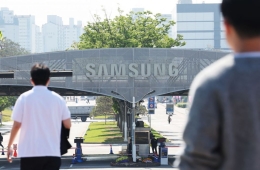
The GIST Ecosystem Research Center held its opening ceremony on the 26th at the GIST Samsung Environment Building. Photo by GIST
View original image[Asia Economy Honam Reporting Headquarters Reporter Cho Hyung-joo] The EcoSysChem Research Center at GIST (President Kim Ki-seon), led by Center Director Jang In-seop, professor of Earth and Environmental Engineering, held an opening ceremony at the GIST Samsung Environment Building on the 26th, with over 20 related personnel attending, the center announced on the 27th.
The opening ceremony was attended by GIST President Kim Ki-seon, former President Moon Seung-hyun, Dean Cho Jung-hee, Director of Research Park Ki-hong, Director of Planning Park Ji-yong, along with other GIST officials and members, as well as representatives from the Korea Institute of Energy Research.
The GIST EcoSysChem Research Center aims to secure core technologies to solve social problems through the development of eco-friendly treatment and upcycling technologies for urban-type municipal solid waste (MSW). The research will focus on biotechnologies for converting syngas-type precursor gases derived from MSW, catalysts for converting residual carbon dioxide after syngas reactions, development of reaction technologies, recovery and stabilization of organic and inorganic by-products derived from syngas, and development of high value-added technologies.
Center Director Jang In-seop stated, “This research center will do its utmost to secure core technologies aimed at innovative conversion of urban solid waste gasification materials,” adding, “We expect positive effects such as reduction of emissions by capturing carbon dioxide, carbon upcycling effects, and improvement of carbon dioxide control.”
Meanwhile, the center includes 11 GIST professors and the Gwangju Bioenergy Research and Development Center of the Korea Institute of Energy Research. It is organized into three detailed core groups: ▲Biotechnologies for conversion of MSW-derived gasification materials ▲Catalysts and reaction core technologies for conversion of residual CO2 after MSW-derived gasification material conversion ▲Recovery, stabilization, and high value-added technologies for organic and inorganic by-products derived from MSW. The center will receive 13.5 billion KRW in research funding over seven years from this year through 2028.
Hot Picks Today
![About 100 Trillion Won at Stake... "Samsung Strike Is an Unprecedented Opportunity" as Prices Surge 20% [Taiwan Chip Column]](https://cwcontent.asiae.co.kr/asiaresize/93/2026051416263163580_1778743590.jpg) About 100 Trillion Won at Stake... "Samsung Strike Is an Unprecedented Opportunity" as Prices Surge 20% [Taiwan Chip Column]
About 100 Trillion Won at Stake... "Samsung Strike Is an Unprecedented Opportunity" as Prices Surge 20% [Taiwan Chip Column]
- 'Still Hesitant? If You're Wondering Whether KOSPI Will Rise, This Is the Number You Must Watch [Weekend Money]'
- "Heading for 2 Million Won": The Company the Securities Industry Says Not to Doubt [Weekend Money]
- "Anyone Who Visited the Room Salon, Come Forward"… Gangnam Police Station Launches Full Staff Investigation After New Scandal
- Did Samsung and SK hynix Rise Too Much?... Foreign Assets Grow Despite Selling [Weekend Money]
© The Asia Business Daily(www.asiae.co.kr). All rights reserved.