COVID-19 Loans, Interest Repayment Deferral Debated: "Extension vs. Risk of Defaults" (Comprehensive)
Mutual Agreement on Loan Maturity Extension... 6-Month Renewal Expected
Confirmation Anticipated Around June 16 Meeting Between Financial Services Commission Chairman and Association President

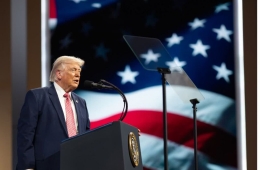
Kim Ki-moon, Chairman of the Korea Federation of SMEs, is giving a greeting at the Financial Services Commission's on-site meeting for small and medium enterprises and small business owners held at the Korea Federation of SMEs in Yeouido, Seoul, on the morning of the 9th. On this day, Financial Services Commission Chairman Ko Seung-beom is known to have listened to opinions regarding financial difficulties of small and medium enterprises and small business owners related to the COVID-19 crisis, as well as financial support measures such as maturity extension and repayment deferral through the meeting. Photo by Kim Hyun-min kimhyun81@
View original image[Asia Economy Reporter Kim Jin-ho] Financial authorities are facing a dilemma over whether to extend the third phase of the ‘COVID-19 Financial Support Program’ for small business owners and self-employed individuals. Although an announcement was expected last week, strong opposition from the financial sector against the ‘interest repayment deferral’ measure has delayed the final decision to this week.
While financial authorities worry that ending the measure could put those who have been surviving on debt in a difficult situation, the financial sector argues that it would only increase latent insolvency, leading to a standoff. Experts have also pointed out that it is now time to distinguish between the viable and non-viable cases.
According to financial authorities and the financial sector on the 13th, the Financial Services Commission will finalize this week whether to extend the third phase of the COVID-19 Financial Support Program. On the 10th, Financial Services Commission Chairman Ko Seung-beom met with the heads of the five major financial holding companies to discuss the matter, and it is known that final adjustments on the details are currently underway at the working level.
The heads of financial authorities and the financial sector have reached a consensus on extending loan maturities by six months until March next year. This is intended to alleviate the difficulties faced by small business owners and the self-employed amid the ongoing strict social distancing measures. Financial authorities have repeatedly emphasized that the quarantine situation is closely linked to COVID-19 financial support measures.
However, there is disagreement between the two sides regarding the interest repayment deferral. The government insists that the deferral should also be extended, considering the hardships faced by small business owners and the self-employed who are on the brink of collapse. Chairman Ko conveyed this opinion during an on-site meeting with the Korea Federation of SMEs on the 9th.
On the other hand, the financial sector has demanded the termination of the interest repayment deferral measure. They express concerns that the prolonged COVID-19 financial support has created a so-called ‘optical illusion effect,’ which could increase potential insolvency. According to the Financial Supervisory Service, as of the end of June, the non-performing loan ratio of domestic banks was 0.54%, down 0.08 percentage points from the previous quarter, marking a record low.
In particular, during the meeting on the 10th, some financial holding company heads reportedly expressed negative views directly to Chairman Ko regarding the extension of the interest repayment deferral. A banking official pointed out, "With interest rates rising sharply, if interest repayment continues to be deferred, the burden on borrowers could increase significantly during the normalization process."
Experts also argue that the interest repayment deferral should now be ended. To prevent latent insolvency, the time to distinguish between viable and non-viable cases should no longer be postponed. Professor Lee Min-hwan of Inha University’s Department of Global Finance said, "The longer the period, the more the principal and interest burdens will grow like a snowball. It is necessary to defer the principal but require some interest payments to reduce future burdens."
Accordingly, financial authorities and the financial sector are expected to engage in final negotiations over whether to extend the measure. The options currently being discussed include ▲6-month extension ▲3-month extension ▲termination. However, even if the interest repayment deferral is ended, financial authorities plan to propose a soft landing plan that allows borrowers to pay principal and interest over a long period.
Hot Picks Today
!["Stock Set to Double: This Company Smiles Every Time a Data Center Is Built [Click e-Stock]"](https://cwcontent.asiae.co.kr/asiaresize/93/2026050416112750184_1777878687.jpg) "Stock Set to Double: This Company Smiles Every...
"Stock Set to Double: This Company Smiles Every...
- "Is Yours Just Gathering Dust at Home? Millennials & Gen Z Rediscover Digicams O...
- [New York Stock Market] Deal Nears... S&P 500, Nasdaq Hit New Highs Again
- "Continuous Groundwater Pumping Causes Mexico City to Sink 24cm Annually... 'Gia...
- “She Shouted, ‘The Rope Isn’t Tied!’... Chinese Woman Falls from 168m Cliff ...
Meanwhile, the final plan for the COVID-19 Financial Support Program is expected to be confirmed around the 16th. Chairman Ko will meet with the heads of six associations?the Korea Federation of Banks, Korea Financial Investment Association, Korea Life Insurance Association, Korea Non-Life Insurance Association, Korea Credit Finance Association, and Korea Federation of Savings Banks?on the 16th. The meeting is expected to cover discussions on the COVID-19 Financial Support Program as well as financial authorities’ management demands regarding the rapidly increasing loans in the secondary financial sector.
© The Asia Business Daily(www.asiae.co.kr). All rights reserved.