"To Enhance Future Car Competitiveness, Regulations on Wireless Updates and Data Utilization Must Be Eased"
[Asia Economy Reporter Ki-min Lee] As the connected and autonomous driving markets, considered core technologies of future automobiles, expand, there are calls to allow over-the-air (OTA) updates and ease regulations on data collection and utilization.
The Korea Automobile Manufacturers Association (KAMA) stated on the 11th through its report titled "Current Status and Implications of Connected Car Services" that the domestic connected car market is experiencing rapid growth. Connected cars refer to vehicles equipped with communication modules that enable internet access and data sharing with both internal and external vehicle components, infrastructure, and external devices.
According to KAMA, as of May this year, the number of connected cars in Korea exceeded 4.24 million, accounting for 17.3% of the total registered vehicles (approximately 24.59 million). The market has grown at an average annual rate of 36.8% from 2015 to last year, with an increase of 1.17 million units last year alone. Recently, automobile manufacturers have contributed to this growth by registering as Mobile Virtual Network Operators (MVNOs) and directly providing connected services.
KAMA argued that to expand and improve the quality of domestic connected services, OTA updates should be allowed without location restrictions. This is because OTA has become essential due to the electrification of vehicles and the increased application of system software. KAMA advised that the current Automobile Management Act only needs to add OTA, which is currently possible only at designated maintenance locations, as an exception to maintenance work.
Furthermore, KAMA pointed out that to compete internationally in the connected field, Korea needs to establish a smooth OTA environment. Since Tesla commercialized OTA in 2012, it has been implementing vehicle performance improvements and adding autonomous driving features. BMW and Volkswagen introduced OTA in their luxury cars last year, Toyota is doing so this year, and GM plans to equip all models with OTA by 2023. However, in Korea, individual automakers must apply for and receive approval under the regulatory sandbox special cases. Hyundai Motor Company, Renault Samsung Motors, BMW, and Volvo are currently providing services under temporary permits valid for two years.
In addition, KAMA emphasized the need to ease regulations on data collection and utilization, at least for vehicle operation and technology development. The Personal Information Protection Act broadly defines personal information and regulates data collection and use, meaning much of the information processed in connected car services is subject to regulation. However, to promote the development of the connected car service industry, it is necessary to amend the law to allow automobile manufacturers to collect and use data without the consent of data subjects, limited to vehicle operation and technology development. KAMA stressed the need to revise the Act on the Promotion and Support of Commercialization of Autonomous Vehicles accordingly.
Hot Picks Today
 "Now Our Salaries Are 10 Million Won a Month" Record High... Semiconductor Boom Drives Performance Bonuses at Major Electronic Component Firms
- Is It Really Like an Illness? "I Can't Wait to Go Again"—Over 1 Million Visited in Q1, Now 'Busanbyeong' Takes Hold [K-Holic]
- "Realizing How Fast Money Disappears: Should You Try Only the Essentials for 5,000 Won? [The Basics of Benefits]"
- People Power Party Files Countersuit for False Accusation Against Ruling Party: "Blocking Vetting of Jung Wonoh"
- Experts Already Watching Closely..."Target Price Set at 970,000 Won" Only Upward Momentum Remains [Weekend Money]
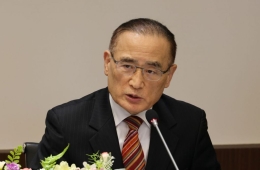
Jung Man-ki, Chairman of KAMA, emphasized, "Considering the recent global competition in the future car sector expanding beyond electric vehicles and autonomous vehicles to connected services, it is necessary to compare and continuously ease domestic regulations on data collection, utilization, and wireless updates with those of foreign countries to provide domestic companies with equal competitive conditions compared to competitors abroad."
© The Asia Business Daily(www.asiae.co.kr). All rights reserved.