[2021 Tax Revision] Tax Relief on Youth and Senior Subscription Accounts and Pensions... Top 2% Comprehensive Real Estate Tax to be Discussed in August
Ministry of Economy and Finance Announces '2021 Tax Law Amendment'
![[Image source=Yonhap News]](http://www.asiae.co.kr/news/img_view.htm?img=2021071207543529173_1626044074.jpg)
[Sejong=Asia Economy Reporter Moon Chaeseok] The government is easing the subscription requirements for the Housing Subscription Savings Account, which includes tax exemption benefits, to help young people without homes purchase their own houses. To support the elderly in securing stable retirement lives, they will be exempted from paying value-added tax (VAT) when taking out mortgage loans. Additionally, some housing units in small-scale redevelopment projects and urban public housing complex projects will be included as housing exempt from the comprehensive real estate holding tax (Comprehensive Real Estate Tax, or CET). This measure aims to reduce the CET burden on redevelopment project operators to activate the 2·4 supply plan.
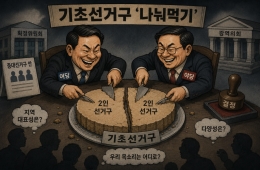
The Ministry of Economy and Finance announced the '2021 Tax Reform Proposal' containing these details on the 26th. However, the amendment to the CET law that would include those in the top 2% of publicly announced property prices in the tax base was not included in this proposal. The government stated that this matter will be re-discussed at the upcoming extraordinary session of the National Assembly next month. Previously, on the 7th, the Democratic Party of Korea proposed an amendment to the CET law to tax the top 2% of publicly announced real estate prices for one household one house owners, rounding amounts under 100 million won, which sparked intense controversy.
Encouraging Expansion of Eligibility for Youth Housing Subscription Savings Account
![[Image source=Yonhap News]](http://www.asiae.co.kr/news/img_view.htm?img=2021013115272553970_1612074445.jpg)
First, to reduce the burden of 'owning a home' for young people, the government plans to expand the eligibility for subscribing to the Housing Subscription Savings Account. This product, which offers tax exemption on interest income, was considered a representative financial investment tool for youth before the real estate price surge caused liquidity to flood the asset market.
Eligible subscribers are young people aged 19 to 34 who are heads of households without homes. Upon subscription, tax exemption benefits apply to up to 5 million won of total interest income. Currently, only those with a total salary of 30 million won or less or a comprehensive income amount of 20 million won or less can subscribe, but the scope will be expanded to 'total salary 36 million won and comprehensive income amount 24 million won' through legal amendments.
The subscription period is at least two years, and the annual payment limit is 6 million won. Although it was scheduled to expire at the end of this year, it will be extended for two more years until the end of 2023 to support low-income youth.
Reducing Burden on Elderly Housing Pension... Exemption from VAT on Collateral Housing
![[Image source=Yonhap News]](http://www.asiae.co.kr/news/img_view.htm?img=2018101612042356338_1539659065.jpg)
To support the elderly's retirement life, taxation related to housing pensions will be eased. When the elderly put up their houses as collateral to repay housing pension loans, they will be exempted from paying value-added tax.
Housing pension subscribers generally entrust their houses as collateral to the Korea Housing Finance Corporation and then receive retirement living funds from financial institutions. The corporation disposes of the subscriber's collateral housing to repay the loan. VAT is currently payable in this process, but the elderly will be excluded from the tax base.
The applicable housing refers to collateral houses disposed of by the trustee, Korea Housing Finance Corporation, to repay housing pension guarantee debts. The system will apply to housing supplied from January 1 of next year.
Including Redevelopment and Public Projects in CET-Exempt Housing

Tax relief policies to increase the overall housing supply nationwide will also be implemented. Redevelopment housing, etc., will be excluded from the CET aggregation housing. This is to support the '3080+ Housing Supply Plan' (2·4 Plan) announced by the government on February 4 to increase housing supply.
Previously, only public rental housing, long-term general private rental housing, employee housing, and dormitories were excluded from CET aggregation housing. After the legal amendment, public project implementers who purchase by 'expropriation' method such as ▲small-scale redevelopment projects and street autonomous housing maintenance projects ▲urban public housing complex projects ▲innovation district regeneration projects implemented by residential regeneration innovation districts ▲public direct implementation maintenance projects will be excluded from the CET aggregation target.
An official from the Ministry of Economy and Finance explained, "The 2·4 Plan includes public redevelopment projects, but under current law, redevelopment project operators have to pay CET during the project, so the law was amended to ease this burden. Once the CET enforcement ordinance is revised at the end of the year, the regulation will apply to housing supplied from next year."
"CET Imposition Criteria for One Household One House Owners to be Re-discussed at August Extraordinary National Assembly"
![[Image source=Yonhap News]](http://www.asiae.co.kr/news/img_view.htm?img=2021072611340849596_1627266849.jpg)
The specific CET application targets among one household one house owners were not included in this amendment. This is because the matter will be re-discussed at the extraordinary session of the National Assembly next month.
Kim Taeju, Director of the Tax Policy Bureau at the Ministry of Economy and Finance, said at a pre-briefing on the 2021 Tax Reform Proposal held at the Government Complex Seoul on the 23rd, "The 'deduction amount of 900 million won' set in 2009, which is the basis for CET payment, does not properly reflect the rise in real estate and inflation, causing a rapid increase in CET payers. The bill was proposed with the intention to target the 'top 2% of housing prices,' and the government agrees with this content." He added, "I understand that this CET bill will be discussed at the extraordinary session of the National Assembly next month."
After the April 7 by-election, the Democratic Party formed a special committee on real estate and proposed on May 27 to impose CET on the top 2% of publicly announced land prices, deciding it as party policy on June 17. During this process, Democratic Party lawmaker Yoo Dongsoo proposed an amendment stating that amounts under 100 million won should be rounded, which sparked controversy. According to the amendment, if the top 2% of publicly announced real estate prices this year is 1.068 billion won, CET would be imposed starting from 1.1 billion won, causing fairness issues as owners of houses priced between 1.068 billion and 1.1 billion won would not have to pay CET.
Hot Picks Today
 No Bacteria Detected in Arisu After 24 Hours of Repeated Drinking from a Tumbler
- "Not Even Expecting Gratitude, Just Hoping for No Complaints": Teachers' Sad Portrait on the Eve of Teacher's Day
- "Available Only in Korea": Pokémon Card Prices Surge 2,532% Due to Rarity, Becoming Investment Assets
- High-Net-Worth Investors Increase Stock Holdings: "Samsung and SK hynix Are Basic, Now Searching for the Next Opportunity" [Investment Strategies of the Wealthy] ⑧
- Police Officer Cycling on Day Off Rescues Woman Attempting to Jump from Hangju Bridge
The National Tax Service must receive the first CET calculation data from the Ministry of the Interior and Safety by next month to accept applications for CET aggregation exemption and tax special cases from taxpayers in September. This is to meet the CET notification timing in November. However, the ruling party is reportedly considering it acceptable to process the bill only within next month.
© The Asia Business Daily(www.asiae.co.kr). All rights reserved.