Blocking Fine Dust and Bringing Fresh Air... Ulsan's 'Green New Deal' Sets Sail
Ulsan City Actively Responds to Climate Crisis with 'Urban Forest Policy' to Achieve '2050 Carbon Neutrality'
Reduces Fine Dust and Mitigates Urban Heat Islands... Enhances Citizens' Quality of Life

[Asia Economy Yeongnam Reporting Headquarters, Reporter Kim Yong-woo] A large-scale "urban forest" creation project is being promoted to establish real forests in Ulsan, an industrial city reminiscent of a "factory forest."
Ulsan City announced on the 5th that it will focus on promoting the "urban forest creation policy" this year to realize a "2050 carbon-neutral city" and to fundamentally respond to the climate crisis.
Through a comprehensive green space policy covering the entire city, Ulsan plans to reduce high concentrations of fine dust, create a pleasant air environment, and improve the quality of life for its citizens.
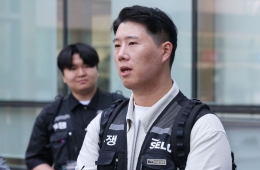
On the 5th at 11:30 a.m., Ulsan Mayor Song Cheol-ho held a press conference at the City Hall Press Center and announced specific urban forest creation plans by sector, including △fine dust blocking forests △urban wind path forests △school forests △child safety green forests.
△The fine dust blocking forest creation project involves establishing forests around industrial complexes with high emissions of air pollutants to block the inflow of fine dust into urban areas and improve the working environment within the industrial complexes.
The project sites cover 14.6 hectares around Mipo Industrial Complex and Shin Industrial Complex (Mipo 8.1ha, Shin Industrial 6.5ha). From 2019 to 2021, a budget of 10.2 billion KRW (5.1 billion KRW national funds, 5.1 billion KRW city funds) was invested to plant 160,000 fine dust reducing trees.
The project has been completed in Wonyeonam Village, Yeonam-dong, Buk-gu, and near Onsan National Industrial Complex. This year, with a budget of 3.2 billion KRW, about 70,000 trees of thorn bushes and dogwoods will be planted in a 5-hectare buffer green space in front of Deokyang Industry in Yeonam-dong, Buk-gu.
△The urban wind path forest creation project aims to alleviate the urban heat island phenomenon by creating connecting forests that bring cool and clean air from the outskirts of the city into the urban interior.
Ulsan City was selected for the Korea Forest Service's public project in 2019 and will invest 20 billion KRW (10 billion KRW national funds, 10 billion KRW city funds) from this year to next year to create large-scale forests covering 20 hectares throughout the city.
To create the wind path forests, Ulsan City introduced scientific methods developed by the German Meteorological Agency, comprehensively analyzing urban topography and wind flow dynamics.
Based on information about fine dust, thermal environment, and vulnerable population areas (concentrations of populations under 5 and over 65 years old), priority project sites were selected.
This year's project sites include 10 hectares of landscape green space in Shin Industrial Complex, Onsan-eup, Ulju-gun, and 7 hectares of buffer green space in Hyomun-dong, Buk-gu.
Near Ulju Shin Industrial Complex, forests of hackberry and camellia trees will be created to spread the cool wind from Geonamsan (wind-generating forest) into the city, and in the buffer green space along the Donghae Nambu Line in Hyomun-dong, Buk-gu, forests of paulownia and bald cypress will be planted to connect the clean air generated from Muryongsan (wind-generating forest) to the urban area.
Next year, with a budget of 9 billion KRW, a wind path forest connecting Taehwa River and Jung-gu Innovation City Green Avenue will be created, complementing existing urban parks and green spaces. Additionally, connecting forests and stepping/spreading forests linking the abandoned Donghae Nambu Line, Taehwa River, Dongcheon, and the National Garden will be organically established.
△School forests are projects that allow children to naturally experience the value of forests and cultivate ecological sensitivity in their daily lives.
The initial project sites are three schools: Seongsin High School in Jung-gu, Hyundai Technical High School in Dong-gu, and Meaari School in Buk-gu. With an investment of 180 million KRW, forests with walking paths and resting spaces will be created around these schools.
△The Child Safety Green Forest is a new project launched this year to create a safe walking environment in school zones.
With a budget of 700 million KRW, green belts will be established along roads near Baekhap Elementary School in Nam-gu, Mipo Elementary School in Dong-gu, and Maegok Elementary School in Buk-gu to ensure safety on the way to and from school.
There are also plans to conduct garden experience education using augmented reality (AR), a technology that overlays three-dimensional virtual objects onto the real world.
Hot Picks Today
!["Heading for 2 Million Won": The Company the Securities Industry Says Not to Doubt [Weekend Money]](https://cwcontent.asiae.co.kr/asiaresize/93/2025061015355092669_1749537351.jpg) "Heading for 2 Million Won": The Company the Securities Industry Says Not to Doubt [Weekend Money]
"Heading for 2 Million Won": The Company the Securities Industry Says Not to Doubt [Weekend Money]
- "Anyone Who Visited the Room Salon, Come Forward"… Gangnam Police Station Launches Full Staff Investigation After New Scandal
- "If You Use This Name for Your Grandchild, We'll Give You a 1 Billion Won Apartment"...A Couple Faces Conflict
- "Drink Three Cups of Coffee and Stay Up All Night Before the Test"... Manual of Insurance Planner Who Collected 1 Billion Won in Payouts
- Did Samsung and SK hynix Rise Too Much?... Foreign Assets Grow Despite Selling [Weekend Money]
Mayor Song Cheol-ho emphasized, "The Ulsan urban forest creation policy is the first step to protect citizens' health and happiness and realize low-carbon green growth," adding, "We will make Ulsan reborn as an eco-friendly ecological cultural garden city beyond an industrial capital."
© The Asia Business Daily(www.asiae.co.kr). All rights reserved.