Lee Ju-yeol "COVID-19 will leave long-term 'Long COVID' sequelae... We must prepare for economic structural changes"
Economic Effects of COVID-19 Prevention Policies and Vaccine Distribution
Video Congratulatory Remarks at the Joint Policy Forum by the National Economic Advisory Council and the Korean Economic Association
"Vaccines Can Be a Turning Point but Risks Lurk Everywhere"
"Support for Small Businesses and Low-Income Groups Severely Impacted by COVID Must Continue"
![[Image source=Yonhap News]](http://www.asiae.co.kr/news/img_view.htm?img=2021031707290634640_1615933746.jpg)
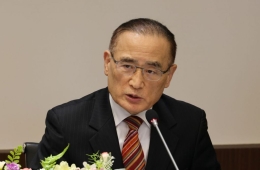
[Asia Economy Reporter Kim Eun-byeol] Lee Ju-yeol, Governor of the Bank of Korea, stated that while vaccine distribution could be a turning point in overcoming the COVID-19 crisis, there are still latent risk factors that prevent full confidence in a robust economic recovery. He emphasized that since COVID-19 is expected to leave long-term aftereffects known as 'long Covid,' the government, academia, and businesses must collaborate to prepare for future economic structural changes.
On the 17th, Governor Lee delivered a video congratulatory message at the joint policy forum of the National Economic Advisory Council and the Korean Economic Association held at the Korea Chamber of Commerce and Industry in Seoul, under the theme "Economic Effects of COVID-19 Quarantine Policies and Vaccine Distribution." He said, "This year, our economy is expected to continue its recovery mainly through exports and investment, but the extent will be greatly influenced by the progression of COVID-19 and the status of vaccine distribution."
He pointed out that the COVID-19 crisis has further exposed the vulnerabilities of our economy, citing ▲ capital concentration in asset markets ▲ increased financial stability risks due to expanded household and corporate debt ▲ growing inequality between sectors and social classes. He added, "In this situation, the most important task for our economy is to thoroughly manage risks and solidify the recovery while preparing for changes in the economic environment in the post-COVID era."
First, Governor Lee stated that since uncertainty about COVID-19 remains high, policy efforts must continue to help households and businesses overcome current difficulties. He also stressed the need to maintain vigilance in quarantine measures until herd immunity is achieved through vaccination and to continue supporting small business owners and low-income groups who are heavily impacted by the COVID shock.
As the economy enters a recovery phase, concerns about inflation are growing, and uncertainty about the direction of the U.S. Federal Reserve's monetary policy may increase, so he said that movements in the international financial markets should be closely monitored.
Governor Lee explained, "As vaccine distribution progresses and economic activities gradually return to normal, we must actively prepare for structural changes after the pandemic." He added, "Since economic agents' behaviors are changing due to COVID-19 and international trade and industrial restructuring are accelerating, the private sector should take the lead in discovering new growth engines and work to improve investment conditions by enhancing access to technology and capital so that quality jobs can be created." He also noted, "Efforts to expand social safety nets must continue as income inequality may worsen during the economic structural changes such as automation and digitalization."
Hot Picks Today
 "Now Our Salaries Are 10 Million Won a Month" Record High... Semiconductor Boom Drives Performance Bonuses at Major Electronic Component Firms
- Experts Already Watching Closely..."Target Price Set at 970,000 Won" Only Upward Momentum Remains [Weekend Money]
- Prime Minister Kim Minseok: "Samsung Electronics Strike Could Cost Up to 1 Trillion Won per Day, 100 Trillion Won Total... Tomorrow's Talks Are the Last Chance" (Comprehensive)
- Did Samsung and SK hynix Rise Too Much?... Foreign Assets Grow Despite Selling [Weekend Money]
- Is It Really Like an Illness? "I Can't Wait to Go Again"—Over 1 Million Visited in Q1, Now 'Busanbyeong' Takes Hold [K-Holic]
Furthermore, Governor Lee emphasized, "The impact of COVID-19 may leave long-term aftereffects known as 'long Covid,' which could impose considerable burdens on our economic management even after overcoming the crisis." He stressed, "The government, academia, and businesses must all make utmost efforts so that our economy can quickly recover from the COVID shock and prepare for a new future."
© The Asia Business Daily(www.asiae.co.kr). All rights reserved.