President, Prime Minister, and Ministers Emphasize Cooperation in 'LH Investigation'... Concerns Raised Within Prosecutors

[Asia Economy Reporters Seokjin Choi and Chulyoung Lim] Despite President Moon Jae-in, Prime Minister Chung Sye-kyun, and Justice Minister Park Beom-gye urging the prosecution to cooperate in the investigation of the Korean Land and Housing Corporation (LH) employees' speculation allegations related to the 3rd New Town development, concerns are emerging within the prosecution about the limitations of cooperation without investigative authority.
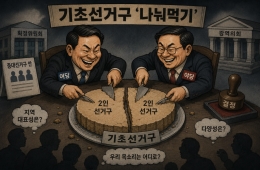
While basic cooperation such as prompt requests for search warrants is expected, many prosecutors and investigators respond cynically, questioning why the prosecution, which currently lacks investigative authority amid discussions of 'complete removal of prosecution's investigative powers' (검수완박), should play a mere supporting role.
On the 10th, negative views surfaced within and outside the prosecution regarding the investigation led by the government and police.
Criticism has been raised about the failure to promptly conduct forced investigations such as search and seizure at the early stages of the case, which allowed room for evidence destruction, and the ongoing parallel investigation and inquiry processes, which raise concerns about the efficiency of fact-finding.
On the 8th, an anonymous post titled “Prosecutor Investigator’s Re-investigation Directive on LH Speculation Allegations” appeared on a workplace anonymous bulletin board, stating “This investigation is ruined,” and criticizing President Moon’s directive for a “full investigation of land transactions in new towns” and Prime Minister Chung’s order to “ruin the speculative employees,” calling them pointless. The same poster later posted again with the same title, saying, “I saw the police conducting search and seizure only at LH, and I thought, as expected,” urging, “You need to search the Ministry of Land, Infrastructure and Transport! Show courage to enter Minister Byeon Chang-heum’s office.”
The poster, who identified themselves as an investigator affiliated with the Supreme Prosecutors’ Office, targeted Minister Park, saying, “Minister Park talks about organic cooperation between prosecution and police and legal reviews! That’s nonsense. Minister Park, please stop the show,” and added, “In cases with many charges, the key is how to classify the charges. Ultimately, if you do legal reviews, that’s directing the investigation. That’s why separating investigation and prosecution doesn’t make sense.”
On the 8th, President Moon referred to the case as “one requiring organic cooperation between the prosecution and police,” requesting the prosecution to coordinate with the police.
Accordingly, the Ansan branch of the Suwon District Prosecutors’ Office, which has jurisdiction over the case, formed a “Real Estate Speculation Investigation Task Force” (led by Chief Prosecutor Lee Gon-hyung of the Criminal Division 3) consisting of four prosecutors and eight investigators to support the government’s joint special investigation headquarters (headed by the National Investigation Headquarters).
However, their role is limited to providing precedents and past case reviews and promptly requesting warrants from the court upon police application, rather than direct participation in the investigation.
Minister Park visited the Ansan branch the day before and urged, “Under the new investigative reform system, actively utilize the prosecution’s investigative expertise as legal professionals and set a model precedent for organic cooperation between prosecution and police.”
Minister Jeon Hae-cheol of the Ministry of the Interior and Safety also emphasized the prosecution’s supplementary investigative role through warrant requests at a press briefing the day before, stating, “The prosecution can only directly investigate six major crimes, so it will be difficult for them to conduct direct investigations at this stage.”
However, an official from the Ansan branch said, “There is a communication channel established for constant interaction with the joint investigation headquarters,” adding, “As the investigation progresses, there may be more areas where the prosecution’s cooperation is needed.”
They further noted, “If the police later transfer the case, the prosecution may order supplementary investigations or conduct them directly.”
Meanwhile, within the prosecution, concerns and cynical reactions coexist regarding the current situation.
A current prosecutor, identified as A, said, “Even if the prosecution cooperates with legal reviews, there will definitely be limits,” expressing doubts about whether the police, who lack experience in direct prosecution, can properly collect evidence necessary to prove charges.
Prosecutor B said, “When the investigative authority between prosecution and police was adjusted, and the authority was simply divided by charge and the rank of the investigation target, I thought it would eventually cause problems.”
According to the amended Prosecutors’ Office Act, this case does not fall under the ‘six major crimes,’ so the prosecution lacks investigative authority. However, if allegations involving public officials of grade 4 or higher emerge during the investigation, the case falls under the prosecution’s jurisdiction.
Concerns about political neutrality were also raised. Chief Prosecutor C said, “In this investigation, it is uncertain who might appear, such as senior officials from the Ministry of Land or ruling party figures. Seeing the head of the National Investigation Headquarters rush to the Prime Minister’s office upon his summons raises doubts about whether a fair and neutral investigation is possible.”
Regarding suggestions that prosecutors should be dispatched to the joint investigation headquarters, Prosecutor D responded, “In a situation where the prosecution’s investigative command has been abolished, does this mean prosecutors will be subordinated to police command?”
Within the prosecution, there is a considerable sentiment to observe whether the police will conduct the investigation properly while the prosecution is excluded from the process.
Another prosecutor, E, pointed out, “Considering the scale and complexity of this case, it is a situation where prosecutors with expertise in speculation cases should be deployed at the Supreme Prosecutors’ Office level, not just at the branch level.”
Hot Picks Today
 No Bacteria Detected in Arisu After 24 Hours of Repeated Drinking from a Tumbler
- "Available Only in Korea": Pokémon Card Prices Surge 2,532% Due to Rarity, Becoming Investment Assets
- "Egg Prices Are Strange" Proven True... Collusive Margin Hike of 46% Without Basis Leads to 594 Million Won Fine
- Pungsan Denies Reports of Jack Nicklaus GC Acquisition Plans
- American Woman Who Poisoned Husband for $2 Million Insurance and Published Memorial Children's Book Sentenced to Life in Prison
Recently, the prosecution uncovered in the investigation of former Democratic Party lawmaker Son Hye-won’s ‘Mokpo speculation allegations’ that she had obtained the ‘urban regeneration project plan’ in Mokpo in advance and purchased land under the names of her nephew, acquaintances, and a foundation chaired by her husband, leading to a first-instance prison sentence.
© The Asia Business Daily(www.asiae.co.kr). All rights reserved.