[Click eStock] "Key to Hanjin Investment Decision, Courier Fee Increase"... Maintaining 'Neutral'
[Asia Economy Reporter Ji Yeon-jin] Korea Investment & Securities stated on the 26th that it expects the social consensus process regarding the increase in delivery fees to take longer than initially anticipated and maintains a 'neutral' buy rating on Hanjin.
![[Click eStock] "Key to Hanjin Investment Decision, Courier Fee Increase"... Maintaining 'Neutral'](http://www.asiae.co.kr/news/img_view.htm?img=2021022607464995996_1614293209.jpg)
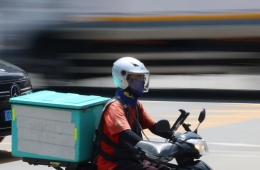
While the biggest issue in the delivery market in January was labor-management conflicts, from the second social consensus onward, the issue seems to be expanding to problems with the delivery fee transaction structure and the distribution industry. The most contentious point between labor and management was the responsibility for sorting work. The union argues that since delivery drivers earn only delivery commissions as income, sorting is the company's responsibility, whereas management claims it is part of the delivery preparation process. This has been a legal dispute for several years, but conflicts intensified last year as the workload increased sharply due to the surge in volume caused by COVID-19. Although the delivery companies promised to increase sorting personnel on the 28th of last month, preventing a strike during the Lunar New Year holiday, conflicts with agencies over additional labor costs remain. This means that discussions on the realistic adjustment of delivery prices have become more important going forward.
In 2020, delivery volume surged by 21% year-on-year, benefiting from the untact trend. This was the highest growth rate since 2009. Hanjin's delivery operating profit is also estimated to have increased by more than 40%. However, looking at the entire delivery market, profitability began to fall short of expectations from the second half of the year. Additionally, costs have been rising since the end of last year to improve working conditions.
Hot Picks Today
 Even with High Oil Price Relief Payment, Additional 300,000 Won Per Person to Be Provided... Applications Open from the 18th in This Region
- "Invested 95% in Hynix and Reached 10 Billion Won"... Japanese Investor's Proof Post Goes Viral
- "Why Is the Korean Stock Market Surging?"... Even Italy Is Astonished by the KOSPI Rally
- "You Don't Need to Go to the Gym": The Best Exercises for Lowering Hypertension
- "That Thing Wakes Up Every Night" ... Suspicious Object Covers Rural Village
Hanjin also promised to recruit 1,000 sorting personnel within this year and install automatic sorters worth 50 billion KRW at sub-terminals. Ultimately, if fare increases that exceed the growing investment burden are not supported, the value of growth potential in delivery demand is bound to diminish. Choi Go-woon, an analyst at Korea Investment & Securities, explained, "The key to future investment decisions depends on this year's plan for fare increases. Since the delivery industry is reducing unnecessary market share competition and moving toward service differentiation, it is clear that Hanjin also has an opportunity to raise prices. This year, the interest coverage ratio is expected to exceed 1, and over 300 billion KRW in liquidity will come in through the sale of idle land, so improving delivery fee practices is the final hurdle."
© The Asia Business Daily(www.asiae.co.kr). All rights reserved.