Democratic Party's 'Half-Price & Quarter-Price' Housing Policy to Be Announced in February Next Year
Future Housing Promotion Team Reviews Equity Accumulation Type, Land Lease Type, and Cooperative REITs
![[Image source=Yonhap News]](http://www.asiae.co.kr/news/img_view.htm?img=2020110512563685078_1604548596.jpg)
[Asia Economy Reporter Park Cheol-eung] In February next year, two months before the by-elections for the Seoul and Busan mayoral offices, the ruling party will prepare and announce a new housing supply policy centered on housing stability.
The main content is to reduce the burden of lump-sum payments to enable stable occupancy, but not to expect capital gains. However, similar supply policies have been promoted several times in the past but failed to achieve effectiveness, and there are criticisms that it is a public-led policy far from market demands, making its effectiveness uncertain. Since it will be announced before the by-elections in April next year, it is expected to have some influence on voter sentiment.
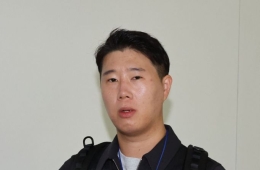
Cheon Jun-ho, vice head of the Democratic Party's Future Housing Promotion Team, said in a phone interview with Asia Economy on the 23rd, "We will comprehensively organize the contents discussed by the promotion team and release them around February next year," adding, "Since people's housing demands and needs vary, we intend to provide various supply methods that suit them."
The promotion team was launched in early last month with the motto of a revolutionary shift in housing policy and has been conducting activities such as expert seminars and field visits. Another promotion team official said, "We will also consider the discussions that emerged during the confirmation hearing of Land, Infrastructure and Transport Minister nominee Byeon Chang-heum and compile them comprehensively."
The policies under discussion by the promotion team include the equity accumulation installment housing, known as 'half of half price,' land lease-type 'half-price apartments,' and cooperative REITs (real estate investment trusts). The common purpose is to provide housing supply methods that allow affordable occupancy. The land lease-type, where the public owns the land and only the building is sold, is also a key policy promoted by nominee Byeon. The Democratic Party expects that some of the currently discussed supply methods can be applied to the 3rd phase new towns, which total about 200,000 households (Namyangju Wangsuk, Hanam Gyosan, Incheon Gyeyang, Goyang Changneung, Bucheon Daejang, Gwacheon, Ansan Jangsang).
Ways to further activate urban regeneration are also being discussed as a core issue. In the Seoul metropolitan area, including Seoul, the sites available for large-scale land development have reached their limits, and supply close to workplaces that meets demand is urgently needed. Representative Cheon said, "The public sector must step in to enable housing redevelopment and reconstruction," adding, "For small-scale reconstruction projects with fewer than 200 households, we are preparing legislation to enhance business feasibility through floor area ratio incentives, public management, and relaxation of building regulations."
The Democratic Party believes that if housing is no longer treated as a means of asset accumulation but aligned with its original residential purpose, it can provide opportunities for ordinary people to own homes. Jin Sung-jun, a Democratic Party lawmaker, proposed an amendment to the Basic Housing Act specifying 'one household, one house ownership and residence,' stating that "housing should not disrupt the market for the purpose of asset accumulation or speculation."
They also cited the Ministry of Land, Infrastructure and Transport's '2019 Housing Survey Results' released this year, noting that four out of ten people are non-homeowners, and the average non-homeownership period for non-homeowner households is 11.2 years.
The Democratic Party's Future Housing Promotion Team focused on finding ways to supply housing more affordably than the soaring market prices. Vice head Cheon Jun-ho said about the land lease-type, "There are criticisms that there will be no demand if the land is not owned but rented, but we need to rethink this," adding, "If land is rented to labor unions or companies intending to build employee housing to provide housing to union members or employees, it can be an accurate win-win model."
The equity accumulation type is a kind of installment method where those who find it difficult to prepare the full house price pay about 25% at move-in and pay the rest over a long-term residence of 20 to 30 years.
Regarding REITs, the cooperative type is seen as one of the desirable options. Tenants form a cooperative, invest, rent, and after eight years decide whether to convert to ownership. This model has already been supplied in Byeollae, Namyangju, Gyeonggi Province, by Korea Land & Housing Corporation (LH) and the social enterprise 'The Ham.' The investment amount is 35 to 40 million KRW per person, and for an exclusive area of 84㎡, the deposit is about 280 million KRW with a monthly rent of around 100,000 KRW. Since the cooperative holds shares, it becomes the main entity managing and operating the complex, establishing itself as an 'apartment-style village community.'
Hot Picks Today
!["Heading for 2 Million Won": The Company the Securities Industry Says Not to Doubt [Weekend Money]](https://cwcontent.asiae.co.kr/asiaresize/93/2025050713592847164_1746593968.jpg) "Heading for 2 Million Won": The Company the Securities Industry Says Not to Doubt [Weekend Money]
"Heading for 2 Million Won": The Company the Securities Industry Says Not to Doubt [Weekend Money]
- "Anyone Who Visited the Room Salon, Come Forward"… Gangnam Police Station Launches Full Staff Investigation After New Scandal
- Hong Joonpyo: "Jung Wonoh Incident Reminds Me of the 'Pig Aphrodisiac Case'... A Policy Contest Is Needed"
- "Envious of Korean Daily Life"...Foreign Tourists Line Up in Central Myeongdong from Early Morning [Reportage]
- Jay Y. Lee Bows His Head: "I Will Face the Harsh Storm"...Apologizes for Samsung Labor-Management Conflict
They also see the need for public REITs to increase housing supply further. Representative Cheon said, "Local governments lack funds to build rental housing, and even if they build, their debt ratios increase, causing difficulties," adding, "For local public enterprises like SH Corporation, public REITs are one of the options they can choose."
© The Asia Business Daily(www.asiae.co.kr). All rights reserved.