"Biden to Attempt Dialogue Rather Than Sanctions with North Korea"… South Korea Actively Promotes 'Facilitator Role'
Early Resumption of North America Dialogue Difficult, but US May Enter Phase 1 Denuclearization Talks in Late Next Year
Kim Jun-hyung, President of the Korea National Diplomatic Academy, "Expect Enhanced ROK-US Cooperation Through Shared Diplomatic Philosophy of Progressive Governments"
ROK Needs to Develop Logic to Persuade Biden Administration... COVID-19 Spread and US-China Conflict Issues Are Burdensome
![[Image source=Yonhap News]](http://www.asiae.co.kr/news/img_view.htm?img=2020121812111173407_1608261070.jpg)
[Asia Economy Reporter Lim Cheol-young] There is a growing expectation that the U.S. Joe Biden administration, which will take office in January next year, is more likely to attempt dialogue rather than pressure North Korea through sanctions. Although the North Korea-U.S. talks, which have been deadlocked since the so-called ‘Hanoi No Deal,’ are unlikely to resume early due to mutual probing, it is analyzed that the U.S. side may engage in negotiations for a first-phase denuclearization deal in the latter half of next year.
The Institute of Foreign Affairs and National Security at the Korea National Diplomatic Academy analyzed this in its '2021 International Situation Outlook' report released on the 23rd, predicting that the Biden administration will complete an early review of its North Korea policy and seek North Korea-U.S. dialogue, while North Korea will focus on COVID-19 quarantine measures and observe the U.S. response.
Kim Jun-hyung, president of the Korea National Diplomatic Academy, said, “Although there will inevitably be some time required due to the regime change, the Biden administration can address North Korea issues faster and more effectively than expected, thanks to the Democratic Party’s accumulated data, experience, and expertise on North Korea,” adding, “The diplomatic philosophy shared by progressive governments of both Korea and the U.S. can activate Korea-U.S. cooperation.” He also suggested the possibility of recreating the success of the ‘Perry Process,’ the U.S. version of the Sunshine Policy, led by President Kim Dae-jung and Chief of Foreign Affairs and Security Lim Dong-won shaking hands with President Clinton in 1998.
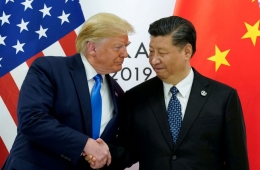
Despite the expectations, many twists and turns are anticipated before the resumption of North Korea-U.S. talks. The Biden administration is likely to place less emphasis on the ‘top-down’ style North Korea-U.S. summits, which were rapidly pursued by the Donald Trump administration, favoring traditional alliance-based multilateral diplomacy. It is also diagnosed that the talks could be interrupted due to mutual differences during the process of creating a step-by-step dialogue atmosphere.
Kim said, “For the U.S., the North Korea issue is a negative agenda,” adding, “From North Korea’s perspective, which has technical necessities for weapons development, if the Biden administration deprioritizes the North Korea issue, provocations by North Korea cannot be ruled out.” He warned that in the worst case, the early situation of the Barack Obama administration could be repeated.
![[Image source=Yonhap News]](http://www.asiae.co.kr/news/img_view.htm?img=2018070212281934601_1530502098.jpg)
Accordingly, the institute advised that more proactive efforts by the South Korean government are necessary to advance the ‘Korean Peninsula Peace Process,’ including the resumption of North Korea-U.S. talks and improvement of inter-Korean relations. It emphasized the need to develop logic that can move the Biden administration’s diplomatic and security team and President Biden himself, ensuring that the ‘Korean Peninsula Peace Process’ is not sidelined amid issues such as the COVID-19 situation and U.S.-China conflicts.
As a party to the North Korean nuclear issue and a facilitator of North Korea-U.S. talks, the South Korean government is expected to actively pursue dual-track diplomacy targeting both sides to prevent North Korea’s nuclear and missile provocations and to resume and advance North Korea-U.S. negotiations. Although improvement in inter-Korean relations is expected to face difficulties due to North Korea’s 8th Party Congress in January next year and the joint South Korea-U.S. military exercises in March, there is a possibility of improvement driven by the momentum of the resumption of North Korea-U.S. talks.
Lee Sang-sook, a research professor at the Institute of Foreign Affairs and National Security, said, “In the short term, North Korea is expected to focus on domestic politics due to COVID-19, and inter-Korean relations are unlikely to improve easily once joint military exercises are implemented,” but she also diagnosed that the resumption of North Korea-U.S. denuclearization negotiations and humanitarian aid to North Korea, approved for sanction exemption extension by the United Nations (UN) Security Council, could serve as momentum for improving inter-Korean relations.
Meanwhile, the institute forecasted that regarding Korea-U.S. relations, the Biden administration will strive to restore alliances and multilateralism, and smoothly resolve pending issues such as the Korea-U.S. Special Measures Agreement (SMA) negotiations on defense cost-sharing, which have been in a 12-month agreement gap. Unlike the Trump administration, which unilaterally pressured for a significant increase, it is explained that the agreement is likely to be concluded as a multi-year contract of about 4 to 5 years within the range proposed by the Korean side.
Hot Picks Today
 Cerebras Soars 70% on IPO Debut: Is Nvidia's Reign Ending as a New AI Semiconductor Power Emerges?
- After Surpassing 8,000 Points, Is Profit-Taking Underway?... Why Is the KOSPI Plunging?
- "Multi-Million Won Bonuses, Life Is Sweet"—Even Employee Reactions... SK hynix Overtakes Samsung to Claim No. 1 Spot
- "Gave in to the Momentary Temptation": Japanese Police Official Dismissed After Stealing 100 Million Won Next to Body
- "After Vowing to Become No. 1 Globally, Sudden Policy Brake Puts Companies’ Massive Investments at Risk"
![[Image source=Yonhap News]](http://www.asiae.co.kr/news/img_view.htm?img=2019032511250521366_1553480705.jpg)
© The Asia Business Daily(www.asiae.co.kr). All rights reserved.