Real Estate Regulation Areas Now Include Many Local Regions... Some Parts of Gwangju and Jeonnam Designated as Adjustment Target Areas

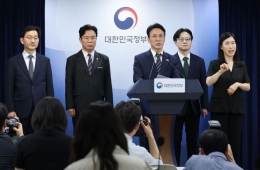
New Proposal for Designation of Additional Regulated Areas. Photo by Ministry of Land, Infrastructure and Transport Provided
View original image[Asia Economy Honam Reporting Headquarters Reporter Lee Gwan-woo] With the entire Gwangju Metropolitan City, which showed signs of overheating in the real estate market, and the southeastern region of Jeonnam including Yeosu, Suncheon, and Gwangyang newly designated as adjustment target areas, attention is focused on whether real estate prices will stabilize in the future.
The current government's 25th real estate measure came one month after the '11.19 Real Estate Measures' announced on the 19th of last month. As the rising trend in housing prices, which started in the Seoul metropolitan area, spread to non-regulated areas such as Gwangju and other local regions, additional measures were taken.
According to the Ministry of Land, Infrastructure and Transport on the 18th, at the Residential Policy Deliberation Committee held the previous day, five areas in Gwangju (Dongseo, Nam, Buk, Gwangsan districts) and Jeonnam's Yeosu City (Dong area, Sora-myeon), Suncheon City (Dong area, Haeryong, Seo-myeon), and Gwangyang City (Dong area, Gwangyang-eup) were included in the regulated areas. The designation takes effect from that day.
As a result, the total number of regulated areas nationwide increased to 160, including 49 speculative overheating districts and 111 adjustment target areas. After 24 previous real estate measures frequently failed to curb housing prices, this effectively placed the entire country under regulatory constraints.
The Ministry of Land, Infrastructure and Transport explained regarding the additional designation of regulated areas, "Due to ultra-low interest rates, abundant liquidity in the market, and rising jeonse price ratios, recent housing purchase sentiment has shifted to an upward trend. Along with the spread of price increases centered on metropolitan and large cities, the proportion of abnormal transactions with speculative potential, such as purchases by outsiders and additional purchases by multi-homeowners, is increasing."
Adjustment target areas are regions judged to be overheated after comprehensively considering various factors among those that meet quantitative criteria such as a three-month housing price increase rate exceeding 1.3 times the inflation rate.
From this day forward, the entire Gwangju area and Jeonnam's Yeosu, Suncheon, and Gwangyang, designated as adjustment target areas, will be subject to strengthened tax, financial, and subscription regulations.
In regulated areas, capital gains tax and comprehensive real estate tax for multi-homeowners will be further strengthened. Owners of two or more homes within adjustment target areas will face increased tax burdens such as capital gains tax surcharges and additional comprehensive real estate tax. Benefits from long-term holding special deductions will not be available.
Loan restrictions will also be fully enforced. The loan-to-value ratio (LTV) will be limited to 50% for amounts up to 900 million KRW and 30% for amounts exceeding 900 million KRW, and a debt-to-income ratio (DTI) of 50% will be applied, among other regulations.
Subscription qualifications for first priority will be raised, and when trading houses, a fund sourcing plan must be submitted without fail.
Hot Picks Today
 "Now Our Salaries Are 10 Million Won a Month" Record High... Semiconductor Boom Drives Performance Bonuses at Major Electronic Component Firms
- Experts Already Watching Closely..."Target Price Set at 970,000 Won" Only Upward Momentum Remains [Weekend Money]
- Seoul Apartment Sales, Jeonse, and Rents in 'Triple Bull Run'... Worst Supply Shortage in 5 Years
- Did Samsung and SK hynix Rise Too Much?... Foreign Assets Grow Despite Selling [Weekend Money]
- Is It Really Like an Illness? "I Can't Wait to Go Again"—Over 1 Million Visited in Q1, Now 'Busanbyeong' Takes Hold [K-Holic]
The Ministry of Land, Infrastructure and Transport stated, "Going forward, every six months, we will comprehensively review price and transaction volume trends for existing regulated areas and consider lifting regulations in some areas where stability is confirmed and no price increase potential is judged."
© The Asia Business Daily(www.asiae.co.kr). All rights reserved.