Cho Hee-yeon, "Reduce the number of students per class to 20 or less... Increase teachers and balance student placement"
Importance of Reducing Student Numbers Grows Amid COVID-19 Crisis
Essential for Social Distancing and Interactive Classes in Schools
South Korea's Students per Class Exceed OECD Average

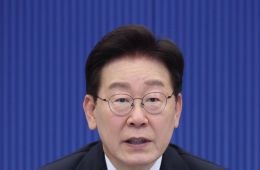
Cho Hee-yeon, Superintendent of the Seoul Metropolitan Office of Education, appeared at the National Assembly's Education Committee hearing on the 26th for the audit of the Ministry of Education and others, responding to questions from lawmakers. Photo by Yoon Dong-joo doso7@
View original image[Asia Economy Reporter Lee Hyun-joo] Jo Hee-yeon, Superintendent of Seoul Metropolitan Office of Education, issued a statement on the 17th advocating for the "Era of 20 Students per Class" and proposed "drastically increasing the number of teachers and balancing student distribution to reduce the number of students per class."
Superintendent Jo emphasized, "The importance of reducing the number of students per class has become greater than ever amid the COVID-19 crisis," adding, "Since school attendance can be suspended at any time and hybrid classes combining in-person and online learning may become the norm, reducing the number of students per class is essential to facilitate physical distancing within schools and smooth interactive online classes." He also noted that since school education is mainly conducted at the class level, an appropriate number of students per class plays a decisive role in improving the quality of education.
Superintendent Jo further stated, "The need to reduce the number of students per class is being raised not only within the education sector but also by the National Assembly and parent organizations," and said, "For enhancing the quality of lessons, the number of students per class holds more significance than the number of students per teacher."
In South Korea, the number of students per class has been gradually decreasing due to the declining school-age population. However, it still falls short of the OECD average. According to the 'OECD Education Indicators 2020' released last September, the average number of students per class in South Korea was 23.1 in elementary schools and 26.7 in middle schools. The OECD averages were 21.1 for elementary schools and 23.3 for middle schools. The National Assembly has proposed a partial amendment to the Framework Act on Education to include a provision stipulating that the number of students per class should be 20 or fewer.
Hot Picks Today
 "Samsung and Hynix Were Once for the Underachievers"... Hyundai Motor Employee's Lament
- After Topping 8,000 Instead of Hitting 10,000... KOSPI Plunges—When Will It Rebound?
- "What? It Wasn't a Wristwatch?" This Brand's Stock Soared 15%, Then Plunged After Official Announcement
- Samsung Electronics Labor-Management Hold Second Post-Adjustment Talks...Central Labor Commission Chair: "Will Do My Best to Prevent a Strike"
- "That? It's Already Stashed" Nightlife Scene Crosses the Line [ChwiYak Nation] ③
To reduce the number of students per class, Superintendent Jo argued, "We must promote balanced school and student distribution and foster appropriately sized schools," adding, "At the same time, bold increases in the number of teachers and financial investment are necessary, requiring active cooperation from each metropolitan and provincial office of education." He expressed hope for progressive policies as the government is also pursuing the reduction of students per class as a national agenda.
© The Asia Business Daily(www.asiae.co.kr). All rights reserved.