Schwarzman, Blackstone Chairman, Says "Biden's China Response Will Not Bring Revolutionary Change"
Schwartzman: "We Will Evaluate and Invest in Companies That Can Reduce Carbon Emissions by 15%"
Former UN Secretary-General Ban Ki-moon: "Biden's Election Encouraging for Tackling Climate Change"

Steven Schwarzman, Chairman of Blackstone, is expressing his views through a video conference with Jeon Gwang-woo, Chairman of the World Economic Research Institute, on the 9th.
View original image[Asia Economy Reporter Kim Eunbyeol] Steven Schwarzman, chairman of Blackstone, the world's largest private equity group, predicted on the 9th that the Biden administration in the United States would not make significant changes to its tough stance on China. This is because the U.S. Congress still holds a negative view toward China. Schwarzman also emphasized the importance of investments considering climate change issues and added that in the future, investments will be made by selecting companies that can reduce carbon emissions by 15%.
On the same day, Schwarzman attended via video the conference titled '2020 ESG Global Summit: The Path to a Resilient Economy and Sustainable Finance' hosted by the Institute for Global Economics (IGE) and KB Financial Group, stating, "Even if Biden is elected, Congress will not significantly change its attitude toward China," and added, "Congress will continue to maintain a similar perspective on economic decoupling from China and China's human rights issues." However, he expected the approach to be somewhat softer compared to the Donald Trump administration. He said, "It might shift to a mutually beneficial policy between the two countries rather than tariff policies," but reiterated, "There will be no revolutionary change in China policy."
He cited the difference in perspectives between the two countries as the reason for the U.S.-China dispute. China has achieved remarkable growth over the past 40 years, with per capita GDP increasing from $300 (about 335,000 KRW) to $11,000. Developed countries say, "Since China has benefited from technology and tariffs so far, it is time to open up now," whereas China argues that "Compared to the U.S. (per capita GDP of $64,000), China is still a poor country." He pointed out, "China has achieved economic growth through exports, and the U.S. and China already account for about 35-40% of the global economy," adding, "It is practically nonsensical for the two economic giants of the global economy to show decoupling."
Regarding the future direction of the U.S.-China trade war, Schwarzman said, "The key is how much the two countries can compromise and find ways to coexist." He warned that if this method is not found, the global flow will also be disrupted.
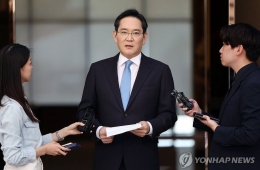
![[Image source=Yonhap News]](http://www.asiae.co.kr/news/img_view.htm?img=2020110910473190580_1604886451.jpg)
Schwarzman also expressed his intention to consider environmental issue responses and whether there is room to reduce carbon emissions by about 15% when investing in companies in the future. He explained that the recent COVID-19 pandemic is inseparable from environmental issues, and natural disasters such as wildfires and typhoons are continuing, making it an essential factor to consider in corporate investments. He said, "We will conduct pre-stress tests to evaluate companies' responses to climate change," and added, "Actually reducing hydrocarbon emissions also increases corporate profitability."
Furthermore, he predicted that vaccine approval would soon be granted in the U.S., stating, "By the end of 2021, most of the world's population will be able to receive COVID-19 vaccinations if they wish." Therefore, he expected the economy to enter a normalization phase from the end of next year. Blackstone's investment assets in Korea are about $17 billion. He evaluated, "There is much to learn from Korea's COVID-19 quarantine management," and said, "Korean assets are profitable."
Meanwhile, Ban Ki-moon, former UN Secretary-General, who participated in the event, gave a positive evaluation, saying that Biden's election is encouraging for solving climate change issues. He said, "Global problems can only be solved through global partnerships, and the U.S. cannot solve them alone," and expressed hope that "the U.S. will return to the Paris Climate Agreement negotiation table." He also commented positively on the Moon Jae-in administration's 2050 carbon neutrality strategy, stating, "Although Korea is a technological powerhouse ranked in the top 10 of the global economy, it has responded slowly to climate change."
The event was attended by Jeon Gwang-woo, chairman of the Institute for Global Economics; Francis Fukuyama, distinguished professor at Stanford University; Robert Zoellick, former U.S. Deputy Secretary of State and former World Bank president; Henry Fernandez, chairman of MSCI; Philip Hildebrand, BlackRock vice chairman and former Swiss National Bank president; and Tim Adams, president of the International Institute of Finance (IIF). Chairman Jeon Gwang-woo said, "The COVID-19 pandemic is the most destructive issue since the Great Depression," and added, "In this era of rapid deglobalization and digitalization, it is the most critical period for the post-COVID-19 economy."
Hot Picks Today
!["Heading for 2 Million Won": The Company the Securities Industry Says Not to Doubt [Weekend Money]](https://cwcontent.asiae.co.kr/asiaresize/93/2025050713592847164_1746593968.jpg) "Heading for 2 Million Won": The Company the Securities Industry Says Not to Doubt [Weekend Money]
"Heading for 2 Million Won": The Company the Securities Industry Says Not to Doubt [Weekend Money]
- "Do We Need to Panic Buy Again?" War Drives 30% Price Surge... Even the Bedroom Feels the Impact
- "Student ID Rentals Reach 500,000 Won... Black Market and Line-holding Services Surge"
- "Anyone Who Visited the Room Salon, Come Forward"… Gangnam Police Station Launches Full Staff Investigation After New Scandal
- Jay Y. Lee Bows His Head: "I Will Take All the Blame"... Apologizes for Samsung Labor-Management Conflict
© The Asia Business Daily(www.asiae.co.kr). All rights reserved.