Financial Services Commission Selects Active Administrative Excellence Cases Including COVID-19 Financial Regulation Flexibility

[Asia Economy Reporter Jo Gang-wook] The Financial Services Commission announced on the 26th that it selected the best cases of proactive administration for the third quarter of this year through a resolution at the 13th Proactive Administration Committee held on the 23rd.
As a result of the third quarter internal competition, a total of 10 cases were submitted through internal and external contests, focusing on economic revitalization and post-COVID-19 response tasks.
The Proactive Administration Committee considered public perception and the enthusiasm of the persons in charge, especially giving high scores to public recommendations and collaborative projects, selecting a total of three outstanding cases.
The Financial Services Commission announced three exemplary cases of proactive administration: ▲preemptive financial regulatory flexibility in response to COVID-19 ▲establishment of a financial market safety net through government-Bank of Korea-policy finance collaboration ▲exceptions to network separation in response to COVID-19 and the transition to a digital financial environment.
Looking at the main cases, there was a request to ease the soundness and liquidity regulations of the financial sector to actively supply funds to small business owners and SMEs affected by COVID-19. In response, the Financial Services Commission implemented comprehensive flexibility measures covering capital, liquidity, and business regulations across the entire financial sector, including banks, insurance, securities, and card companies, twice. In particular, to avoid missing the golden time for COVID-19 response, it actively responded by issuing the newly introduced 'preemptive legal interpretation and non-action opinion' for the first time. As a result, the burden of securing capital and liquidity in the financial sector was reduced, strengthening support capabilities such as expanding fund supply to companies. In fact, corporate loans in the banking sector increased by 81.3 trillion won in the first half of this year, which is 1.6 times the annual increase of 48.8 trillion won last year.
The government planned to introduce a 'Special Purpose Vehicle (SPV) for purchasing low-credit corporate bonds and commercial papers (CP)' to prevent liquidity crunch in the financial market caused by the spread of COVID-19. However, there were many contentious issues related to the SPV, such as the scale of the SPV, funding methods and interest rates, types of securities to be purchased, and default probability simulations for corporate bonds and CPs.
Accordingly, the Financial Services Commission, together with related agencies including the Ministry of Economy and Finance, the Bank of Korea, and the Korea Development Bank, actively communicated to derive reasonable alternatives. They devised a credit risk-sharing structure using a syndicated loan structure (senior-subordinated loans) and a plan involving fiscal authorities, the Bank of Korea, and the Korea Development Bank to support fallen angel companies that lost investment-grade ratings. As a result, since the establishment of the SPV, up to the 22nd, it has purchased a total of 1.7 trillion won in corporate bonds and CPs, including 1.3 trillion won in non-investment grade bonds, supporting the stabilization of the financial market.
Additionally, under the COVID-19 situation, network separation regulations made it difficult for domestic and foreign financial companies to utilize telecommuting. In response, to enable domestic and foreign financial companies to conduct smooth business continuity planning (BCP) without work interruptions, the Financial Services Commission proactively expanded exceptions to network separation for telecommuting and required the establishment of financial security measures.
Furthermore, the Commission actively identified regulatory sandboxes to review risk mitigation measures for network separation exceptions and alleviated burdens on electronic financial operators through proactive legal interpretations, thereby actively resolving difficulties in the field caused by the digital transformation of finance.
The Financial Services Commission plans to determine rankings for the outstanding cases selected in the third quarter competition along with those from the fourth quarter and hold an award ceremony for institution heads with exceptional incentives in December.
Hot Picks Today
 "Buy on Black Monday"... Japan's Nomura Forecasts 590,000 for Samsung, 4 Million for SK hynix
- "Plunged During the War, Now Surging Again"... The Real Reason Behind the 6% One-Day Silver Market Rally [Weekend Money]
- "We're Now Earning 10 Million Won a Month"... Semiconductor Boom Drives Performance Bonuses at Major Electronic Component Firms
- [PE Now] F&B Companies Making a Second Attempt at Sale: The Formula for a Successful Deal
- Experts Are Already Watching Closely..."Target Stock Price 970,000 Won" Now Only the Uptrend Remains [Weekend Money]
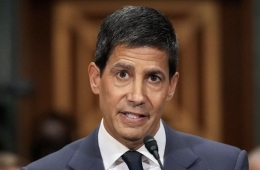
Son Byung-doo, Vice Chairman of the Financial Services Commission and Chairman of the Proactive Administration Committee, emphasized, "We will continuously discover and promote outstanding cases of proactive administration to firmly establish proactive administration within the organization," adding, "In the second half of the year, we will provide exceptional incentives to outstanding proactive public officials to favor employees who have worked hard on proactive administration."
© The Asia Business Daily(www.asiae.co.kr). All rights reserved.