[2020 National Audit] "Workplace Power Harassment Blind Spots in Government-Funded Research Institutes"
![[2020 National Audit] "Workplace Power Harassment Blind Spots in Government-Funded Research Institutes"](http://www.asiae.co.kr/news/img_view.htm?img=2020102011070153215_1603159621.jpg)
[Asia Economy Reporter Junho Hwang] A survey revealed that workplace harassment is widespread throughout the science and technology sector. One in ten employees experiences various forms of workplace harassment or sexual harassment daily, highlighting the need for measures to address this issue.
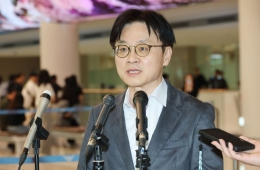
On the 20th, Jeong Pil-mo, a member of the National Assembly's Science, Technology, Information and Broadcasting Committee from the Democratic Party of Korea, pointed this out through the report on the "Survey on Awareness in the Science and Technology Sector for the Spread of a Culture of Mutual Respect" submitted by the National Research Council of Science & Technology.
According to the report, among the 697 participants in the survey, 126 (18.1%) responded that "power harassment is very severe." Adding those who answered "severe" (14.8%) or "frequently occurs" (23.2%), nearly half of the respondents are exposed to workplace harassment.
Regarding the frequency of power harassment, 38.9% of respondents said "internal power harassment occurs at least once a week." Those who answered "experience internal power harassment daily" accounted for 11.5%.
Among the respondents, 33.6% identified their superiors as perpetrators. 26.8% answered that the perpetrators were position holders, followed by project and task managers at 22.1%.
Among employees who experienced power harassment, 29.1% said it "very severely affects work efficiency," expressing a decline in work performance. Those who answered "severely affects" accounted for 47.9%, with severe or very severe responses making up 77%.
The survey categorized types of power harassment into four types: 'pursuit of organizational interests,' 'pursuit of personal interests,' 'disadvantageous treatment related to work,' and 'disadvantageous treatment related to personality.'
In the pursuit of organizational interests category, 36.1% of respondents said they "experienced unfair work orders," citing examples such as instructions outside their assigned duties and forced participation in company dinners.
In the pursuit of personal interests category, cases of shifting tasks such as papers were most prominent, with more than half of respondents (54.8%) reporting harm. 11.9% said they "experienced being asked to perform illegal tasks such as prepaying credit cards or covering dinner expenses."
In the disadvantageous treatment related to work category, the most common case was assigning tasks and then shifting responsibility. In the disadvantageous treatment related to personality category, informal speech, verbal abuse, and insults were most prominent.
Among those who experienced verbal abuse such as informal speech, examples included insults like "You're dead," and phrases such as "Do you have no thoughts?" or "Why do you live like that?" Sexual harassment remarks such as "Your skirt is too short" and "People outside see us as a couple" were also cited as examples.
Jeong Pil-mo said, "Even though the survey covered only a limited period of one year, it confirmed that power harassment is widespread throughout the science and technology sector," emphasizing, "Power harassment in the science and technology sector must be eradicated not only because it violates human rights and dignity but also because it actually lowers work efficiency."
Hot Picks Today
 No Bacteria Detected in Arisu After 24 Hours of Repeated Drinking from a Tumbler
- "We Can't Just Let Them Be Damaged Inside"... Samsung Electronics Removes 360,000 Wafers in Preparation for Strike
- "Up to 100 Trillion Won in Losses Feared, It's Not About Second Place but Catastrophe"... Industry Minister: 'Emergency Mediation Unavoidable If Samsung Strike Occurs'
- Wife in $6.7 Million Debt Took Out $3 Million in Husband's Life Insurance, Poisoned Him... US Court: "She Can Never Be Released"
- "He's Handsome, It's Such a Pity?"... Lawyer Responds to Bizarre 'Appearance Evaluation' of High School Girl Murder Suspect
He particularly pointed out, "Since power harassment is an abuse of authority and a personal deviant act, there are limits to institutional prevention, so strong punishment for power harassment acts is effective," and added, "It is necessary to conduct regular surveys to check improvement status."
![[2020 National Audit] "Workplace Power Harassment Blind Spots in Government-Funded Research Institutes"](http://www.asiae.co.kr/news/img_view.htm?img=2020102011070853217_1603159628.jpg)
© The Asia Business Daily(www.asiae.co.kr). All rights reserved.