'US State Department's First Mention of "Korea-US Alliance Dialogue" Agrees to Positive Consideration'
Official Response Four Days After Korea-US Deputy Foreign Ministers' Meeting
No Mention of 'Alliance Dialogue' in US Statement Immediately After Meeting... Controversy Over Korean Side's Previous Announcements
![[Image source=Yonhap News]](http://www.asiae.co.kr/news/img_view.htm?img=2020091507573780778_1600124256.jpg)
[Asia Economy Reporter Lim Cheol-young] The U.S. Department of State announced that it agreed to positively consider the establishment of a director-level working consultation body between South Korean and U.S. diplomatic authorities called the "Alliance Dialogue," which South Korea proposed four days after the South Korea-U.S. Deputy Foreign Ministers' meeting. There had been controversy over whether the establishment of the "Alliance Dialogue" was a mutually agreed intention between the two sides due to discrepancies between the South Korean Ministry of Foreign Affairs' announcement and the U.S. Department of State's statement immediately following the Deputy Foreign Ministers' meeting, but this official response is expected to settle the matter.
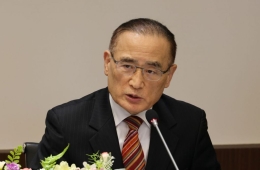
On the 14th (local time), a spokesperson for the U.S. Department of State responded to Yonhap News Agency's inquiry regarding the establishment of the "Alliance Dialogue" announced by South Korea after the South Korea-U.S. Deputy Foreign Ministers' meeting, stating, "Both sides agreed on the need to take measures to strengthen the South Korea-U.S. alliance." The spokesperson added, "Deputy Minister Choi Jong-geon proposed the Alliance Dialogue, and Deputy Secretary Stephen Biegun agreed to consider it positively." The two deputy ministers held their first face-to-face consultation since Deputy Minister Choi's appointment on the 10th (local time) in Washington, D.C., discussing a wide range of mutual interests including overall South Korea-U.S. relations, the Korean Peninsula issue, and regional situations.
This is the first time the U.S. Department of State has officially mentioned the "Alliance Dialogue" following the South Korea-U.S. Deputy Foreign Ministers' meeting. Previously, some argued that the U.S. Department of State had not agreed to the new consultation body, citing the absence of any mention of the "Alliance Dialogue" in the U.S. Department of State's announcement after the Deputy Ministers' meeting. In response, Deputy Minister Choi explained again to reporters on his return flight from the U.S. on the 12th that there was no disagreement with the U.S. regarding the establishment of the director-level consultation body between diplomatic authorities and that the first meeting was planned around October, but the controversy persisted.
The confusion grew due to significant differences in the announcements made by South Korea and the U.S. immediately after the Deputy Ministers' meeting. South Korea emphasized the "Alliance Dialogue" and the Korean Peninsula peace process, while the U.S. appeared to focus on the Special Measures Agreement (SMA) negotiations on defense cost-sharing and the Indo-Pacific strategy. On the 11th, the Ministry of Foreign Affairs stated that the two deputy ministers broadly discussed various mutual interests including overall South Korea-U.S. relations, the Korean Peninsula issue, and regional situations, and especially "agreed to establish the Alliance Dialogue, a director-level working consultation body between the two countries' diplomatic authorities, to regularly review and coordinate on various alliance issues."
On the other hand, the U.S. Department of State, while acknowledging Deputy Secretary Biegun's meeting with Deputy Minister Choi, mentioned cooperation on COVID-19 response, SMA, peace and stability on the Korean Peninsula, a free and open Indo-Pacific, and cooperation with Japan to enhance regional security. The U.S. Department of State stated, "The two deputy ministers discussed the SMA and reaffirmed the strength of the alliance," and "discussed ways to enhance the South Korea-U.S. alliance as a force for peace and prosperity in the Indo-Pacific going forward." However, the "Alliance Dialogue" emphasized by South Korea was not mentioned.
Although the controversy has been somewhat resolved with the U.S. Department of State's official mention of the "Alliance Dialogue," criticism that Deputy Minister Choi prematurely disclosed an underdeveloped consultation outcome is likely unavoidable. The Alliance Dialogue is expected to mainly address bilateral issues such as the currently stalled SMA negotiations and the return of U.S. military bases in South Korea, but coordination with the agenda handled by the South Korea-U.S. working group led by Deputy Secretary Biegun, who also serves as the Special Representative for Korean Peninsula Peace and Security Affairs, is necessary regarding Korean Peninsula issues. A diplomatic source explained, "The Alliance Dialogue had been under discussion even before Deputy Minister Choi's visit to the U.S.," adding, "The timing of the first meeting and the agenda are matters that need to be coordinated between the two countries."
Hot Picks Today
 "Now Our Salaries Are 10 Million Won a Month" Record High... Semiconductor Boom Drives Performance Bonuses at Major Electronic Component Firms
- Experts Already Watching Closely..."Target Price Set at 970,000 Won" Only Upward Momentum Remains [Weekend Money]
- "Heading for 2 Million Won": The Company the Securities Industry Says Not to Doubt [Weekend Money]
- Did Samsung and SK hynix Rise Too Much?... Foreign Assets Grow Despite Selling [Weekend Money]
- "Chanel Open Run? I Get a Free Pass"... The World of the Top 0.1% That Money Alone Can't Enter [Luxury World]
![[Image source=Yonhap News]](http://www.asiae.co.kr/news/img_view.htm?img=2020091004412072473_1599680480.jpg)
© The Asia Business Daily(www.asiae.co.kr). All rights reserved.