Stock Market Recovers from Shock of COVID-19 Resurgence in Just One Day
[Asia Economy Reporters Song Hwajeong and Gu Eunmo] The stock market, which was expected to enter a correction phase after a sharp plunge due to the resurgence of the novel coronavirus infection (COVID-19), rebounded in just one day. Experts predict that even if a correction occurs, it will be a short-term adjustment rather than a steep drop like in March.
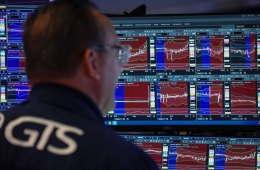
On the 19th, the KOSPI opened at 2370.87, up 0.96% (22.63 points) from the previous trading day. The KOSPI, which started the day with gains, rose more than 1% in the early session, recovering to the 2380 level. Afterwards, the gains slowed somewhat, recording 2362.18 at 10 a.m., up 0.59% (13.94 points) from the previous day. The KOSDAQ also showed an upward trend of over 1%. It opened at 810.86, up 1.33% (10.64 points) from the previous day, and although it rose more than 2% in the early session, the gains narrowed to 1.04% (8.36 points) at 10 a.m., closing at 808.58.
The previous day, the KOSPI fell 2.46%, marking the largest decline since June 15. The KOSDAQ dropped more than 4%, raising concerns about entering a correction phase, but it managed to rebound in just one day. The record-high U.S. stock market and the return of individual investors appear to have influenced the rebound.
Individual investors, who led the index decline by net selling over 500 billion KRW the previous day, turned to net buying within a day, driving the index recovery. As of 10 a.m., individual investors had net bought 116.7 billion KRW, while institutional and foreign investors net sold 82.3 billion KRW and 43.6 billion KRW, respectively.
In the KOSPI market, most of the top market capitalization stocks, including Samsung Electronics, showed an upward trend. In the KOSDAQ market, pharmaceutical and bio stocks, which performed well even during the previous day’s decline, continued their strength.
Although concerns increased due to fatigue from the recent surge combined with the COVID-19 resurgence, the market expects no sharp decline like in March due to a learning effect. Han Daehun, a researcher at SK Securities, said, "Concerns about the domestic resurgence of COVID-19 served as a pretext for a short-term correction in a market that had shown a short-term surge to record highs. Considering the learning effect from the first major outbreak in February-March and the over 50 trillion KRW in standby funds in the stock market, it is unreasonable to view this as a shift to a downtrend."
Depending on the intensity of the COVID-19 spread, there may be differences in the scale of the decline, but a sharp drop or prolonged correction is unlikely. An Soeun, a researcher at IBK Investment & Securities, said, "If the spread intensifies, the decline could widen, but considering the learning effect from the first outbreak’s rebound and liquidity effects, the possibility of a plunge at the level of the first outbreak is low. If the spread weakens, it is more likely to be a period of correction rather than further decline."
Hot Picks Today
!["Rather Than Endure a 1.5 Million KRW Stipend, I'd Rather Earn 500 Million in the U.S." Top Talent from SNU and KAIST Are Leaving [Scientists Are Disappearing] ①](https://cwcontent.asiae.co.kr/asiaresize/93/2026051414165763158_1778735817.jpg) "Rather Than Endure a 1.5 Million KRW Stipend, I'd Rather Earn 500 Million in the U.S." Top Talent from SNU and KAIST Are Leaving [Scientists Are Disappearing] ①
"Rather Than Endure a 1.5 Million KRW Stipend, I'd Rather Earn 500 Million in the U.S." Top Talent from SNU and KAIST Are Leaving [Scientists Are Disappearing] ①
- "I Hated Myself as Much as I Craved It"... Even a Mother's Tears and Brilliant Dreams Were Shattered [ChwiYakGukga] ⑦
- "Most Americans Didn't Want This"... Americans Lose 60 Trillion Won to Soaring Fuel Costs
- Mother of Three Gang-Raped on Bus in India... Outrage as Bus Driver Implicated
- "It's Only May, but Convenience Stores Know... Iced Americano at 24°C, Tube Ice Cream at 31°C: The Thermometer of the Summer Sales Boom"
Since the next one to two weeks are expected to be a critical period for the COVID-19 resurgence, there is an opinion that attention should be paid to growth stocks or untact (non-face-to-face) related stocks that performed well during the previous COVID-19 market phase. In the previous day’s market, stocks in domestic demand and cyclical sectors fell more sharply than the KOSPI, but BBIG (Bio, Battery, Internet, Game) stocks showed smaller declines. The researcher explained, "For the next one to two weeks, it is necessary to respond focusing on growth stocks related to untact while monitoring the situation, and when the situation calms down, it is worth paying attention to sectors that have been excessively sold off."
© The Asia Business Daily(www.asiae.co.kr). All rights reserved.