New National Police Agency Chief Expected to Be Appointed This Week... Task to Complete 'Police Reform'
Leading Major Police Reforms Including Investigation Authority Adjustment and Introduction of Autonomous Police... Heavy Responsibility
Bill to Elevate Commissioner of Police to 'Ministerial Level' Also Submitted to National Assembly

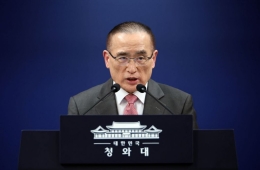
[Asia Economy Reporter Lee Gwan-ju] The next police chief, who will lead 140,000 police officers following Min Gap-ryong, is expected to be appointed as early as this week. The next Commissioner General of the National Police Agency will be entrusted with the important task of completing 'police reform,' including the adjustment of investigative authority between prosecutors and police and the introduction of the autonomous police system.
Currently, the leading candidates for the next police chief are Jang Ha-yeon, Deputy Commissioner General of the National Police Agency; Lee Yong-pyo, Commissioner of the Seoul Metropolitan Police Agency; and Kim Chang-ryong, Commissioner of the Busan Metropolitan Police Agency. All three have extensive experience in key departments within the police and have managed organizations as heads of regional police agencies responsible for public safety in their respective areas, so it is widely viewed inside and outside the police that any of them could be appointed without surprise.
The next police chief will be assigned the heavy responsibility of leading the 'great transformation' of the police, including the implementation of the expected amendment to the Criminal Procedure Act regarding investigative authority adjustment between prosecutors and police, anticipated in the second half of this year. With the adjustment, prosecutorial supervision of investigations will be abolished, and the police will have primary investigative authority and the power to conclude investigations. Although the police's investigative authority will increase, they must maintain fairness and neutrality while demonstrating swift and professional investigative capabilities. To achieve this, the next police chief must focus on strengthening the substance of police investigations.
Alongside the investigative authority adjustment, the introduction of the autonomous police system, which is being promoted to decentralize police power, is also a key task of police reform. The related bill (the full revision of the Police Act), which was automatically discarded due to the expiration of the 20th National Assembly's term, is expected to be reintroduced and discussed in the 21st National Assembly. Since there are many contentious issues such as ▲political neutrality ▲financial disparities among local governments ▲cooperation between national police and autonomous police, the next police chief's capabilities will also need to be demonstrated in resolving these challenges. Previously, Commissioner Min also stated at a press conference, "The police have taken certain measures regarding major reform tasks such as investigative authority reform, the autonomous police system, and intelligence police reform," but added, "It is regrettable that the legislative process has not been completed because institutionalization requires enactment by the National Assembly." This highlights that the 'institutionalization' of police reform is a responsibility the next police chief must undertake.
Meanwhile, attention is also drawn to a bill proposed at the National Assembly level to elevate the police chief position from vice-ministerial to ministerial level. On the 18th of this month, Jeong Cheong-rae, a member of the Democratic Party of Korea, introduced a partial amendment to the Police Act with this content as the lead sponsor. Jeong explained the purpose of the bill on his Facebook, saying, "There is a strong public voice that the police, as an external agency under the Ministry of the Interior and Safety, should not be swayed by administrative organizations, should mutually check and balance with the prosecution, independently perform their duties, and be held accountable for them." If the police chief is elevated to ministerial level in the 21st National Assembly, the next police chief could become the first minister-level police chief.
Hot Picks Today
 Even with High Oil Price Relief Payment, Additional 300,000 Won Per Person to Be Provided... Applications Open from the 18th in This Region
- "Invested 95% in Hynix and Reached 10 Billion Won"... Japanese Investor's Proof Post Goes Viral
- "Why Is the Korean Stock Market Surging?"... Even Italy Is Astonished by the KOSPI Rally
- "You Don't Need to Go to the Gym": The Best Exercises for Lowering Hypertension
- "That Thing Wakes Up Every Night" ... Suspicious Object Covers Rural Village
Meanwhile, Commissioner Min's term ends on the 23rd of next month. The next police chief is expected to be appointed alongside the Commissioner of the National Tax Service as early as this week. However, due to variables such as the appointment of the Minister of Unification and the situation in the National Assembly, it is also anticipated that more time will be required before the actual appointment, National Assembly confirmation hearings, and formal appointment.
© The Asia Business Daily(www.asiae.co.kr). All rights reserved.