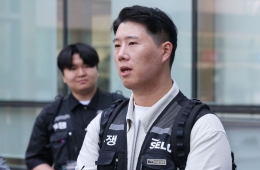
Jongno-gu, Safety Inspection of Underground-Connected Complex Buildings
District to conduct 'Disaster Response Status Inspection' and 'Special Inspection on Infectious Disease Response' until June 26... Targeting 14 underground-connected complex buildings including Jongno Tower, Gran Seoul Tower, Gwanghwamun D Tower

[Asia Economy Reporter Jongil Park] Jongno-gu (District Mayor Kim Young-jong) will conduct a 'Disaster Response Status Inspection' and a 'Special Inspection on Infectious Disease Response Status' targeting large-scale underground-connected complex buildings until June 26.
Underground-connected complex buildings refer to buildings with 11 or more floors or those accommodating more than 5,000 people daily, including cultural facilities, retail facilities, office facilities, transportation facilities, and lodging facilities connected to underground stations or underground shopping streets.
In Jongno-gu, although there are no supertall buildings with 50 or more floors or heights exceeding 200 meters, there are a total of 14 underground-connected complex buildings such as Jongno Tower, Gran Seoul Tower, Gwanghwamun D Tower, and SC First Bank Building.
For this inspection, the district formed an inspection team composed of responsible public officials who will visit the 14 underground-connected complex buildings in the area to check the implementation status of ▲establishment of disaster prevention and damage mitigation plans ▲establishment of education and training plans for disasters and terrorism ▲prohibition of concurrent positions as general disaster managers and completion of mandatory education ▲installation and operation of comprehensive disaster control rooms and safe evacuation zones ▲formation of initial response teams and operation of disaster response support systems.
Along with the disaster response status inspection, due to the prolonged COVID-19 pandemic, a 'Special Inspection on Infectious Disease Response Status' will be conducted simultaneously to prevent the spread within the region, including ▲establishment of COVID-19 related response plans ▲environmental hygiene management and other infection prevention measures ▲management of facility entry for employees, users, and visitors.
The inspection also carefully checks whether fever monitoring is conducted and whether a separate isolation area is prepared for suspected patients to wait, striving to prevent COVID-19.
Depending on the inspection results, minor violations without legal issues will be corrected through recommendations and on-site guidance, while legal violations will be subject to administrative actions such as fines.
Hot Picks Today
!["Heading for 2 Million Won": The Company the Securities Industry Says Not to Doubt [Weekend Money]](https://cwcontent.asiae.co.kr/asiaresize/93/2025050713592847164_1746593968.jpg) "Heading for 2 Million Won": The Company the Securities Industry Says Not to Doubt [Weekend Money]
"Heading for 2 Million Won": The Company the Securities Industry Says Not to Doubt [Weekend Money]
- Jay Y. Lee Bows His Head: "I Will Face the Harsh Storm"...Apologizes for Samsung Labor-Management Conflict
- 200 Billion Won in Additional Loans Amid Ongoing Trial for 180 Billion Won Illegal Lending? Saemaeul Geumgo Reported to Police
- "Anyone Who Visited the Room Salon, Come Forward"… Gangnam Police Station Launches Full Staff Investigation After New Scandal
- "Stop Tying Others' Hands"... China Criticizes U.S. Containment Policy
District Mayor Kim Young-jong stated, “Focusing on citizen safety and health, we are conducting safety management status inspections and special COVID-19 response inspections targeting underground-connected complex buildings with high foot traffic. We will do our best to systematically respond to various disaster situations and infectious disease outbreaks that can occur anytime and anywhere to minimize damage,” adding, “We will create a community where everyone can live with peace of mind.”
© The Asia Business Daily(www.asiae.co.kr). All rights reserved.