[Asia Exclusive] "We Will Eradicate Hiring Corruption in Public Institutions... Comprehensive Inspections Every Year"
Top Priority for the Next National Assembly: Conflict of Interest Prevention Act
Judged to Have Sufficient Public Consensus on the Bill
Increase in Reports Thanks to the Whistleblower Protection Act
National Corruption Perceptions Index Reaches Historic High at 39th
Rising Six Ranks Annually... Aiming for Top 20 Globally by 2022
Need to Enhance Enforcement and Normative Power Rather Than Just Detecting Solicitation
Absolutely No Tolerance for Unfair Privileges and Abuse of Power
Without Transparency, Survival Is Impossible
Companies Also Expect Awareness Expansion and Soundness Improvement

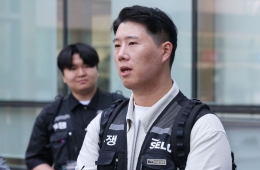
Park Eun-jung, Chairperson of the Anti-Corruption and Civil Rights Commission, is being interviewed by Asia Economy on the 24th. Photo by Moon Ho-nam munonam@
View original image[Dialogue = Asia Economy Kang Hee-jong, Head of Economic Department; Summary = Reporter Moon Chae-seok] "When the 21st National Assembly convenes, the Conflict of Interest Prevention Act must be enacted as soon as possible above all else."
On the 24th, Park Eun-jung, Chairperson of the Anti-Corruption and Civil Rights Commission (ACRC), stated in an interview with Asia Economy that the 'Conflict of Interest Prevention Act for Public Officials,' which strictly limits family hiring and private contracts by high-ranking public officials, will be promptly enacted. This expresses the determination to eradicate corrupt self-interest pursuits by public officials. She emphasized, "We will conduct annual comprehensive inspections until recruitment corruption in public institutions is completely eradicated."
She also identified the increase in public interest reports thanks to the Whistleblower Protection Act as a significant change. Since CEOs of companies are included among the institutions subject to whistleblower protection, she expects private sector corruption to naturally decrease. With South Korea’s Corruption Perceptions Index (CPI) ranking 39th globally last year?the highest ever?she confidently assessed the anti-corruption reform achievements during the three years of the Moon Jae-in administration, saying, "I dare say they deserve a score of over 80 points."
◆ 'Conflict of Interest Prevention'?The Final Puzzle to Eradicate Improper Solicitation = "As a legal scholar, I believe that rather than merely detecting solicitation under the Improper Solicitation and Graft Act, the way to enhance enforcement and normative power is ultimately to enact the Conflict of Interest Prevention Act. It is most important to establish a system that can preemptively block situations where a public official’s private interests conflict with public interests during the execution of their duties."
When the Improper Solicitation and Graft Act was created, the conflict of interest prevention section was omitted among the three categories of solicitation prohibition, bribery, and conflict of interest prevention, and it has not been supplemented even after more than three years. The ACRC revealed on the 18th that from the act’s enforcement in September 2016 through December last year, 65.6% (5,863 cases) of the total 8,938 reported violations in public institutions were related to improper solicitation, and bribery accounted for 31.4% (2,805 cases). This means most cases involved improper solicitation and bribery. The current act can regulate illegal acts already committed, such as improper solicitation and bribery, but cannot preemptively prevent public officials from intervening in matters where they or their family or acquaintances have vested interests, due to the absence of relevant provisions. Consequently, the fundamental blocking of solicitation from related parties has not been achieved, and the pattern of detecting improper solicitation only after it occurs has repeated.
The government’s 'Conflict of Interest Prevention Act for Public Officials' submitted to the National Assembly in January last year includes eight specific behavioral standards that public officials must follow in conflict of interest situations, such as: public officials must report to the head of their institution and avoid duties if they recognize that a related party has a private interest; they must report to the institution head if engaging in private transactions involving money or real estate with related parties; and high-ranking officials must submit records of their private sector work activities for the three years prior to appointment.
Chairperson Park said, "Given that conflict of interest issues among high-ranking public officials have recently become a social issue, I believe sufficient public consensus on the need for the Conflict of Interest Prevention Act has been formed. Preventing conflicts of interest is the foremost task to secure trust in the public service, so once the new National Assembly convenes, we will proceed with enacting this law as quickly as possible." She added, "The current Improper Solicitation and Graft Act prohibits improper solicitation only by public officials performing their duties but does not regulate improper solicitation by public officials toward the private sector. Regulations must be established to sanction public officials who solicit personnel or sponsorship favors from the private sector." The related bill was introduced by Min Byung-doo of the Democratic Party on January 30 last year and has been pending in the National Assembly for one year and two months. She also mentioned plans to reduce legal blind spots by including cases such as correctional work in prisons, internship and career solicitations, and degree acquisition, which are unfair acts but not covered by the 14 types of improper solicitation under the current act, thus lacking sufficient sanctions.
◆ Annual Comprehensive Inspection of Recruitment Corruption in Public Institutions = Chairperson Park raised her voice, saying, "Under the Moon Jae-in administration, we will continue annual comprehensive inspections until recruitment corruption in public institutions is completely eradicated." She emphasized that the practice of introducing jobs among acquaintances is no longer acceptable to the public. The ACRC conducts annual joint comprehensive inspections of recruitment corruption in public institutions with the Ministry of Economy and Finance and the Ministry of the Interior and Safety. In 2018, 1,190 public institutions were investigated, and last year, 1,205 institutions were surveyed for recruitment corruption in the previous year. Among these, 118 cases with high suspicion of improper solicitation or bribery were referred for investigation, and 401 cases involving serious errors or negligence in recruitment processes led to disciplinary demands. As a result, 269 of the 3,294 victims of recruitment corruption were hired or are scheduled to be hired. Thanks to these efforts, the number of investigation referrals and disciplinary demands has decreased?from 82 to 36 and from 255 to 146, respectively, between 2018 and last year. Chairperson Park noted, "The public perception has clearly shifted from the old notion that 'one might occasionally make a recruitment solicitation to an acquaintance' to recognizing recruitment solicitation as a clear corruption and social crime. The social consensus on applying a zero-tolerance principle to recruitment corruption is a significant achievement."
Although the COVID-19 pandemic has slowed progress, the ACRC is conducting the third regular comprehensive inspection of recruitment corruption in public institutions, which was initiated last year. The investigation deadline has been extended from next month to within the first half of this year. This third inspection will include: in-depth review of suspicious cases identified in the first investigation by examining institutional documents; focused assessment of whether recommended institutional improvements from the past two comprehensive inspections have been implemented; thorough investigation of the status of relatives in public institutions; and verification of whether personnel guidelines and institutional improvements have been enacted.
Chairperson Park emphasized, "We are conducting this year's recruitment status survey reflecting issues pointed out by the Board of Audit and Inspection and the implementation status of institutional improvements made by the institutions after two comprehensive inspections. We will thoroughly investigate the implementation of personnel guidelines and institutional improvements related to new hires and regularization, any corruption in the initial hiring process of dispatched and outsourced workers, and the status of relatives (spouses and relatives within the fourth degree of kinship or affinity)."
◆ "Companies Cannot Survive Long Without Transparency" = The ACRC contributed to South Korea’s CPI rising to a historic high of 39th last year, climbing six ranks annually since 2017. The goal is to enter the top 20 globally by 2022. Chairperson Park attributed the rise in CPI to amendments to the Whistleblower Protection Act. In October 2018, the ACRC revised the law to allow anonymous proxy reporting through lawyers. With anonymity guaranteed, the burden of reporting decreased, leading to an increase in public interest reports. This enabled cases such as the 'Victory KakaoTalk' and 'B.I drug case' to be reported to the ACRC last year. According to the ACRC, 27 anonymous proxy reports were received from October 18, 2018, to the 17th of last month. Public interest reports related to health and safety, environment, consumer interests, and fair competition are expected to occur more frequently in the private sector than internal corruption reports. The number of public interest reports steadily increased from 2,521 in 2017 to 3,923 in 2018 and 5,164 last year. Internal public interest reports also rose from 153 in 2017 to 347 in 2018 and 408 last year.
Chairperson Park explained, "The increase in public interest reports indicates that the concept of corruption and wrongdoing has broadened. The public now views not only corrupt acts such as receiving money in exchange for favors but also public officials failing to perform their duties properly as corruption. Within the public service, lower-ranking officials are no longer tolerating certain concessions they previously made to improve relations with superiors." She added, "The government has emphasized anti-corruption and integrity as the foundation of all policies. In this atmosphere, the spread of intolerance toward unfair privileges, special treatment, and abuse of power has led to a more rational society and increased opportunities to confirm trust among social members."
Hot Picks Today
!["Heading for 2 Million Won": The Company the Securities Industry Says Not to Doubt [Weekend Money]](https://cwcontent.asiae.co.kr/asiaresize/93/2025061015355092669_1749537351.jpg) "Heading for 2 Million Won": The Company the Securities Industry Says Not to Doubt [Weekend Money]
"Heading for 2 Million Won": The Company the Securities Industry Says Not to Doubt [Weekend Money]
- "Anyone Who Visited the Room Salon, Come Forward"… Gangnam Police Station Launches Full Staff Investigation After New Scandal
- "Feeling Hurt by Close Friend Who Sent Gift Money Minus Meal Cost"... What Are People Saying Online?
- "Drink Three Cups of Coffee and Stay Up All Night Before the Test"... Manual of Insurance Planner Who Collected 1 Billion Won in Payouts
- Did Samsung and SK hynix Rise Too Much?... Foreign Assets Grow Despite Selling [Weekend Money]
As public awareness of the public interest has risen, will corporate corruption naturally decrease? Chairperson Park did not definitively confirm an increase in corporate whistleblowers (deep throats) but believes that it will influence management’s value judgments and gradually increase corporate transparency. Since the introduction of the Whistleblower Protection Act, public interest reporting has become freer, and companies, as major reporting targets, cannot ignore this. Because the law designates company CEOs as whistleblower protection institutions, companies are provided opportunities to voluntarily correct problems, preventing potential costs arising from public interest violations. Chairperson Park stated, "Companies must actively recognize, correct, and prevent public interest violations within their organizations to expect sustainable development. Among companies, the recognition that 'clean business is profitable business' is now established." She added, "I believe global companies increasingly realize that 'without transparency, survival is impossible.' Above all, it is important for CEOs to regard whistleblowing not as betrayal or challenge to the company but as an early warning of risks and to establish a system that thoroughly protects whistleblowers, thereby enhancing corporate soundness."
© The Asia Business Daily(www.asiae.co.kr). All rights reserved.