'US Zero Interest Rate + Global Money Printing'... Korea Likely to Join Soon (Comprehensive)
"Current Economic Situation Serious" Global Central Banks Reach Consensus
Major 6 Countries' Central Banks Implement Dollar Swap Rate Cuts
Japan Advances Monetary Policy Meeting
Bank of Korea May Lower Base Rate as Early as Today
Possibility of Korea-US Currency Swap Increases
"If Signed, Concerns Over Foreign Exchange Crisis and Capital Outflow Significantly Reduced"

![[Image source=Yonhap News]](http://www.asiae.co.kr/news/img_view.htm?img=2020022713425083020_1582778569.jpg)
[Asia Economy Reporters Eunbyeol Kim and Hyunjin Jung] Major central banks around the world are battling the novel coronavirus disease (COVID-19). As COVID-19 spread to the U.S. and Europe, causing significant turmoil in financial markets due to fear, central banks decided to lower dollar swap rates to supply global dollar liquidity. It is also anticipated that countries including South Korea, China, and Japan may hasten additional monetary easing measures.
According to the Bank of Korea (BOK) and the bond market on the 16th, the BOK is expected to hold an emergency Monetary Policy Committee (MPC) meeting soon to cut interest rates. The rate cut is likely to be around 0.5 percentage points. If a 0.5 percentage point cut is implemented, the benchmark interest rate will fall from 1.25% per annum to 0.75% per annum, marking the first time the base rate enters the 0% range in history. On the morning of the same day, BOK Governor Lee Ju-yeol held a meeting with executive officials to discuss responses to the U.S.'s emergency rate cut. It is reported that they exchanged broad opinions on the timing of the emergency MPC, the appropriate rate cut size, and market conditions.
Initially, the BOK was expected to hold an emergency MPC around the 17th or 18th to lower rates in response to the economic shock caused by COVID-19. Since the supplementary budget bill (추경) was expected to pass in the National Assembly on the 17th, it was necessary to show coordinated action between fiscal and monetary authorities by implementing a rate cut alongside the budget approval. However, with the Fed making another 'big cut' two days ahead of the scheduled regular Federal Open Market Committee (FOMC) meeting on the 17th-18th (local time), the BOK's justification for delaying the rate cut further weakened.
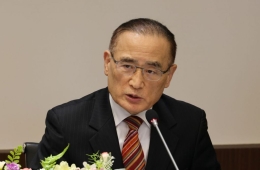
Similar to the 2008 financial crisis, attention is also focused on whether the South Korean government will enter into a Korea-U.S. currency swap agreement and join the global central banks' coordinated efforts. Professor So-young Kim of Seoul National University's Department of Economics said, "(If the Korea-U.S. currency swap) can be done, it will have a very positive effect," adding, "If the Korea-U.S. currency swap is implemented, we will have less concern about foreign exchange crises or capital outflows."

◆ Six Central Banks Lower Dollar Swap Rates... Easing Measures by South Korea, China, and Japan Also in Focus = Following the U.S., central banks worldwide are showing signs of additional rate cuts to calm financial market volatility caused by the spread of COVID-19. The Bank of Japan (BOJ) held its monetary policy meeting earlier than scheduled, starting at noon on the 18th-19th. The meeting duration was shortened from two days to one. The BOJ explained that the schedule was moved up to "review necessary financial adjustments considering recent financial and economic developments." Japanese Prime Minister Shinzo Abe stated, "We will take bold and unprecedented measures in close cooperation with the BOJ to ease conditions." The BOJ's decision to advance its monetary policy meeting is the first time in nine years since the Great East Japan Earthquake in March 2011. The market expects the BOJ to decide on additional monetary easing during this meeting. The People's Bank of China (PBOC) implemented a selective reserve requirement ratio cut on the same day, injecting an additional 550 billion yuan (approximately 95 trillion won) in liquidity.
Coordination among central banks to supply dollar liquidity also took place. On the morning of the same day (Korean time), following the U.S. Federal Reserve's (Fed) surprise 1 percentage point rate cut, six central banks?including the European Central Bank (ECB), BOJ, Bank of Canada (BOC), Bank of England (BOE), and Swiss National Bank (SNB)?agreed to improve global dollar liquidity through existing dollar swap agreements. They lowered swap rates by 0.25 percentage points and added 84-day maturity operations in addition to the existing weekly swap operations.
![Christine Lagarde, President of the European Central Bank (ECB), and Jerome Powell, Chair of the U.S. Federal Reserve (Fed) <br>[Photo by Reuters Yonhap News]](http://www.asiae.co.kr/news/img_view.htm?img=2020031611390923585_1584326349.jpg)
Christine Lagarde, President of the European Central Bank (ECB), and Jerome Powell, Chair of the U.S. Federal Reserve (Fed)
[Photo by Reuters Yonhap News]
This measure aims to secure liquidity in the key currency, the U.S. dollar, by extending dollar loan terms and facilitating dollar lending. Recently, the dollar's value surged sharply as liquidity in the market decreased. A shortage of dollar liquidity could exacerbate turmoil in global financial markets. The ECB stated in a release, "We will maintain appropriate pricing and maturity benefits for a suitable period to ensure the smooth functioning of the dollar funding market." Mark Carney, Governor of the BOE, and Andrew Bailey, the incoming Governor, said, "This coordination will complement the measures taken by the BOE last week and other central banks and governments, helping to prevent disruptions caused by economic shocks."
The six central banks have jointly responded by expanding dollar supply during major financial market shocks in December 2007, October 2008, and November 2011. In 2008, five countries excluding Japan simultaneously lowered their benchmark interest rates.
◆ Similar to 2008... Growing Possibility of Korea-U.S. Currency Swap = As central banks worldwide coordinate, expectations for a Korea-U.S. currency swap agreement are increasing. As of the end of February this year, South Korea's foreign exchange reserves stood at $409.2 billion, ranking ninth globally, indicating sound external stability. However, a currency swap is a risk-free choice to secure a safety net in preparation for emergencies. The government's COVID-19 contingency plan reportedly includes a Korea-U.S. currency swap agreement.
The decision rests with the U.S. The Fed signed currency swap agreements with 14 countries, including South Korea, during the 2008 global financial crisis, most of which ended in 2010. At that time, the ECB and central banks of Canada, the U.K., Japan, and Australia first increased swap limits, and emerging countries including South Korea signed additional currency swap agreements in October 2008. However, since the U.S. does not sign one-on-one currency swap agreements with South Korea, but rather bundles multiple countries together as before, it is analyzed that it will take time to finalize the agreement.
![[Image source=Reuters Yonhap News]](http://www.asiae.co.kr/news/img_view.htm?img=2020031614274023913_1584336461.jpg)
If South Korea signs a currency swap agreement with the U.S., it will be significant in securing a dollar liquidity safety net. It also symbolizes increased credibility in international financial markets. In 2008, the $30 billion Korea-U.S. currency swap agreement, signed just before South Korea's foreign exchange reserves fell below $200 billion, played a decisive role as a bulwark against the financial crisis's impact.
Hot Picks Today
 "Now Our Salaries Are 10 Million Won a Month" Record High... Semiconductor Boom Drives Performance Bonuses at Major Electronic Component Firms
- Experts Already Watching Closely..."Target Price Set at 970,000 Won" Only Upward Momentum Remains [Weekend Money]
- "Heading for 2 Million Won": The Company the Securities Industry Says Not to Doubt [Weekend Money]
- Did Samsung and SK hynix Rise Too Much?... Foreign Assets Grow Despite Selling [Weekend Money]
- "Chanel Open Run? I Get a Free Pass"... The World of the Top 0.1% That Money Alone Can't Enter [Luxury World]
Earlier, The Wall Street Journal (WSJ) argued that international cooperation, including currency swaps with major countries such as South Korea, is necessary to stabilize international financial markets shocked by COVID-19. Professor So-young Kim said, "At that time, our government persuaded the U.S. with the logic that if emerging markets including South Korea deteriorate, the U.S. dollar market could also be shaken," adding, "Since there is precedent, it might be easier this time than before."
© The Asia Business Daily(www.asiae.co.kr). All rights reserved.