Ruling Party Leaders Who Keep the Economy Chief on a Rollercoaster
Lee Hae-chan's 'Dismissal Remarks' Met with Lee In-young's "Trust in Economic Commander" as Party-Government Conflict Resolution Begins
![[Image source=Yonhap News]](http://www.asiae.co.kr/news/img_view.htm?img=2020031310571320189_1584064632.jpg)
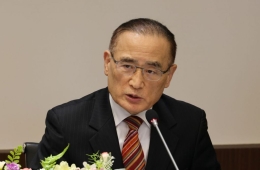
[Asia Economy reporters Kwangho Lee and Sehee Jang] Amid the economic shock caused by the spread of the novel coronavirus infection (COVID-19), controversy is intensifying over Lee Hae-chan, leader of the Democratic Party of Korea, making a 'recommendation for dismissal' remark regarding Hong Nam-ki, Deputy Prime Minister and Minister of Economy and Finance. At a time when support should be given to the head of the economy to focus on responding to the economic crisis, there are criticisms that attacking the Deputy Prime Minister of Economy and Finance is inappropriate. In response, the ruling party belatedly urged to prepare an 'economic war room' centered on Deputy Prime Minister Hong.
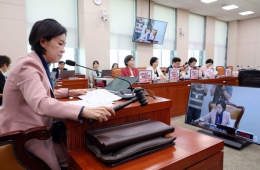
On the 13th, Lee In-young, floor leader of the Democratic Party of Korea, said at the COVID-19 National Crisis Overcoming Meeting held at the National Assembly, "I hope that all economic measures for extraordinary response in this emergency situation will be prepared in the economic war room centered on Deputy Prime Minister Hong." Lee added, "At the early stage of the COVID-19 outbreak, a 'war room' centered on the Korea Centers for Disease Control and Prevention was activated at the forefront of quarantine to protect the lives of the people. Now, we must trust the economic command post and fully activate the economic front war room."
Lee In-young's remarks are interpreted as an attempt to resolve the exposed conflict between the ruling party and the government after it became known that Lee Hae-chan mentioned the dismissal of Deputy Prime Minister Hong amid discussions on expanding the supplementary budget and fiscal spending.
Deputy Prime Minister Hong posted on his Facebook around 10:14 p.m. the previous day, stating, "This is a time when both a passionate heart and a cool head are needed," expressing his conviction. Hong said, "So far, we have been doing our utmost to control COVID-19, alleviate difficulties in people's livelihoods, and strengthen our economic momentum and power. We are fighting to endure this crisis and stand up again, but suddenly there is controversy over my position... I worry that I might be seen as someone clinging to my post."
This statement is seen as a response to Lee Hae-chan's criticism during a closed supreme council meeting, where he said, "If (Deputy Prime Minister Hong) takes such a passive stance, I might even tell him to step down," referring to the Ministry of Economy and Finance's reluctance to increase the supplementary budget size. The tone of Hong's post was stronger than expected, and although those around him tried to dissuade him, he went ahead and posted it. As the conflict between the ruling party and the government over the supplementary budget increase surfaced, difficulties are expected in the future passage of the supplementary budget in the National Assembly.
Deputy Prime Minister Hong explained, "The supplementary budget size was decided and submitted to the National Assembly after comprehensively considering this year's approved budget, which increased by 9.1%, the 2 trillion won earmarked reserve fund (3.4 trillion won including the general reserve fund), the 20 trillion won scale of previously announced measures by the government, public institutions, and financial institutions, the review results of supplementary budget target projects, and the fiscal capacity." He emphasized, "The Ministry of Economy and Finance will carefully examine support for vulnerable groups, economic revitalization, rationality and fairness of fiscal support, fiscal soundness, and capacity, and proceed at a manageable level." This is interpreted as an indirect expression of opposition to increasing the supplementary budget through deficit bond issuance, which could make national fiscal management difficult due to massive debt.
Hot Picks Today
 "Now Our Salaries Are 10 Million Won a Month" Record High... Semiconductor Boom Drives Performance Bonuses at Major Electronic Component Firms
- Experts Already Watching Closely..."Target Price Set at 970,000 Won" Only Upward Momentum Remains [Weekend Money]
- "Heading for 2 Million Won": The Company the Securities Industry Says Not to Doubt [Weekend Money]
- Did Samsung and SK hynix Rise Too Much?... Foreign Assets Grow Despite Selling [Weekend Money]
- "Chanel Open Run? I Get a Free Pass"... The World of the Top 0.1% That Money Alone Can't Enter [Luxury World]
The Democratic Party is pressuring to process a supplementary budget bill in the 180 trillion won range by increasing the government's submitted 11.7 trillion won by 6.3 to 6.7 trillion won. They are also demanding additional tax reductions. According to the Ministry of Economy and Finance, the supplementary budget total has increased only four times so far: in 1998 (from 6 trillion to 6.7 trillion won), 1999 (from 1.3 trillion to 2.7 trillion won), 2001 (from 1.6 trillion to 1.9 trillion won), and 2003 (from 4.2 trillion to 4.5 trillion won), mostly small amounts.
© The Asia Business Daily(www.asiae.co.kr). All rights reserved.