Bank of Korea Prepares Funding Supply Measures for Businesses Affected by COVID-19
14th 'Macroeconomic Financial Meeting'
Lee Ju-yeol and Hong Nam-ki Meet After 6 Months
Discussing COVID-19 Economic Impact and Response Measures

[Asia Economy Reporter Kim Eun-byeol] The Bank of Korea is considering a plan to supply low-interest funds to companies affected by the novel coronavirus disease (COVID-19). This plan involves utilizing the Financial Intermediation Support Loan (FISL), which falls under the Bank of Korea's credit policy within its monetary and credit policy framework. Unlike broad interest rate cuts that supply funds widely to the market, this approach has the advantage of targeting and supporting specific companies that have been impacted. The FISL is a system where the Bank of Korea lends funds to commercial banks at an interest rate of 0.5?0.75% to promote loans to small and medium-sized enterprises (SMEs). By lowering the banks' funding costs, the Bank supports the flow of funds to SMEs with weaker credit ratings or financing capabilities.
According to Bank of Korea officials on the 14th, the Monetary Policy Department is planning to use the FISL to support companies affected by COVID-19. Currently, the FISL consists of programs such as trade finance, new growth job support, SME loan stabilization, and regional SME programs. It is highly likely that a portion of the already allocated limits will be separately set aside to support companies hit by COVID-19. The specific scale and duration of support will be finalized and approved through the Monetary Policy Committee meetings. The Bank of Korea also allocated 650 billion won in 2015 to support companies affected by the Middle East Respiratory Syndrome (MERS) outbreak.
A Bank of Korea official explained, "Monetary policies like interest rate cuts have broad effects and the opinions of Monetary Policy Committee members vary, making it difficult to guarantee outcomes. In contrast, there is relatively little disagreement among committee members regarding the FISL, and it is meaningful in that it can reliably support affected companies." This means funds can be directed to sectors severely impacted by COVID-19, such as movie theaters, tourism, and retail industries.
Hot Picks Today
 "Now Our Salaries Are 10 Million Won a Month" Record High... Semiconductor Boom Drives Performance Bonuses at Major Electronic Component Firms
- Experts Already Watching Closely..."Target Price Set at 970,000 Won" Only Upward Momentum Remains [Weekend Money]
- Seoul Apartment Sales, Jeonse, and Rents in 'Triple Bull Run'... Worst Supply Shortage in 5 Years
- Did Samsung and SK hynix Rise Too Much?... Foreign Assets Grow Despite Selling [Weekend Money]
- Is It Really Like an Illness? "I Can't Wait to Go Again"—Over 1 Million Visited in Q1, Now 'Busanbyeong' Takes Hold [K-Holic]
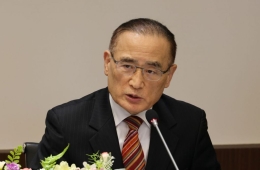
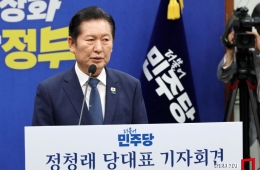
Meanwhile, on the same day, Bank of Korea Governor Lee Ju-yeol held a 'Macroeconomic and Financial Meeting' at the Bankers' Hall in Jung-gu, Seoul, together with Deputy Prime Minister and Minister of Economy and Finance Hong Nam-ki, Financial Services Commission Chairman Eun Sung-soo, and Financial Supervisory Service Governor Yoon Seok-heon. This meeting between Deputy Prime Minister Hong and Governor Lee was the first in six months since their last meeting in August of last year, which was held to respond to Japan's export restrictions and the U.S. designation of China as a currency manipulator. Some view this meeting as government pressure on the Bank of Korea to cut interest rates, but the government explained that the meeting was held to discuss the real economy impact of COVID-19. Although the intensity has somewhat subsided, market expectations for a Bank of Korea interest rate cut remain strong. JP Morgan and Morgan Stanley have forecasted that the Monetary Policy Committee will further lower the base rate by 0.25 percentage points from the current 1.25% this month.
© The Asia Business Daily(www.asiae.co.kr). All rights reserved.