Samsung vs Huawei, Weighing the Pros and Cons of MWC Cancellation
![On the 12th (local time), on-site staff are collecting the 'Mobile World Congress (MWC) 2020' banner with a welcome message in front of the Fira Barcelona Montju?c exhibition center located in Barcelona, Spain. <br>[Image source=EPA Yonhap News]](http://www.asiae.co.kr/news/img_view.htm?img=2020021308434555940_1581551025.jpg)
On the 12th (local time), on-site staff are collecting the 'Mobile World Congress (MWC) 2020' banner with a welcome message in front of the Fira Barcelona Montju?c exhibition center located in Barcelona, Spain.
[Image source=EPA Yonhap News]
[Asia Economy Reporter Seulgina Cho] With just two weeks left before the opening of the 33-year-old Mobile World Congress (MWC), the event was abruptly canceled due to the impact of COVID-19, leading to widespread analysis that Chinese ICT companies such as Huawei have suffered the greatest blow. Mid-sized smartphone manufacturers and ICT companies, unlike Apple and Samsung Electronics, which have the capacity to hold their own unpacking events, are also said to have lost the industry's largest business platform.
The Global System for Mobile Communications Association (GSMA), which organizes MWC, officially announced on the 12th (local time) that MWC2020, scheduled to be held from the 24th to 27th in Barcelona, Spain, has been canceled.
As MWC was canceled for the first time in its 33-year history, the company most frequently cited as the biggest victim is Huawei. As a leading Chinese ICT company targeted by the US-led trade war, Huawei has been focusing on the European market. At the CES IT and electronics exhibition held earlier in the US, instead of setting up a booth with existing products, Huawei had prepared a large-scale booth for this MWC, reflecting this strategy.
This year, Huawei, the largest sponsor of MWC known as a 'Gold Sponsor,' had prepared a large-scale booth at the main venue, Fira Gran Via, and was ready to unveil its second foldable phone, the Mate Xs, but all these plans ended up being wasted. It is reported that Huawei occupied major spots within the exhibition hall and invested hundreds of billions of won in exhibition costs alone.
Not only Huawei but other Chinese companies such as Xiaomi, OPPO, and Vivo are also expected to suffer significant damage. Despite major companies from various countries, including LG Electronics, Intel, Amazon, Facebook, Sony, and Nokia, announcing their withdrawal one after another, these companies had intended to use MWC as a platform to unveil and promote key new products.
Major foreign media reported that among the approximately 2,400 companies scheduled to attend this year's MWC, the proportion of Chinese companies was in double digits. The unprecedented cancellation of MWC due to the China-originated COVID-19 will inevitably become a stigma attached to the image of Chinese companies in the future.
Xiaomi, OPPO, and Vivo were reportedly preparing to unveil new products at this MWC. However, with the event itself canceled, they now have no choice but to prepare their own announcement events like Samsung Electronics' unpacking. The bigger problem is that considering these companies' global recognition and infrastructure, it is difficult to expect greater success than announcing at MWC.
This issue is not limited to Chinese companies alone. An industry insider said, "Small and medium manufacturers who have maximized their marketing strategies through MWC have lost a major promotional platform," adding, "They have missed business opportunities not only with consumers but also with industry insiders." The IT specialist magazine CNET also noted, "Small and medium Android companies will be hit hard," citing HMD, which leads with the Nokia brand, as a representative example.
Saskia Sagan, a mobile analyst at PCMag.com, expressed regret, saying, "MWC shows where the entire industry is heading and allows industry insiders to meet Ericsson, Intel, Nokia, and Qualcomm in one day to plan their business," adding, "The true function of MWC is that it is a marketplace where small companies can meet all telecom operators and infrastructure providers worldwide."
Considering that major business meetings from CEOs to working-level staff are held and various contracts are signed during the event, the overall damage to the industry due to the cancellation of MWC is expected to be even greater. Ben Wood, research director at CCS Insight, stated in a press release immediately after GSMA's cancellation announcement, "The impact on companies that have invested budget and time should not be underestimated," pointing out that the status of MWC itself could change in the future.
Among domestic companies, the telecommunications industry, including SK Telecom, expressed regret. Despite concerns over COVID-19 causing major companies to give up attendance and reduce booth sizes, SK Telecom CEO Park Jung-ho, KT CEO Koo Hyun-mo, and LG Uplus Vice Chairman Ha Hyun-hoe actively pushed for the trip to Barcelona. In particular, Park, who was expected to make his international debut at MWC ahead of his CEO inauguration next month, also saw this plan fall through. Park, who is also a GSMA board member, reportedly expressed regret several times as news of companies and media personnel withdrawing due to COVID-19 continued.
Hot Picks Today
 Cerebras Soars 70% on IPO Debut: Is Nvidia's Reign Ending as a New AI Semiconductor Power Emerges?
- [Breaking] Samsung Electronics Executives: "We Will Participate Unconditionally... We Urge the Union to Join the Talks"
- "Gave in to the Momentary Temptation": Japanese Police Official Dismissed After Stealing 100 Million Won Next to Body
- "Mom, Isn't It Comfortable Living With Me?"... 'Unexpected Result' Shows Increased Drinking Out of Frustration
- "After Vowing to Become No. 1 Globally, Sudden Policy Brake Puts Companies’ Massive Investments at Risk"
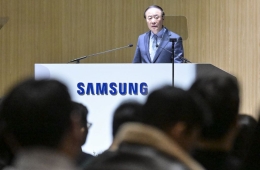
On the other hand, Samsung Electronics, which successfully held its unpacking event just before the MWC cancellation, is said to have gained a secondary benefit. Since it had minimized its MWC booth operation from the start, attention was more focused on the new products unveiled at the unpacking event the day before. LG Electronics, which was among the first major companies to decide not to participate, also minimized the scale of damage by making an early decision. It also gained an image as a company that made a wise decision considering the health of its employees.
© The Asia Business Daily(www.asiae.co.kr). All rights reserved.