Democratic Party, Is It Possible to Nominate 30% Female Candidates?
[Asia Economy Reporter Jeon Jinyoung] 'The party has a rule to nominate 30% female lawmakers. Do you think this goal is achievable?'
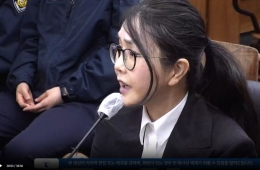
Nam Insoon, a Supreme Council member of the Democratic Party of Korea, said on the 12th after the interview with the nomination committee that she was asked this question during the interview. The Democratic Party's party constitution stipulates that "in the recommendation of candidates for constituency elections (excluding recommendations for local government heads), women must be included at 30% or more."
Concerns have been raised that it will be difficult for the Democratic Party to achieve the 30% target for nominating female members of the National Assembly. At the Supreme Council meeting on the 12th, Nam said, "The Moon Jae-in administration also appointed 30% women to the cabinet, so our ruling party must also implement the goal of 30% female nominations." President Moon pledged during his candidacy to appoint 30% female ministers and achieved this by appointing Minister of Justice Choo Mi-ae in January.
The '30% female nomination rule' was created to expand women's political participation. At the meeting, Nam explained the purpose, saying, "There is a critical mass theory that at least 30% of the total members must be present for a minority to bring about change in the group. A certain number of women must be secured within the group to have a proper voice."
![[Image source=Yonhap News]](http://www.asiae.co.kr/news/img_view.htm?img=2020021312001856848_1581562818.jpg)
In June 2019, the Democratic Party held the 'Women’s Party Declaration Ceremony for Victory in the 2020 General Election' and promised to implement this. On that day, Party Leader Lee Hae-chan said, "Seeing this, it would be a big problem if the '30% rule' is not followed," and added, "We will do our best to ensure that the 30% female rule stipulated in the party constitution is realized."
However, according to the current status of Democratic Party candidate applications, the proportion of female candidates is 62 out of 475, or 13.1%. In terms of constituencies, excluding 15 strategic nomination areas out of 238, there are 57 constituencies with female candidates. Although there may be changes through recruiting female talents or placement in strategic areas, even if all registered candidates are nominated, achieving 30% is difficult.
Professor Lee Jae-mook of the Department of Political Science and Diplomacy at Hankuk University of Foreign Studies said, "The qualifications of female lawmakers are by no means inferior to those of men. It is not a matter of ability but that the door for women to enter the National Assembly is narrow," emphasizing, "The proportion of women entering Korean politics is ridiculously low compared to other advanced countries. With 17% female lawmakers, can they represent the female population, which accounts for about half of the population? We must ensure that women do not become a minority."
Hot Picks Today
 There Is a Distinct Age When Physical Abilities Decline Rapidly... From What Age Do Strength and Endurance Drop?
- Japanese Teacher Dismissed for Obscene Acts Involving Third-Grade Girl's Water Bottle
- Cerebras Soars 70% on IPO Debut: Is Nvidia's Reign Ending as a New AI Semiconductor Power Emerges?
- "After Vowing to Become No. 1 Globally, Sudden Policy Brake Puts Companies’ Massive Investments at Risk"
- "Is It Possible to Look That Happy at Work? Of Course They're Smiling" SK hynix Employees' Expressions Go Viral
Currently, the proportion of female lawmakers in the 20th National Assembly is about 17%, which is lower than the global average of 24.5% according to the Inter-Parliamentary Union. South Korea ranks 124th out of 189 countries.
© The Asia Business Daily(www.asiae.co.kr). All rights reserved.