One Month Since Prime Minister Jeong's Inauguration... Strengthening Position as a 'Responsible Prime Minister'
COVID-19 Occurs Just 6 Days After Work Start... Self-Proclaimed Control Tower Faces Harsh Test

[Asia Economy Reporter Kwangho Lee] Prime Minister Chung Sye-kyun marks one month since his inauguration on the 14th. Just six days after starting his duties, on the 20th of last month, South Korea confirmed its first domestic COVID-19 case, putting him through a harsh test. Prime Minister Chung has taken it upon himself to be the 'control tower,' chairing the Central Disaster and Safety Countermeasure Headquarters meetings three times a week, striving to demonstrate his role as the 'responsible prime minister' at the forefront of the COVID-19 response. However, there have been criticisms that the measures and responses during the crisis management process were not smooth. There were internal government discrepancies and conflicts between the government and local governments. Moving forward, the challenge will be how successfully to conclude the COVID-19 crisis and stabilize the economy, which has faced unexpected setbacks.
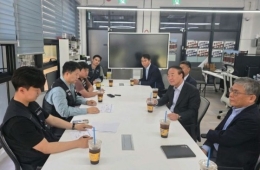
Prime Minister Chung became the 46th prime minister and the second under the Moon Jae-in administration, succeeding former Prime Minister Lee Nak-yeon on the 14th of last month. His inaugural statement was, "I will create a business-friendly environment to boost economic vitality." However, the past month has been a battle against infectious disease rather than the economy. He visited various sites such as the Korea Centers for Disease Control and Prevention 1399 call center, COVID-19 diagnostic reagent manufacturers, the Gyeonggi Disaster and Safety Countermeasure Headquarters situation room, the screening clinic at Gyeonggi Medical Center Suwon Hospital, and automobile parts companies to listen to difficulties and communicate. He also convened meetings with relevant ministers to coordinate differing opinions among departments and meticulously oversee the government's announced measures. On the 13th, he planned to visit the field again to conduct inspections and offer encouragement.
When recently asked by reporters if he seemed to have a heavy workload, Prime Minister Chung replied, "I have always been someone with a heavy workload," adding, "Once difficult problems are solved, easier ones may be a piece of cake, so I will do my best to solve difficult problems without complaint." A ruling party official evaluated, "Prime Minister Chung is a seasoned leader with extensive experience, having served six terms as a member of the National Assembly, party leader, Minister of Trade, Industry and Energy, and Speaker of the National Assembly. He is a virtuous general (德將). He will devote all efforts to successfully concluding the COVID-19 quarantine and revitalizing the economy by visiting the livelihood and economic sites that have been depressed."
However, immature responses were exposed when the Ministry of Health and Welfare and the Ministry of Foreign Affairs voiced differing opinions regarding the boarding of symptomatic evacuees and transportation methods during the evacuation of Wuhan residents. Conflicts also arose between the government and the relevant local governments over the designation of quarantine facilities for evacuees, raising concerns about Prime Minister Chung’s leadership overseeing the cabinet. Comparisons have been drawn to former Prime Minister Ko Gun’s successful disaster response through the SARS comprehensive situation room during the 2003 Severe Acute Respiratory Syndrome (SARS) crisis and former Prime Minister Lee’s stable leadership during the African Swine Fever (ASF) outbreak.
Hot Picks Today
 Cerebras Soars 70% on IPO Debut: Is Nvidia's Reign Ending as a New AI Semiconductor Power Emerges?
- [Breaking] Debris from Namuho Spacecraft Arrives in Korea... "Detailed Analysis Planned"
- "Multi-Million Won Bonuses, Life Is Sweet"—Even Employee Reactions... SK hynix Overtakes Samsung to Claim No. 1 Spot
- "It Costs 100,000 Won for Two Hours"...No Place for Kids to Play if Parents Can't Afford It
- Japanese Teacher Dismissed for Obscene Acts Involving Third-Grade Girl's Water Bottle
In this context, Prime Minister Chung held a press conference titled 'Power Institution Reform Plan,' announcing the establishment of a high-ranking public officials crime investigation office under the prime minister and a follow-up task force for adjusting investigative authority between the prosecution and police, which has sparked much debate. Although the replacement of the chief secretary and the political, civil affairs, and public relations secretaries at the vice-ministerial level was expected with the prime minister’s change, voices have emerged criticizing the prime minister’s office for declining operational capability amid the COVID-19 crisis. There is also speculation that appointing former Democratic Party proportional representative Kim Sung-soo as chief secretary, former People’s Party publicity chairman Jung Ki-nam as political secretary, and former Democratic Party policy committee vice-chairman Kwon Oh-joong as civil affairs secretary is a move to position himself as a presidential contender. Prime Minister Chung, however, drew a clear line during his confirmation hearing when asked about a presidential bid, stating, "I have no such intention at all. I plan to focus all efforts on economic revitalization and integration."
© The Asia Business Daily(www.asiae.co.kr). All rights reserved.