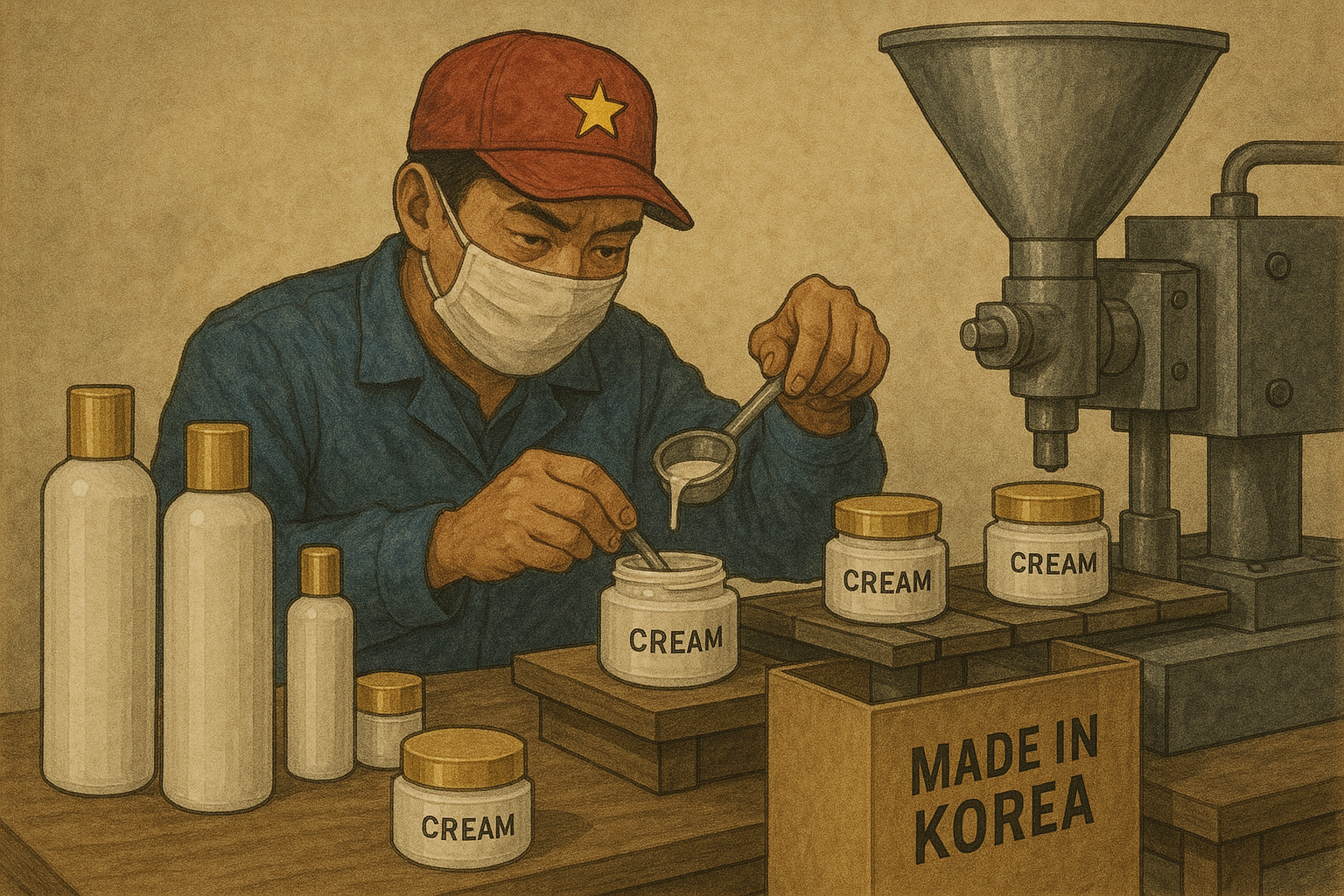
#On the evening of the 28th of last month at 7 p.m., in front of a warehouse on the outskirts of Foshan City, Guangdong Province, China, under the cover of darkness. Four Chinese public security officers and two employees from the intellectual property (IP) enforcement agency "IP SPACE" turned off their vehicle engines and observed the situation inside. Once the signal to enter was given, the warehouse door opened, and about ten workers, who had gathered in small groups, abruptly stopped what they were doing in surprise. When the public security presented a warrant and announced, "We are conducting a criminal crackdown related to the manufacturing of counterfeit goods," the atmosphere instantly became tense. An employee who had been filling containers with white cream from a large tub halted their work.
Hundreds of boxes labeled in Chinese were stacked on one side of the factory. The agency staff quickly opened the boxes to compare them with genuine products and verify if they were counterfeit, while the public security officers demanded documentation to prove the authenticity of the products. A man, believed to be the head of the workshop, remained silent for a moment before admitting in resignation that he had counterfeited five Korean cosmetic brands.
The counterfeit cosmetics confirmed on-site that day amounted to 56,000 items, with an estimated value of about 1 billion won. All of the counterfeit goods were confiscated by public security. Due to the sheer volume, it took a full two days to empty the warehouse.
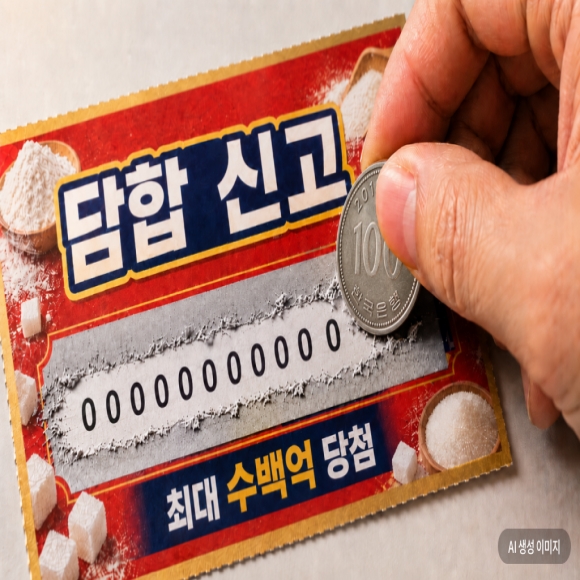
Surge in counterfeit cosmetics amid K-Beauty popularity QR codes for authentic product verification also duplicated Boldly sold on Southeast Asian e-commerce channels
Warehouses with counterfeit goods worth tens of billions repeatedly uncovered China imposes light penalties on cosmetics and clothing counterfeiting
Korea Intellectual Property Office 'IP dispute support' Limited budget restricts support to about 80 cases annually
Even without doing business in China Customs and trademark registration are essential Must protect IP independently
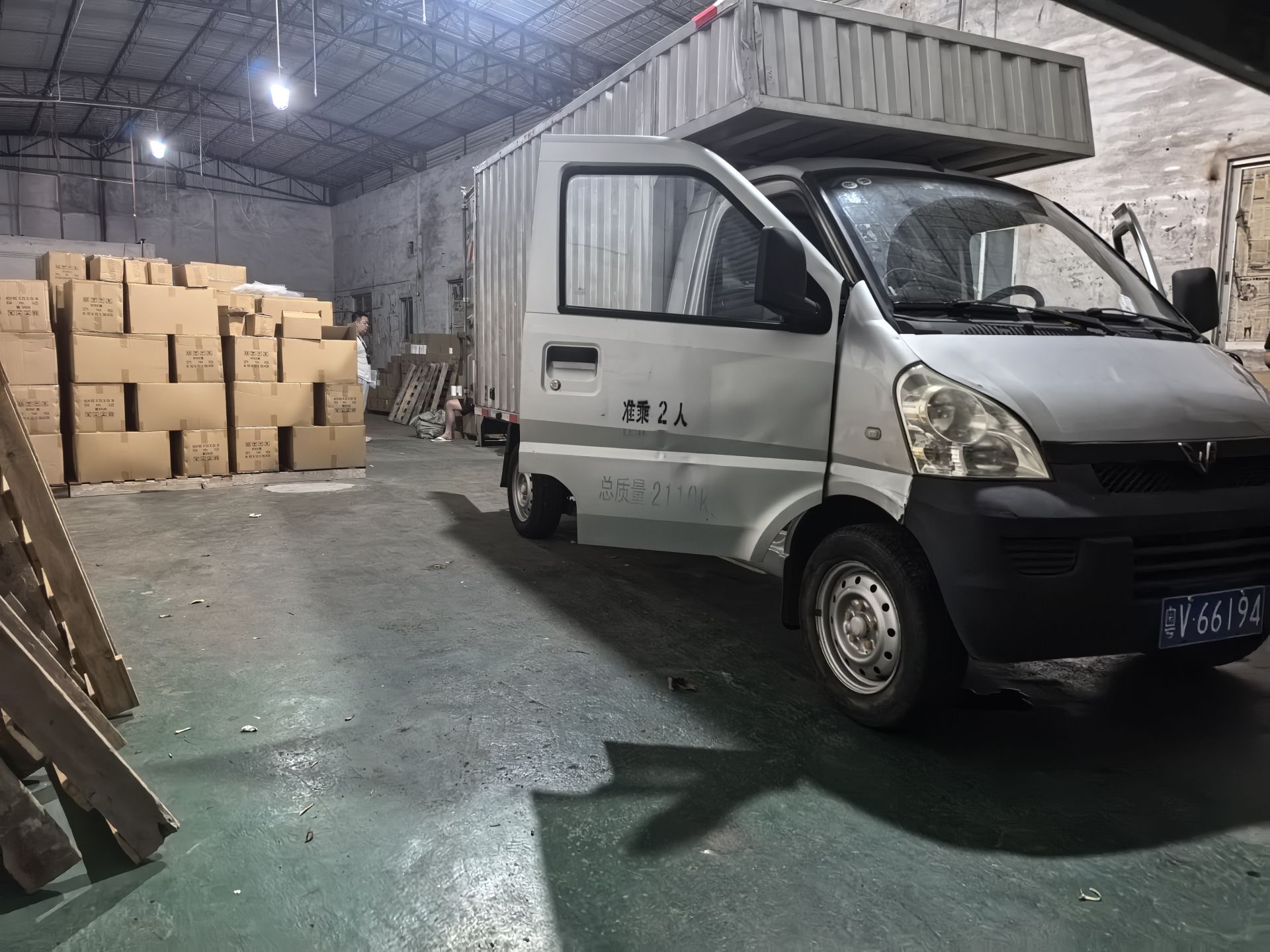
Boxes of counterfeit goods seized at a warehouse on the outskirts of Foshan City, Guangdong Province, China, at 7 p.m. on the 28th of last month. The counterfeit items are confiscated on-site by public security and destroyed internally. However, the disposal process is not disclosed externally for security reasons. It cannot be confirmed whether the items were actually destroyed. Provided by IP SPACE
Chinese Public Security Only Take Action When Everything Is Prepared
According to industry sources on the 31st, the most frequently seized counterfeits in China-a major global producer of fake goods-are currently K-Beauty products. Before and after the COVID-19 pandemic, the detection of K-Beauty counterfeits in China was rare due to anti-Korean sentiment, but recently, warehouses containing counterfeit goods worth billions of won have been discovered frequently. The surge in counterfeit production is a result of K-Beauty's growing popularity in the global market.
These counterfeits, produced in China, are made to look identical to genuine products and are shipped to major K-Beauty export destinations such as Southeast Asia, the United States, and the Middle East. This is why K-Beauty products are openly sold on Southeast Asian e-commerce platforms like Lazada and Shopee, even when domestic brands do not officially export there. Counterfeit goods are also distributed at low prices on major U.S. platforms such as Amazon and eBay. A representative from a leading cosmetics company said, "Even if we insert QR codes to distinguish genuine products, they are immediately duplicated, making it difficult to find any flaws," and added, "We are aware that counterfeits are being sold in key markets and are therefore strengthening local enforcement in China."
On the evening of the 28th last month at 7 PM, counterfeit product boxes were secured at a warehouse on the outskirts of Fusang City, Guangdong Province, China. Workers accompanied by public security officials are opening each box to count the number of counterfeit items. The entire process, from comparing with genuine products to confirming the scale of counterfeit goods, is done manually. Provided by IP SPACE.
The main issue lies with local enforcement in China. K-Beauty counterfeit producers operate in small workshops of about 66 to 99 square meters, manufacturing products in a cottage-industry style. Even large-scale manufacturing facilities only carry out relatively simple processes, such as filling containers with product in a warehouse, making it time-consuming to pinpoint the locations of these counterfeit operations.
Cooperation from Chinese public security is also lukewarm. For smaller crimes, administrative enforcement is conducted with local officials, but as the value of counterfeit goods has increased, criminal enforcement now requires approval and participation from public security. Rather than conducting investigations based on intelligence or reports, public security mainly acts on information provided by brand owners to apprehend the offenders.
As a result, Korean brands must directly oversee the entire process from investigation to arrest. They must inform public security of the production of counterfeits, as well as the time and place of raids. An industry insider said, "Although things have improved compared to the past, Chinese public security will not take action without concrete evidence and location information. When we go to the scene, we often find counterfeits of brands other than our own, but in China, only the reported counterfeits are confiscated and prosecuted."
The penalties are also lenient. While China imposes heavy sentences for counterfeiting food and pharmaceuticals, which directly affect human health, counterfeiting cosmetics and clothing is met with only light punishment. Most of those caught by Chinese public security recently are first-time offenders, and it is common for them to receive only fines even when caught on-site. This means they can resume producing counterfeits after being released. The maximum sentence for producing counterfeit goods is seven years.
The situation is similar in other countries where counterfeits are widely distributed. India and Southeast Asian countriesdo not have sophisticated customs systems to detect counterfeit goods. Kim Kideok, CEO of IP SPACE, said, "Except for Thailand, enforcement systems are even weaker than in China, so ultimately, the source-China-must be addressed. Even if it's like a game of whack-a-mole, we need to instill the perception that producing counterfeits of a brand is risky."
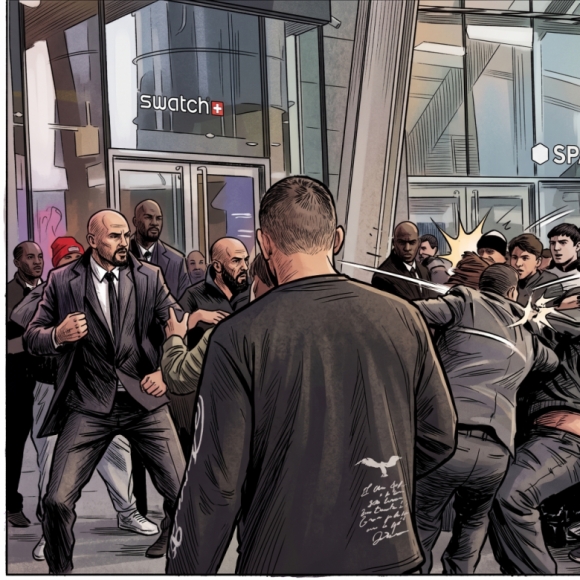
On the 28th of last month at 7 p.m., a raid took place at a counterfeit goods workshop in a warehouse on the outskirts of Foshan City, Guangdong Province, China. The larger the scale of counterfeit goods, the more police officers?usually four to five?accompany the operation, while smaller cases involve only one or two officers. Most suspects are economic offenders and do not resist strongly, but some incidents involve sudden situations such as suspects wielding knives or fleeing. Provided by IP SPACE.
Intellectual Property Office Supports 80 Lawsuits a Year... "Limited Support Scale"
The Korea Intellectual Property Protection Agency is running the "K-Brand Dispute Response Strategy Support Project" to help K-brands respond to IP disputes overseas. The agency provides services such as administrative enforcement or litigation strategies against those who manufacture and distribute counterfeit goods, as well as countermeasures against trademark squatters.
However, only about 80 companies receive support through this program each year, as support is selectively provided due to budget constraints. The government's annual support for responding to trademark squatting is about 40 million won. An official from the Intellectual Property Protection Agency explained, "Since the budget is fixed, it is difficult to support all companies. The scale of the dispute response strategy support project is gradually increasing each year and is being expanded step by step."
Industry experts unanimously agree that the best defense is for K-Beauty brands to take an active interest in protecting their own IP. They advise that customs registration and trademark registration are essential. By submitting a trademark certificate to customs, brands can be notified when suspicious products are detected, giving them a chance to verify whether they are counterfeit and to block local distribution.
In particular, they emphasize that in China, trademarks should be registered in advance even if the company does not plan to enter the market directly. If a Chinese party preemptively registers the trademark, it can take at least one year to reclaim it through litigation in China. If the Chinese company appeals the first trial outcome, the litigation period can extend to three to five years.
Kim added, "K-brands are currently focusing their investments on growth, so IP protection tends to be neglected. Since counterfeits produced in China do not enter China or Korea, delaying IP protection simply because you do not plan to do business in China is not advisable."