#KT&G encountered an unexpected obstacle earlier this year while establishing a local subsidiary to enter the Indian market. There was already a company called "KT&G India" in the country. This entity was impersonating KT&G and distributing counterfeit cigarettes locally. KT&G conducted raids in places like Delhi, where signs of counterfeit cigarettes had been detected, and discovered 20,000 packs of fake cigarettes at the scene.

India is the third-largest cigarette-consuming country in the world. The total demand for regular cigarettes in India is about 130 billion sticks, with illegal and counterfeit cigarettes estimated to account for about 25-30% (32.5 billion to 39 billion sticks). This is equivalent to about 70% of Korea's total demand for regular cigarettes. High taxes and weak enforcement have fueled the counterfeit cigarette market.
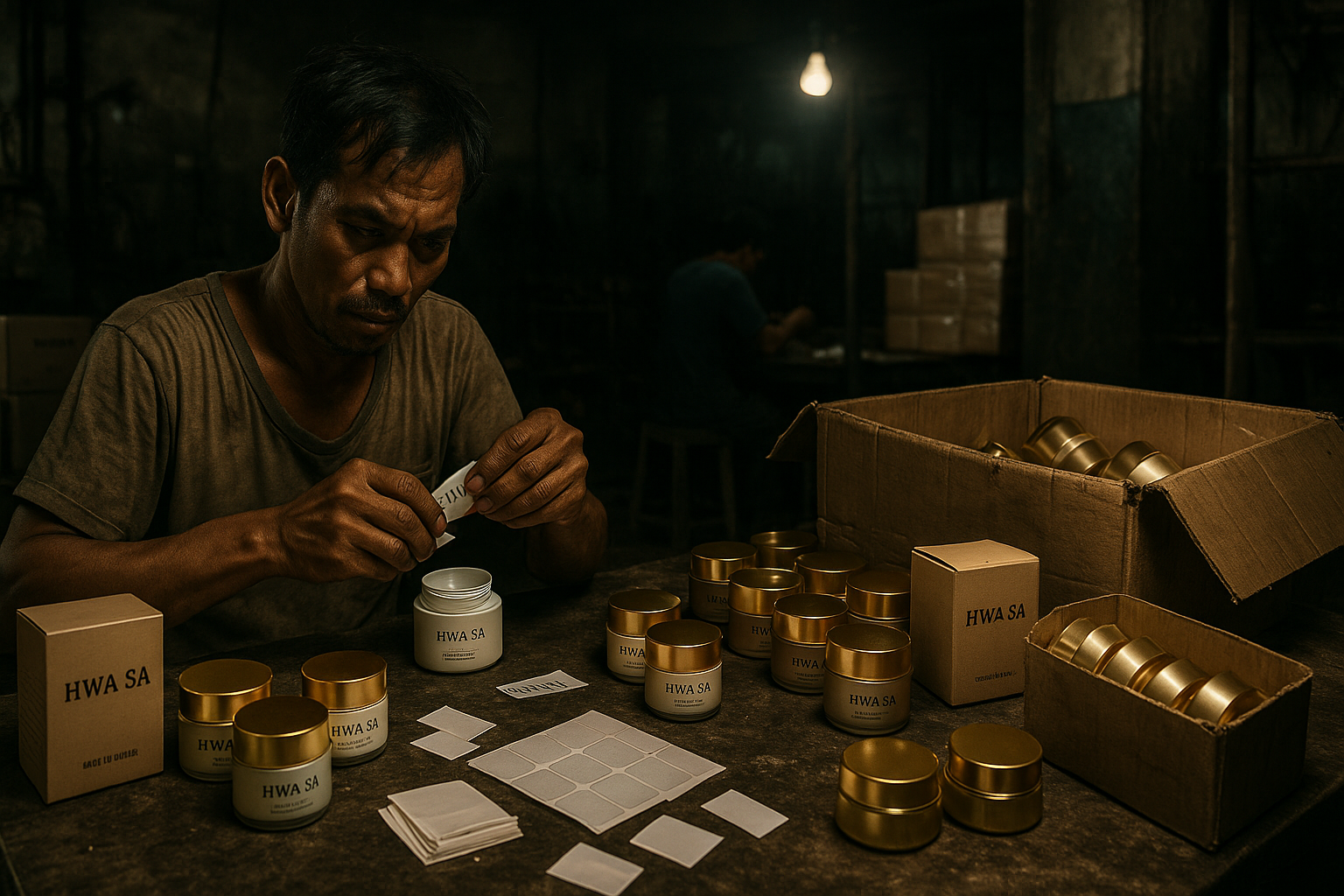
As the global counterfeit market expands, K-brands have become targets. While counterfeits previously focused on imitating high-end luxury goods, the worldwide spread of "K-culture" has led to a surge in counterfeit products imitating domestic brands.
Samsung Electronics Counterfeits Frequently Seized at Hong Kong and U.S. Customs

According to data released last year by the Organisation for Economic Co-operation and Development (OECD), as of 2021, the value of counterfeit goods infringing on Korean companies' intellectual property (IP) rights reached 11.1 trillion won (9.7 billion dollars, based on the exchange rate at the time). This accounted for 1.5% of the total export value of genuine Korean brand products.
The most frequently seized counterfeit products (based on customs seizure cases) infringing on domestic companies' IP were electrical, electronic, and telecommunications equipment (51%), with a transaction value approaching 6.978 trillion won (6.1 billion dollars). Many counterfeit products imitating Samsung Electronics and LG Electronics-such as earphones, chargers, cables, batteries, mobile phones, and accessories-are being distributed.
In fact, Hong Kong and U.S. customs authorities frequently seize counterfeit Samsung Electronics products. In 2023, the Philadelphia Customs and Border Protection seized 648 Samsung Electronics touchpads.
Other categories affected by IP infringement include clothing (20%), perfumes and cosmetics (15%), miscellaneous goods (6%), and toys (5%). In the case of cosmetics and fashion brands, the scale of counterfeits is rapidly increasing amid the global "K-beauty craze."
13,800 Jobs Lost... Equivalent to the Entire Workforce of Kookmin Bank

Counterfeit goods are inflicting serious damage on domestic companies. The loss in domestic and overseas sales for Korean companies reached 7 trillion won (6.1 billion dollars), equivalent to 0.6% of the total manufacturing sector's sales. This is comparable to the annual sales of Kakao, a platform company ranked 16th in market capitalization in Korea, whose annual revenue is 7.9 trillion won-essentially wiped out by counterfeiting.
The estimated number of jobs lost is about 13,800, meaning around 1% (0.7%) of manufacturing wage workers (as of 2021) suffered losses due to counterfeiting. This is equivalent to the entire workforce of Kookmin Bank (13,800 employees) disappearing. The national loss is also significant. The OECD estimates tax revenue losses at nearly 1.715 trillion won.
Consumer harm from purchasing counterfeit goods is also evident. Since counterfeit products are made with low-cost materials to maximize profit margins, there is a high chance they contain harmful substances. The U.S. Food and Drug Administration (FDA) has warned that counterfeit cosmetics have been found to contain mercury. In Korea, tests on counterfeit products have detected lead and cadmium levels at least twice, and up to 930 times, above safety standards. The European Union's Safety Gate has also pointed out that many counterfeit metal accessories distributed contain 80-90% cadmium, which is hazardous to human health.
Unauthorized Preemptive Registration of Domestic Brand Trademarks... 9,520 Cases Last Year and Increasing Annually

An even bigger problem is that counterfeit manufacturers are preemptively and illegally registering the trademarks of domestic brands. According to the Korean Intellectual Property Office, the number of trademarks suspected of being preemptively and illegally registered (as monitored) increased from 4,654 cases in 2022 to 5,015 in 2023, and reached 9,520 last year.
The number of affected companies is also rising. According to the Korea Intellectual Property Protection Agency, the number of companies suspected of suffering from unauthorized trademark preemption in key countries (including China, Vietnam, Thailand, and four others) grew from 1,001 in 2019 to 6,100 last year-a sixfold increase over five years.
In particular, Chinese trademark brokers create counterfeit brands domestically, register the trademarks first, and then demand high settlement fees or royalties from Korean companies trying to enter the market.
According to the Korea Intellectual Property Protection Agency, Chinese brokers preemptively registered 2,358 trademarks between 2019 and 2023. Internationally, trademark protection is determined by the laws of each country, and most countries adopt a "first-to-file" system, which gives priority to whoever registers the trademark first. This means domestic brands have difficulty asserting priority over their trademarks.
Even "Sulbing" Was Taken... "Sulbing Yuanso" in China Copied the Trademark, Menu, and Interior

Sulbing trademark in Korea (left) and Sulbing trademark illegally preempted in China. Provided by the Korean Intellectual Property Office
원본보기 아이콘The main victims are in sectors leading the K-culture wave, such as cosmetics, food, and apparel. From 2014 to last year, the cumulative number of Korean trademarks suspected of being preemptively and illegally registered was highest in cosmetics (4,985 cases), followed by franchises (4,761), apparel (4,471), electronics and electrical (4,706), and food (2,671).
The most well-known case is the domestic franchise shaved ice brand "Sulbing." In 2015, as Sulbing was entering the Chinese market, it belatedly discovered that a brand called "Sulbing Yuanso" had registered the trademark and was operating counterfeit Sulbing stores, copying its trademark, menu, and interior design. Sulbing, in cooperation with the Korean Intellectual Property Office, filed a lawsuit and finally received a trademark invalidation ruling from the China Trademark Review and Adjudication Board (Intellectual Property Office) in 2022. However, after years of legal battles and incalculable losses, Sulbing ultimately gave up on entering the Chinese market.
An industry insider said, "Chinese brokers have been engaging in these practices for a long time, but domestic brands have been powerless to stop them. Since 81.8% of the companies targeted by brokers are small and medium-sized enterprises, they often lack the funds for prolonged legal battles and are especially vulnerable to unauthorized overseas trademark preemption."
<To be continued in Part 6: The Invasion of Counterfeits>
IndexJjaktung's Practice
- Booming 'Made-in-Korea' Counterfeits... Damage from Fakes Exceeds 11 Trillion Won
- 'MAGA' Blocked Counterfeit Crackdown Bills Stalled in the National Assembly
- The Rise of AI as a Game Changer...Wiping Out All Counterfeits
- "Just a Fine and It's Over"... China Rakes in Cash Copying 'K-Beauty'
- "Dior? Gucci? We Have Everything" Vietnam's Must-Visit Stop for Package Tours...
-

Reporter ming@asiae.co.kr
-

Reporter Park Jaehyun now@asiae.co.kr
-
Edit Kim Boram kbram6457@asiae.co.kr
© The Asia Business Daily(www.asiae.co.kr). All rights reserved.
!["Please Help Us": How Much Do Those Bowing Deeply for Your Vote Really Earn? [Data Pick]](https://cwcontent.asiae.co.kr/asiaresize/323/2026052010120870131_1779239528.png)