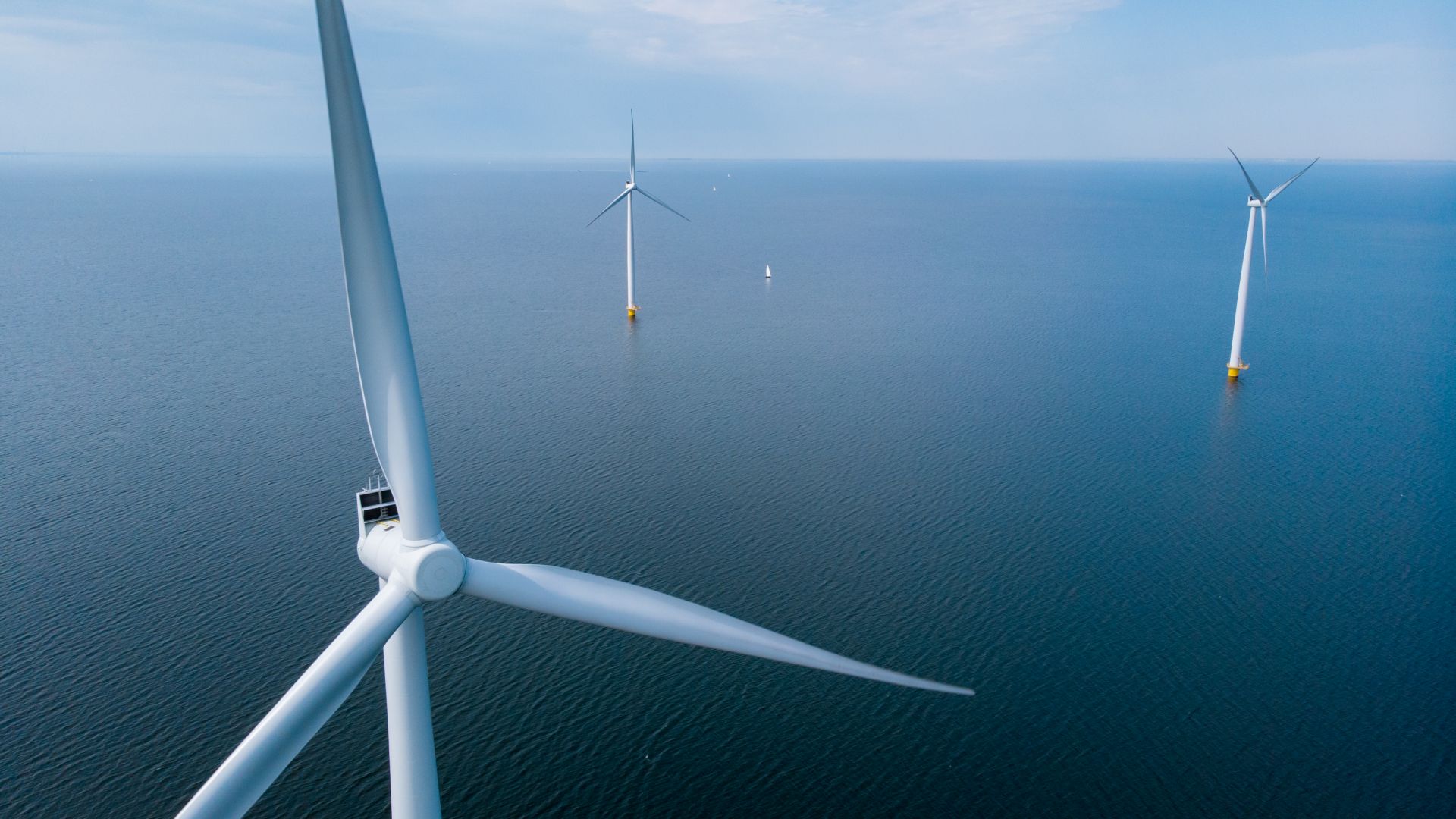
Even after the government selects the project operators, the low construction rate is due to structural constraints such as complex permitting procedures, local opposition, delays in grid connection, and uncertainty in profitability.
Construction Rate at 20% Since 2022... Concerns Over Hollow Offshore Wind Expansion
In an effort to expand offshore wind power, the government has selected a total of 10 large-scale projects since 2022, but only 2 of these have actually begun construction. Once selected as project operators, companies are required to independently handle follow-up permitting and financing. However, numerous obstacles make it difficult for projects to proceed to the construction stage. Despite these challenges, the government plans to select new large-scale operators again at the end of this month. The offshore wind adoption rate remains at just 1% of the government’s target, raising concerns that simply selecting operators without resolving structural bottlenecks could result in “hollow expansion.”
According to the offshore wind industry and other sources on May 19, the government has selected a total of 10 projects since 2022: Jeonnam Site 1 (96MW), Wando Geumil Phase 1 (200MW), Wando Geumil Phase 2 (400MW), Shinan Ui (396MW), Nagwol (364.8MW), Gochang (76.2MW), Anma Phase 1 (224MW), Anma Phase 2 (308MW), Taean (500MW), and Yawol (104MW). However, as of recently, only Jeonnam Site 1 and Nagwol have actually begun construction.
Even after the government selects the project operators, the low construction rate is due to structural constraints such as complex permitting procedures, local opposition, delays in grid connection, and uncertainty in profitability. Project operators must independently handle multi-year processes ranging from wind measurement equipment installation and fisheries compensation to environmental impact assessments and military operation reviews. Much of the designated project areas overlap with fishing zones, making it difficult to secure local acceptance. On top of this, uncertainties in grid connection, low electricity sales prices, and high equipment costs overlap, making the investment return structure unclear. Although the government is offering fixed-price contracts as an incentive, private companies still bear the full burden of initial financing, permitting risks, and local negotiations.
On top of this, uncertainties in grid connection, low electricity sales prices, and high equipment costs overlap, making the investment return structure unclear.
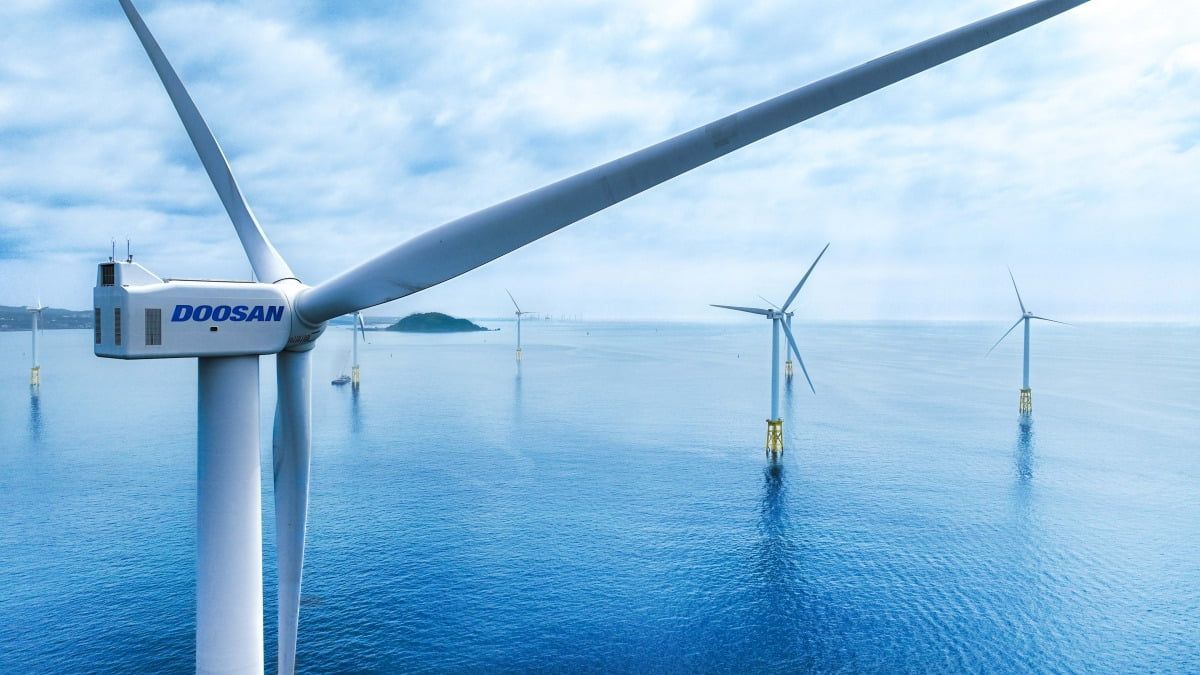
A 5.5MW offshore wind turbine installed by Doosan Enerbility near Hallim-eup, Jeju. Photo by Doosan Enerbility
Only Six Offshore Wind Farms in Commercial Operation, Including Jeju Hallim
This situation is clearly reflected in the actual performance of domestic offshore wind projects. Currently, there are only six offshore wind farms with a capacity of 3MW or more in commercial operation: Jeju Hallim, Southwest Demonstration, Jeju Tamra, Jeonnam Yeonggwang, Haengwon, and Nue Island. Their combined generation capacity totals just 229.83MW. This is only 1.6% of the government’s target. Even when including the capacity of projects that have begun construction, such as Jeonnam Site 1 and Nagwol, the total still falls short of 5% of the government’s 2030 target of 14.3GW. An official from the Ministry of Trade, Industry and Energy stated, “We are aware that there are no projects besides these two that have started construction,” but added, “Because operators must handle everything from permitting to securing local acceptance themselves, there is limited scope for government intervention.”

Another Tender Without Solving Structural Bottlenecks... Policy Effectiveness in Question
Despite the lack of progress in construction, the government plans to announce another competitive tender for fixed-price contracts at the end of this month to select offshore wind power operators for up to 3.5GW. The final operators will be announced in July.
Offshore wind is considered virtually the only alternative capable of large-scale, long-term supply compared to existing onshore resources. However, there are criticisms that repeatedly holding tenders without grid connection plans cannot resolve structural bottlenecks. Electricity demand is expected to increase by double-digit percentages in the coming years due to high-performance semiconductor production and data center expansion. If the imbalance between supply and demand becomes structurally entrenched, not only will carbon neutrality targets be at risk, but the stability of the power grid itself could be threatened. From the perspective of energy supply-demand balance, the current policy is seen as fundamentally flawed in both feasibility and consistency.
This could also negatively impact South Korea’s export competitiveness. With global regulations such as the Carbon Border Adjustment Mechanism (CBAM) and the spread of RE100 (a global corporate initiative to use 100% renewable energy) taking effect, countries with a low share of renewables will inevitably face disadvantages in export competitiveness. Expanding offshore wind has thus become an urgent task for protecting domestic industries.
Yang Yebin, a researcher at the legal entity Climate Solution, said, “When expanding offshore wind, it is extremely important to institutionalize values such as economic viability, environmental impact, and local acceptance,” adding, “There has been a lack of proper systems to incorporate these values into permitting and tender processes.”

![[Stalled Sea Winds]② "Construction Costs Soar 30% After Operator Selection... Government and Banks Turn Away from Financing"](https://cwcontent.asiae.co.kr/asiaresize/251/2025051610541260308_1747360451.jpg)
IndexThe Stilled Sea Breeze
- "Only 2 Out of 10 Projects Started Construction"... Offshore Wind Projects Left Idle
-
Reporter Jang Heejun junh@asiae.co.kr
-
Edit Choi Yujeong yjchoi@asiae.co.kr
© The Asia Business Daily(www.asiae.co.kr). All rights reserved.


![[Reportage]"It Only Leads to Arguments"... Chungnam's True Sentiments Hide Deeper After Martial Law](https://cwcontent.asiae.co.kr/asiaresize/304/2026051223490460082_1778597344.jpg)