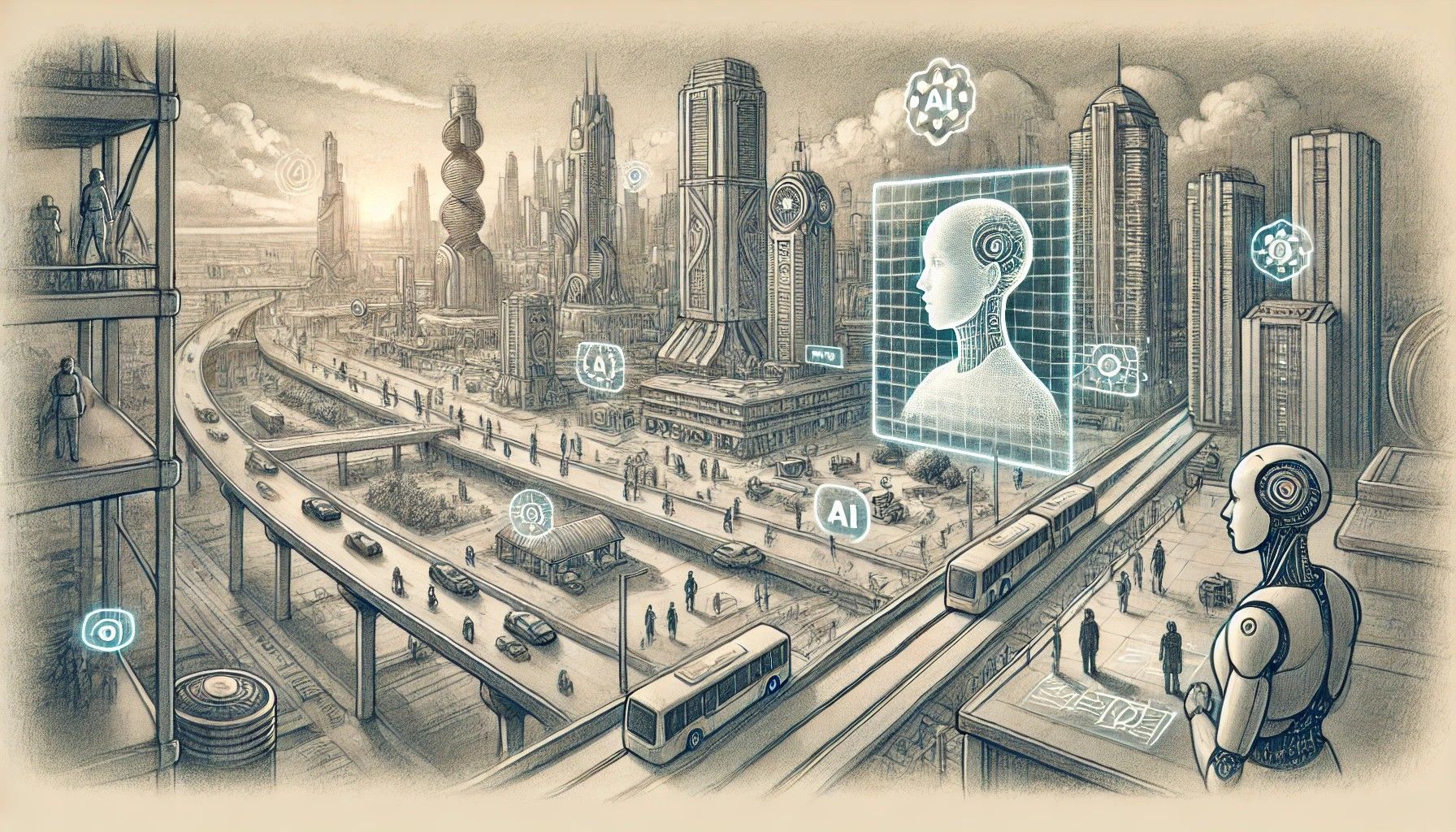
Dae-Shik Kim & Hyeyeon Kim's AHA ⑬ Park Sunghyun, CEO of Rebellions, on AI Semiconductor Design
The competition in the artificial intelligence (AI) industry is moving beyond the corporate level and becoming a contest for national supremacy. While individual companies strive to enhance their own technologies, they must also respond closely to national and institutional changes. 'Rebellions' is a startup in AI semiconductor design that is tackling both of these challenges head-on in the AI field.
Park Sunghyun, CEO of Rebellions, is both founder and chief executive officer. He earned his Ph.D. in Computer Science from MIT and built his semiconductor design career at various American companies, including Intel, SpaceX, and Morgan Stanley. In 2020, he returned to Korea and co-founded Rebellions with three other partners. Over the past four years, Rebellions has rapidly grown, achieving mass production and commercialization of its AI semiconductor Atom for data centers, and attracting global investment from companies such as Aramco.
In 2024, Park led the merger with Sapeon Korea, formerly a subsidiary of SK Telecom, marking a significant milestone in the history of Korea's AI infrastructure. We met with Park on the 13th at BOTBOTBOT, a unique space in Seongsu-dong where AI robots make coffee and people dance.


-Recently, China's semiconductor industry has been rapidly advancing, narrowing the gap with the United States. How do you see China's influence on the future AI semiconductor market?
▲China is also growing rapidly in the AI semiconductor market. Especially after U.S. sanctions, they have succeeded in building their own supply chain. Recently, Huawei developed its own AI chip and is running AI services without Nvidia. While China's influence in the AI semiconductor market is likely to grow, it will not be easy for them to catch up with the U.S.'s dominant technology and software ecosystem. On the other hand, Korea still lacks competitiveness in system semiconductor design, so in the era of AI semiconductors, a strategy to overcome these limitations is necessary.
-What do you think is the most critical change needed for the Korean semiconductor industry to remain competitive in the AI era?
▲The biggest problem facing Korea's semiconductor industry is the shortage of design talent. Even at major companies like Samsung Electronics and SK Hynix, talent tends to concentrate on the memory business rather than semiconductor design. Ultimately, the incentive structure for nurturing semiconductor design talent needs to be revamped. Promotion systems and research support policies should be adjusted to create an environment where design talent can grow in the long term. Now is the time to invest in the future value of AI semiconductors rather than focusing on short-term profits.

-There are predictions that as AI advances, the role of humans will gradually diminish. What roles should humans play in the AI era, and how should companies prepare for this?
-What kind of education or experiences do you think are necessary to grow into global talent in the AI era?
▲In the AI era, the most important thing is not memorizing simple knowledge, but developing problem-solving skills. I feel this as a parent as well: if education only provides the answers, children do not develop the ability to think and solve problems on their own.
Ultimately, what matters is experiencing difficulties and solving them through direct engagement. The same goes for actual AI research. It's not about problems with predetermined answers, but about defining and solving new problems. Therefore, to grow into global talent, it is essential to go beyond simple learning, accumulate practical experience, and seek opportunities to solve various problems independently.

"AI, whether summarizing papers or finding code errors
Already replacing a significant portion of human work
Maximizing professional efficiency, but..."
"The problem is, when inexperienced people
Rely excessively on AI
They may lose real opportunities for growth"
AI should be used to complement humans,
So that they can play more creative and strategic roles"
-In the rapidly changing AI industry, how is Rebellions navigating the AI semiconductor market?
▲Rebellions, as an AI semiconductor startup, is developing inference-specialized semiconductors instead of traditional general-purpose GPU-based AI chips. As AI computation increases, existing GPU-based systems become inefficient in terms of power consumption and cost. Rather than handling general-purpose AI computation like Nvidia, Rebellions develops Neural Processing Units (NPUs) optimized for real-world deployment after AI models have been trained.
Simply put, while Nvidia excels at training AI models, Rebellions focuses on creating hardware that operates trained models efficiently in practice. Although the AI semiconductor market has been centered on GPUs, Rebellions is taking a differentiated approach through power efficiency, performance optimization, and customized semiconductor design.
-Currently, Nvidia has a huge influence in the AI semiconductor market. What is Rebellions' strategy to secure competitiveness in this market?
▲Nvidia holds a monopoly in GPU-based AI training. The enormous computational requirements for training AI models are ideally suited to the parallel architecture of GPUs. However, Rebellions takes a different approach.
We focus on AI inference. Since the computation method differs when AI is actually used after training, NPU-based semiconductors are much more efficient than GPUs. While GPUs are highly versatile, they also include a lot of unnecessary computation. In contrast, Rebellions' semiconductors are designed with optimized computational structures tailored to specific AI models, resulting in significant gains in power efficiency and cost reduction. Although Nvidia currently leads the market, the AI semiconductor sector will become increasingly segmented, and Rebellions aims to pioneer a new market with customized AI inference chips.


-How does AI computation differ from traditional CPU and GPU processing, and what are the characteristics of the MPU and NPU (Neural Processing Unit) developed by Rebellions?
▲Traditional Central Processing Units (CPUs) use sequential processing, making them unsuitable for AI computation. GPUs, which allow for parallel processing, are used for AI training, but they are still general-purpose, leading to excessive power consumption and unnecessary computations.
The NPU developed by Rebellions is a customized chip tailored to specific AI computational patterns. For example, in the AI inference process, certain matrix operations are repeatedly used, and Rebellions' NPU is optimized for this, designed for faster computation and lower power consumption.
In short, while Nvidia's GPUs remain strong for AI training, Rebellions' NPU-based AI semiconductors are a much more economical and efficient solution for real-world AI applications.
-The possibility of Artificial General Intelligence (AGI) is increasingly being discussed. How do you think the AI semiconductor industry will change if AGI becomes a reality?
▲If AGI emerges, the amount of AI computation will increase beyond anything we can imagine today. Even current large language models (LLMs) require enormous computational resources, and with AGI, this will multiply several times over. Computational optimization will become even more critical in the AI semiconductor market. Instead of relying solely on Nvidia's GPUs for both training and deployment, specialized chips for each AI application will become essential. Since Rebellions is a company that designs such customized chips, I believe we will have the opportunity to lead the high-performance, high-efficiency AI inference chip market even in the AGI era.
Dae-Shik Kim, Professor of Electrical Engineering at KAIST · Hyeyeon Kim, Choreographer (CEO of Yeonist)
IndexAHA by Kim Daesik and Kim Hyeyeon
- Aespa Coexisting with AI Avatars: Innovation Itself
- "Do Not Give Commands to AI as If You Are Speaking Informally"
- Do You Want a World Where AI Does Everything Instead of Humans?
- Hyunjoon Yoo: "Coexistence of AI and Architecture Is Already Underway"





![[Report] "A Culinary Destination with a View of Gyeongbokgung"... Kim Dong-sun's High-End Dining Takes Over Gwanghwamun](https://cwcontent.asiae.co.kr/asiaresize/304/2026042114562634571_1776750985.jpg)
![[Gallery Stroll] Red Robe, Black Lines... Danjong Returns with the Face of Wounds](https://cwcontent.asiae.co.kr/asiaresize/304/2026042014183532691_1776662315.jpg)