Why Lee Jaemyung Faces a Grim Outlook Ahead of the Perjury Incitement Verdict on the 25th
AK Radio
Why Lee Jaemyung Faces a Grim Outlook Ahead of the Perjury Incitement Verdict on the 25th
by So Jongseop
by Choi Sukjin
by Ma Yena
by Choo Myeonghoon
Published 20 Nov.2024 14:41(KST)
Updated 20 Nov.2024 15:21(KST)
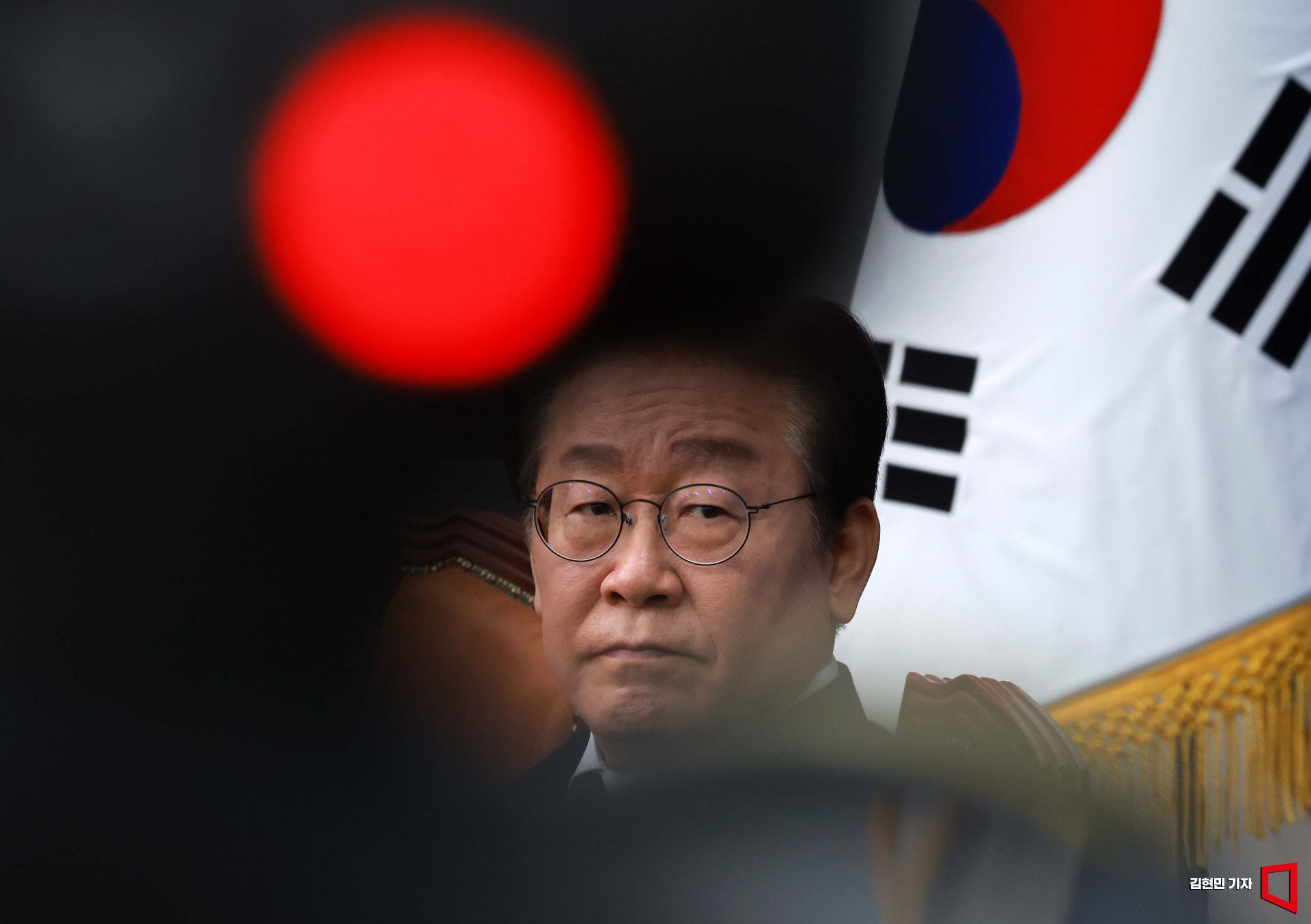
Lee Jae Myung, leader of the Democratic Party of Korea, is wearing a stern expression at the Supreme Council meeting held at the National Assembly on the 18th. Photo by Kim Hyun Min
Unexpected Prison Sentence in First Trial for Election Law Violation
Lee Jaemyung, leader of the Democratic Party of Korea, received an unexpected prison sentence in the first trial for his violation of the Public Official Election Act. There are also predictions that a heavy sentence is likely in the perjury incitement case, with the verdict scheduled for the 25th. The legal community expects that final judgments in some of the four ongoing trials against Lee may be delivered before the 2027 presidential election.
On the 15th, the Seoul Central District Court sentenced Lee to one year in prison with a two-year suspended sentence in the first trial for violating the Public Official Election Act. Initially, many in the legal and political circles expected a fine of around 800,000 to 1,500,000 KRW.
In its ruling, the court determined that Lee's statements were related to the Daejang-dong and Baekhyeon-dong development corruption allegations, which are crucial factors for voters in assessing a candidate's competence and qualifications. The court specifically pointed out that Lee's remarks "are not light offenses to the extent that they could undermine the function of the electoral system or the essence of representative democracy."
In sentencing, the court considered it unfavorable that Lee completely denied the crime and showed no sign of remorse, and that he had a prior record of violating the election law and receiving a fine. On the other hand, the fact that he lost the presidential election and has no criminal record exceeding a fine were recognized as mitigating factors.
The legal community believes there is little chance that the verdict will be significantly overturned on appeal. Since Lee was already acquitted in the first trial regarding his statement that he "did not know Kim Moonki, former director of Seongnam Development Corporation," the scope for legal disputes in the appeals trial has been greatly reduced. Even if some not-guilty verdicts are delivered, it is considered highly unlikely that the type of sentence will change from imprisonment to a fine, given that a prison sentence was already handed down in the first trial.
Meanwhile, the perjury incitement case, with a verdict scheduled for the 25th, is expected to result in an even harsher punishment than the election law violation case. Prosecutors have requested a three-year prison sentence. The core of the perjury incitement case is the allegation that Lee instructed Kim Jinseong, who was the secretary to the late former Seongnam Mayor Kim Byeongryang in December 2018, to commit perjury in his own trial.
Perjury Incitement Case Had Higher Likelihood of Conviction Than Election Law Violation
Reasons for the Bleak Outlook in Lee Jae-myung's Perjury Coaching First Trial
From the beginning, the legal community viewed the perjury coaching case as more likely to result in a guilty verdict than the violation of the Public Official Election Act. This is due to concrete evidence such as the confession of former secretary Kim Jin-sung and recorded phone calls. In particular, since the crime of perjury coaching infringes on the state's judicial function and involves significant protected legal interests, it is analyzed that the level of punishment could be severe. The Supreme Court adopts the 'subjective theory' as the standard for false testimony in perjury cases. In other words, the key to establishing perjury is not whether the testimony matches objective facts, but whether the witness gave a statement different from their memory or perception. Therefore, even instructing a witness to testify as if they remember something they do not can constitute perjury coaching.
Currently, Lee faces a total of five criminal trials, as prosecutors filed additional charges without detention on the 19th regarding the "Gyeonggi Province corporate card personal misuse allegations." If he is confirmed guilty and sentenced to imprisonment or higher in any of these cases, his eligibility to run for office will be restricted for 10 years after the completion of his sentence. Moreover, if he is convicted in multiple cases, the restrictions on candidacy are applied in parallel. Even if the restriction period for one case ends, he cannot run for office if another restriction period remains.
The legal community expects that the Supreme Court's final ruling on Lee's election law violation case will be delivered before the 2027 presidential election. The Public Official Election Act limits the duration of election crime trials, so a faster verdict is expected compared to ordinary criminal cases. It is also reported that there is a consensus within the judiciary that postponing all of Lee's trials until the 2027 presidential election is undesirable.
In particular, legal experts noted, "For election cases, even a fine of 1 million KRW or more restricts candidacy for the next election, and for other crimes, even a suspended sentence for imprisonment disqualifies a candidate from running for president," adding, "If all four trials are not concluded by 2027, causing future controversy, it would mean the judiciary has failed to fulfill its responsibilities."
Accordingly, the legal community believes that at least one or two of the trials against Lee are highly likely to reach a Supreme Court decision by next year at the latest. Especially in the case of the election law violation, the facts are relatively simple and there is little room for legal dispute, so a prompt verdict is expected.
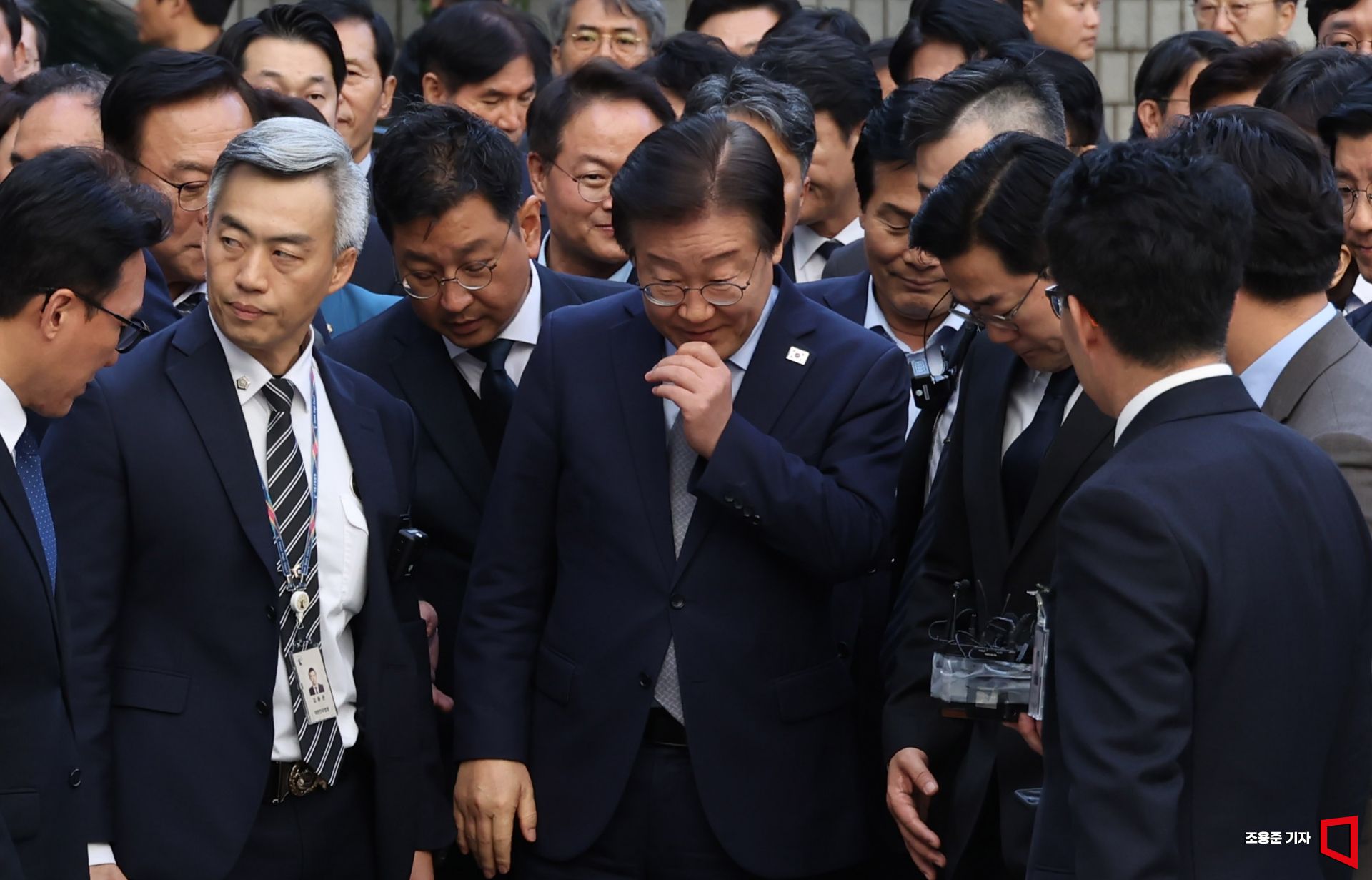
On the 15th, the day of the first trial sentencing hearing for Lee Jae Myung, leader of the Democratic Party, on charges of violating the Public Official Election Act, a rally demanding Lee Jae Myung's detention was held in front of the Seoul Central District Court in Seocho-gu, Seoul. Supporters from the progressive camp held the rally shouting for Lee Jae Myung's acquittal. Photo by Jo Yongjun





![Deregulation and Capital Inflow to Transform Yeouido Skyline [Real Estate AtoZ]](https://cwcontent.asiae.co.kr/asiaresize/304/2026042914415745503A.jpg)
![[Gallery Walk] The Vanished Rooms of Women Reopened](https://cwcontent.asiae.co.kr/asiaresize/304/2026042915095445640_1777442994.jpg)