“Block Before the Sky Is Covered”
Large Group of Lovebug Larvae Confirmed in the Gyeyang Mountain Area, Incheon
☞ Eco-friendly BTI Insecticide Application
Strong Reproduction with a Pair Laying Hundreds of Eggs
Mid-May is the Optimal Time for Insecticide Before Pupae Stage
Photo by GettyimagesBank
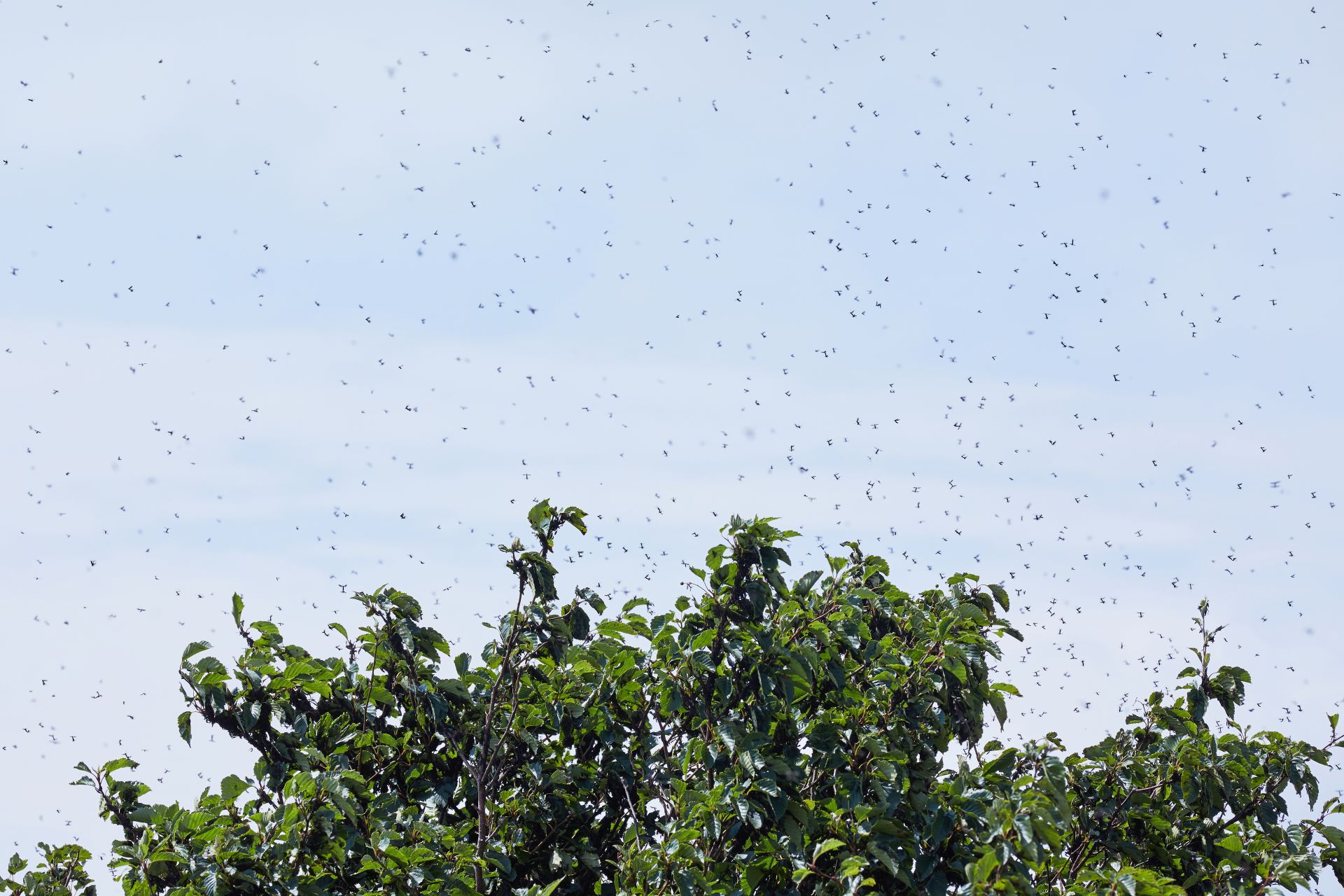
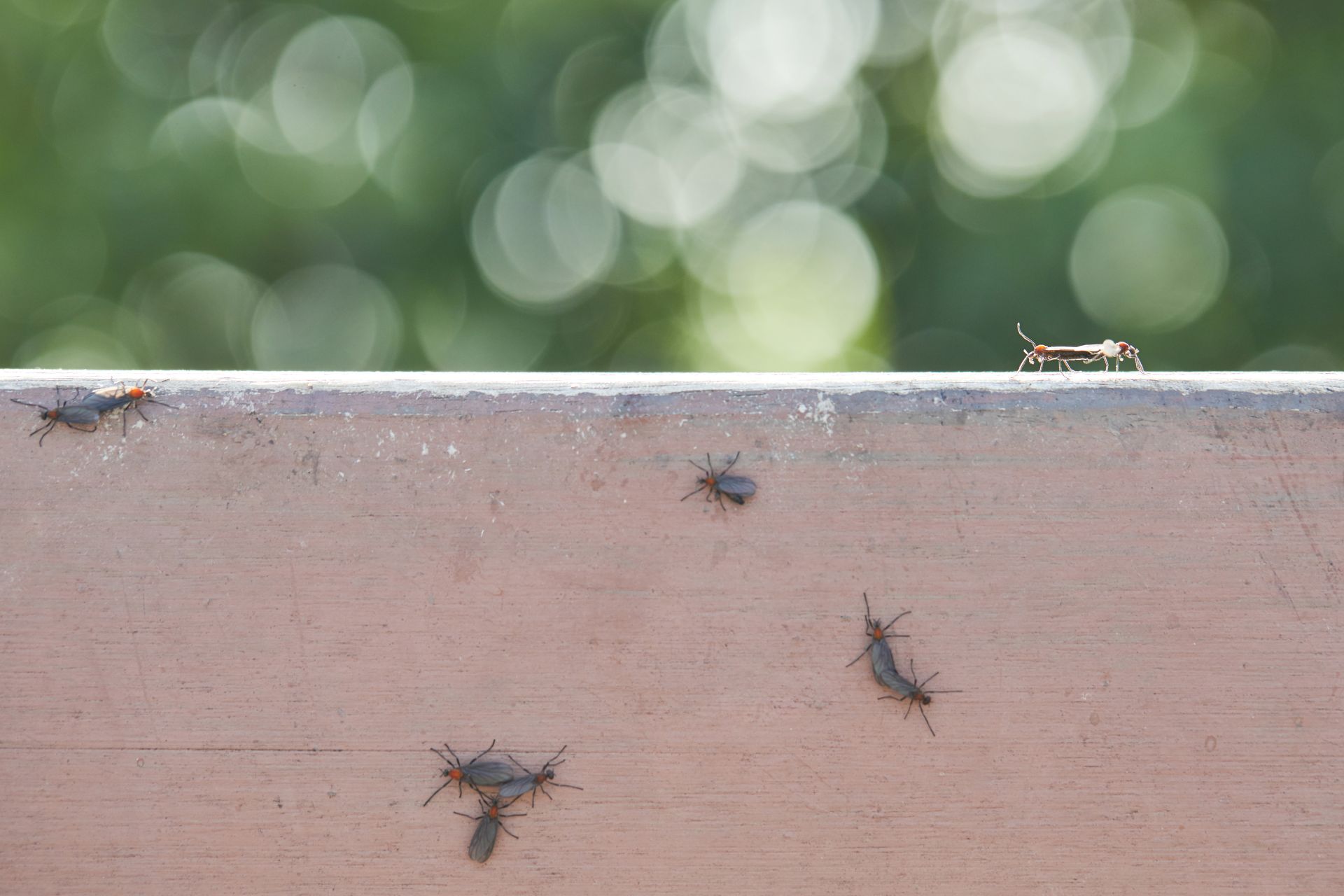
Lovebugs (scientific name: red-backed parasitic fly), often referred to as unwelcome summer visitors in urban areas, are showing signs of another mass outbreak this year. Recently, a large group of lovebug larvae was discovered in the Gyeyangsan area of Incheon, where last year these insects covered the summit and hiking trails. As a result, relevant authorities have launched preemptive pest control measures before the adult insects emerge.
On April 28, the National Institute of Biological Resources under the Ministry of Climate, Energy and Environment, together with researchers from the Environmental Ecology Research Institute at Sahmyook University, announced that they sprayed Gyeyangsan’s summit area with an eco-friendly microbial insecticide called BTI (Bacillus thuringiensis israelensis) on April 22. BTI is a microbial agent that selectively targets the larvae of certain insect species such as flies. It is used as a method of pest control to reduce the population before the insects emerge as adults. This insecticide has demonstrated a high larval mortality rate within 48 hours of application in laboratory tests.
The research team believes that controlling lovebugs in the larval stage is the most effective approach, since it becomes difficult to manage them once they emerge as adults in large numbers. Lovebugs have a high reproductive capacity, with one pair known to lay hundreds of eggs. If early pest control is delayed, there is a possibility of a large-scale outbreak in urban areas, as well as on walking trails and hiking routes, after the end of June.
Lovebug larvae typically grow in layers of fallen leaves with high humidity or in soil rich in organic matter. After passing through the pupal stage around mid-May, they are known to emerge as adults starting from the end of June. Around June 28 last year, a massive outbreak of lovebugs darkened the summit and hiking trail areas of Gyeyangsan in Incheon, with related civil complaints reportedly surging more than sevenfold compared to the previous year.
Lovebugs Confirmed Across the Greater Seoul Area Including Seoul and Incheon
In recent years, the regions where lovebugs appear have been expanding. Previously concentrated in certain districts such as Eunpyeong-gu in Seoul, lovebugs have now been confirmed in all 25 districts of Seoul and 10 districts and counties in Incheon, covering the entire metropolitan area. This year, experts warn that the infestation may spread to areas beyond the metropolitan region. Rising temperatures, changes in urban green spaces, and an increase in layers of fallen leaves are all believed by experts to be linked to the mass outbreak of lovebugs.


However, lovebugs generally do not bite or sting people, are not toxic or aggressive, and are not classified as disease-carrying insects. As adults, they contribute to pollination, and as larvae, they help decompose fallen leaves and organic matter, making them beneficial insects within the ecosystem. The problem arises when their population explodes in a short period, causing swarms to cling to house windows, vehicles, walking trails, and shopfront glass, resulting in significant inconvenience for residents.
At Home, Repair Gaps in Window Screens to Prevent Entry
The government is stepping up its response. The Ministry of Climate, Energy and Environment is promoting a plan to systematically manage urban outbreak insects, such as the red-backed parasitic fly, by designating them as legally controlled species. In cooperation with local governments, the plan includes strengthening early response measures and combining monitoring with eco-friendly pest control, especially in areas of mass outbreak.
Local governments are also focusing on managing larval habitats. Since lovebug larvae thrive in moist, organic-rich environments, maintaining areas such as walking trails with excessive fallen leaves or poorly drained regions can help reduce their population. However, indiscriminate insecticide spraying can affect other insects and the surrounding ecosystem, so selective pest control that considers the location, timing, and target species is necessary.
At home, it is helpful to repair gaps in window screens to prevent lovebugs from entering, and to minimize opening windows near lights at night. Adult insects attached to vehicles or exterior walls may leave stains as bodily fluids dry, so it is best to wash them off with water promptly. For individuals that enter the home, using a vacuum cleaner or a water sprayer is recommended over insecticides for removal.
-

Reporter Bang Jeil zeilism@asiae.co.kr
-
Edit Hong Jayeon hongzaa@asiae.co.kr
© The Asia Business Daily(www.asiae.co.kr). All rights reserved.

![[Exclusive] "Looking Beyond Financial Statements for Future Value"... IBK Injects 170 Billion Won into 72 Innovative Companies](https://cwcontent.asiae.co.kr/asiaresize/304/2026011314545989464_1768283699.jpg)