![A wireless communication device exploded during a funeral in Beirut, Lebanon, on the 18th (local time). A Hezbollah member is holding a wireless communication device with the battery removed. The Lebanese Ministry of Health reported that the death toll from wireless communication device explosions across Lebanon has risen to 14, with up to 450 injured. [Image source=Xinhua-Yonhap News]](https://cphoto.asiae.co.kr/listimglink/9/2024092414041337173_1727154253.jpg)
![[Image source=Reuters Yonhap News]](http://www.asiae.co.kr/news/img_view.htm?img=2024092409511136683_1727139071.jpg)
![[Image source=AFP Yonhap News]](http://www.asiae.co.kr/news/img_view.htm?img=2024092414204437204_1727155244.jpeg)
![[Image source=AP Yonhap News]](http://www.asiae.co.kr/news/img_view.htm?img=2024092414263337231_1727155593.jpeg)
![[Image source=AFP Yonhap News]](http://www.asiae.co.kr/news/img_view.htm?img=2024092409583736711_1727139517.jpg)
![[Image source=AFP Yonhap News]](http://www.asiae.co.kr/news/img_view.htm?img=2024092414262037228_1727155579.jpeg)
![[Image source=Reuters Yonhap News]](http://www.asiae.co.kr/news/img_view.htm?img=2024092414262437229_1727155584.jpeg)
![[Image source=Reuters Yonhap News]](http://www.asiae.co.kr/news/img_view.htm?img=2024092414262737230_1727155587.jpeg)
Recent Escalation of Israel-Hezbollah Clashes
Military tensions between Israel and the Lebanese Shia militant group Hezbollah have reached a peak. Recently, suspicions have been raised that Israel is behind a series of simultaneous explosions involving pagers (beepers) and radios across Lebanon, leading to continued military clashes between the two sides. As concerns over a full-scale war with Israel grow, Lebanon is experiencing increasing political instability.
Pager Explosion Incident Spreads..."Preparation Likely Took Over 15 Years"
According to CNN, on the 23rd (local time), the Israeli military carried out a massive bombardment targeting Hezbollah's main bases, raising the death toll to at least 492. This marks the highest number of casualties since the 2006 Israel-Hezbollah war. As clashes between the two forces, triggered by the pager explosions, have intensified, civilian casualties have also increased significantly.
Earlier, on the 17th and 18th, Hezbollah members across Lebanon suffered mass casualties as their pagers and radios exploded. According to CNN, the Lebanese Ministry of Health officially announced that the pager explosions on the 17th resulted in 9 deaths and 2,750 injuries. The death toll has since risen to 37, and with around 200 of the injured in critical condition, the number of fatalities is expected to continue rising.
Various suspicions have been raised regarding the background of the explosions. Hezbollah has been using outdated communication equipment such as pagers and radios, as the use of modern devices like smartphones poses risks of location tracking and information leaks. The ban on smartphones for communication security has, in effect, exacerbated the impact of these explosions.
Israel has not made a clear statement regarding the incident. Israeli authorities have neither denied nor acknowledged involvement, maintaining an ambiguous stance. However, Israel continues to clash with Hezbollah at the northern border even while engaged in conflict with the Palestinian militant group Hamas, and is intensifying the scale of its operations. Analysts suggest that Israel’s intent is to instill fear not only in Hezbollah but in all of Lebanon, aiming to foster anti-war sentiment within Lebanon and suppress Hezbollah’s military activities.
US intelligence agencies believe that Israel may have spent at least 15 years preparing to cause mass casualties using phaser bombs, which were previously only used for assassinating a small number of high-ranking officials or agents. It is analyzed that Israel gradually infiltrated Hezbollah’s supply network for radios and pagers, allowing them to install explosives in thousands of pagers.
According to ABC News, citing US intelligence sources, "Israel has been directly involved in the manufacture of Hezbollah’s pagers that exploded across Lebanon and appears to have planned supply chain disruption operations for at least 15 years," adding, "Israel operated several paper companies and even ran companies manufacturing pagers to carry out the operation."
Hezbollah Shaken...Lebanon's 'March 8 Alliance' Also Threatened
As Hezbollah’s organization, having lost a significant number of its military members, begins to falter, concerns are growing that Lebanon's political instability will worsen. Hezbollah is a pro-Iranian Shia Islamic party established in 1982 to resist Israel, with an armed wing, and currently leads Lebanon’s ruling coalition, the "March 8 Alliance."
Lebanese politics are divided between the pro-Iranian/Syrian "March 8 Alliance" centered around Hezbollah, and the "March 14 Alliance" mainly composed of pro-Saudi Sunni parties. Traditionally, Lebanon's population is split roughly evenly among Maronite Eastern Christians (an offshoot of the Roman Catholic Church), Sunni Muslims, and Shia Muslims, each accounting for about 30%, resulting in a complex web of political factions based on sect and affiliation.
Hezbollah, while appearing as a radical Islamist group externally, has formed the March 8 Alliance domestically with Christian forces such as the Maronite Christian party "Free Patriotic Movement (FPM)" to maintain the coalition. If the localized conflict between Israel and Hezbollah drags on and Hezbollah’s power is significantly weakened, Lebanon’s political instability is expected to intensify further.
If Iran vs. Israel Full-Scale War Breaks Out, Fifth Middle East War...But Possibility Remains Low
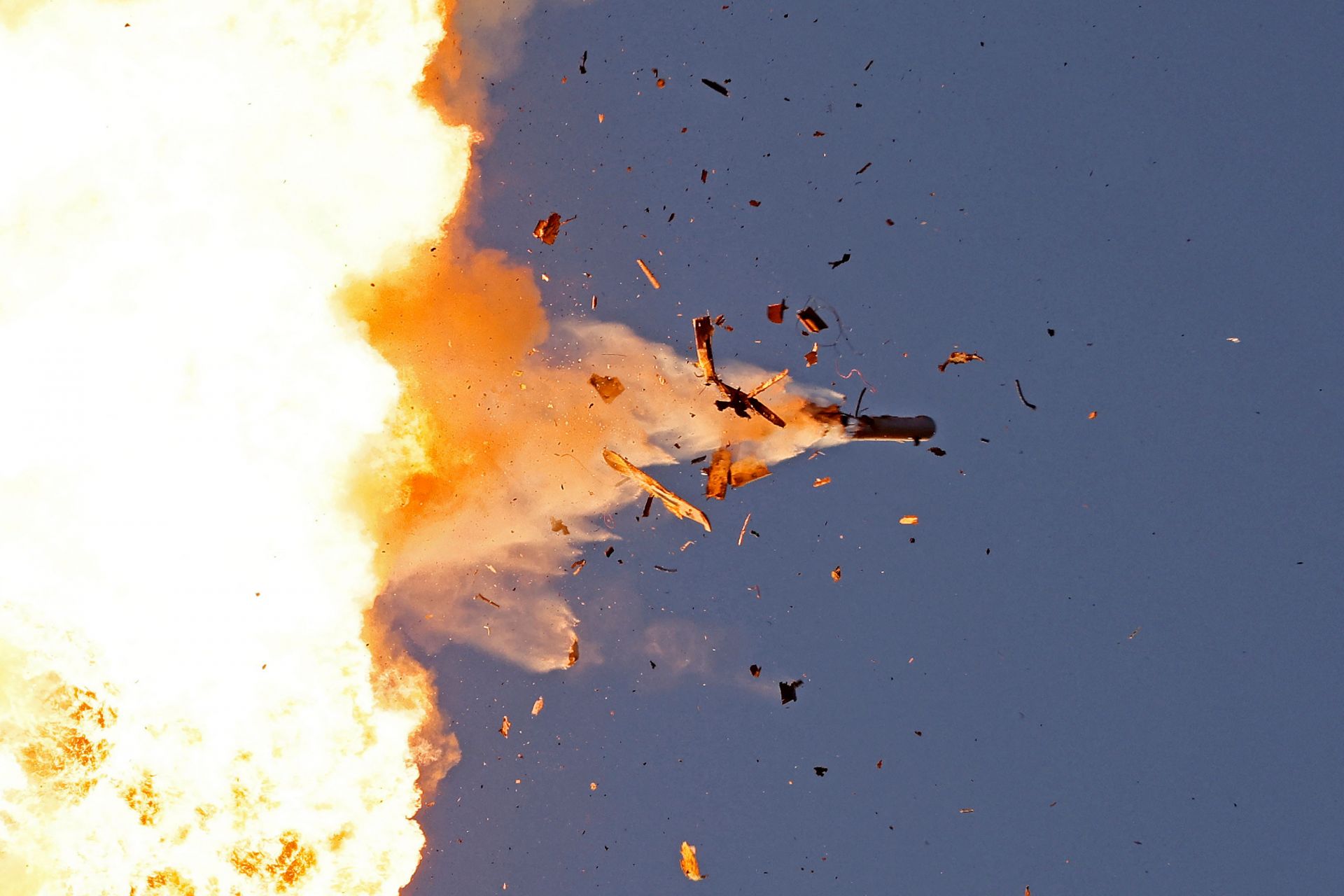
September 17-18
-Simultaneous explosions of pagers and radios in Lebanon
-Simultaneous explosions of pagers and radios in Lebanon
September 19
-Hezbollah publicly declares retaliation, accusing Israel as the mastermind
-Israel launches large-scale airstrikes targeting Hezbollah military assets in southern Lebanon
-Hezbollah publicly declares retaliation, accusing Israel as the mastermind
-Israel launches large-scale airstrikes targeting Hezbollah military assets in southern Lebanon
September 20
-Hezbollah conducts airstrikes in northern Israel
-Israel targets Beirut in Lebanon, eliminating key Hezbollah commanders
-Hezbollah conducts airstrikes in northern Israel
-Israel targets Beirut in Lebanon, eliminating key Hezbollah commanders
September 21-22
-Hezbollah attacks Israeli infrastructure
-Israel strikes Hezbollah strongholds, leading to continuous clashes, the largest since the Gaza War
-Pro-Iran armed group in Iraq, the Islamic Resistance in Iraq (IRI), begins drone attacks on Israel
-Hezbollah attacks Israeli infrastructure
-Israel strikes Hezbollah strongholds, leading to continuous clashes, the largest since the Gaza War
-Pro-Iran armed group in Iraq, the Islamic Resistance in Iraq (IRI), begins drone attacks on Israel
Analysts say the possibility of a fifth Middle East war largely depends on whether Iran intervenes. If Iran becomes fully involved, the conflict with Israel could spread throughout the Middle East. However, due to Iran’s economic situation, internal turmoil, and US sanctions, it is unlikely that Iran will easily engage in a full-scale war. Iran is currently facing political and economic difficulties, and starting a war under these circumstances would be a significant burden.
Israel, too, is unlikely to choose a full-scale war with Iran while depleting its resources in the war with Hamas. Israel’s military equipment and finances are heavily dependent on US support. However, as the US is now entering an election season and focusing more on domestic issues than on the Middle East, it would be difficult for Israel to sustain a prolonged war without US financial backing. Thus, Israel is also likely to avoid a full-scale war with Iran.
Ultimately, the direction of the conflict between Israel and Hezbollah depends on the strategic calculations of both sides. Israel is no longer in a position to launch a new war in the Middle East, but its military response may continue to harden. Israel is engaged in a complex diplomatic balancing act, confronting both Hamas and Hezbollah while trying to avoid direct conflict with Iran.
Meanwhile, Hezbollah has defined this incident as an Israeli operation and continues to respond aggressively. However, as civilian casualties in Lebanon increase, anti-war sentiment is also growing domestically. In this situation, Hezbollah’s military position may become even weaker. Ultimately, how long the clashes between Israel and Hezbollah will last depends on Hezbollah’s response and Lebanon’s internal political situation.
For now, there is a possibility that the conflict could escalate into a larger war, but whether this will actually happen remains uncertain. Unless Iran intervenes directly, the conflict between Israel and Hezbollah is likely to be managed at a certain level. However, if Iran does become involved, the entire Middle East could be engulfed in war. This incident once again highlights the instability of the Middle East, and international tensions are expected to rise further.
As clashes between Israel and Hezbollah continue, civilian casualties are also increasing. The world is closely watching to see how long the conflict will last and whether it will escalate into another Middle East war.
Editor's NoteThis content is also available on Asia Economy's economic podcast 'AK Radio.' AK Radio is a platform that provides essential information for investors on politics, economics, international affairs, tech, bio, and digital trends. Click the play button in the article to hear the reporter's actual voice. This article is a reorganization of the content broadcast on AK Radio, summarized using ChatGPT.
IndexAK Radio
- "Over 15 Years of Preparation: Beeper Bomb Explosion Shocks Hezbollah"
- Bitcoin 'Trump Rally' Saved This Country's President
- Why Lee Jaemyung Faces a Grim Outlook Ahead of the Perjury Incitement Verdict on the 25th
- Christians Lee Jaemyung and Kim Moonsu... Catholics Han Donghoon and Lee Joonseok
-

Reporter Lee Hyunwoo knos84@asiae.co.kr
-
Reporter Song Yunjung singasong@asiae.co.kr
-
Reporter Park Sumin soop@asiae.co.kr
-
Edit Choo Myeonghoon chox2mh@asiae.co.kr
© The Asia Business Daily(www.asiae.co.kr). All rights reserved.




![Deregulation and Capital Inflow to Transform Yeouido Skyline [Real Estate AtoZ]](https://cwcontent.asiae.co.kr/asiaresize/304/2026042914415745503A.jpg)

![[Gallery Walk] The Vanished Rooms of Women Reopened](https://cwcontent.asiae.co.kr/asiaresize/304/2026042915095445640_1777442994.jpg)