[K-Women Talk]To Avoid a "Meaningless Master's Degree," Get Familiar with Job Postings
![[K-Women Talk]To Avoid a "Meaningless Master's Degree," Get Familiar with Job Postings](http://www.asiae.co.kr/news/img_view.htm?img=2026042111033134214_1776737011.jpg)
A friend's son holds a master's degree in biotechnology. After graduating in February this year, he entered the job market but has yet to find employment, causing considerable anxiety. While the major conglomerates he hoped to join mainly recruited for "production process development" roles, he had completed his master's in "basic research." Faced with the threat of becoming what is colloquially referred to as a "worthless master's," what strategies should he consider?
According to statistics, approximately 110,000 individuals earned master's or doctoral degrees in 2025. As of 2024, the employment rate for master's degree holders—who make up 80% of this group—stood at 80.2%. This means that two out of every ten master's graduates are unemployed, and as the number of degree holders continues to increase each year, the situation may become more severe.
In the humanities, it has long been proven that a master's degree often acts as "overqualification," making job searches even more challenging. As a result, job seekers in these fields have become more discerning, and fewer pursue graduate studies without a clear goal. Nevertheless, there are still areas within the humanities job market that value a master's degree, such as research firms, counseling psychology, museum curators, and international organizations, which require a high degree of specialization. However, it is difficult to find major conglomerates in these fields, and the number of available positions is limited, making it unrealistic to expect significant compensation.
The first critical step for science and engineering master's students to achieve employment is selecting the right laboratory. Whether a lab conducts research that companies actually need is far more important than its reputation. In Korea, where manufacturing is strong, there is greater demand for process development required for mass production rather than for basic research. Therefore, prospective graduate students must conduct a "demand survey" before choosing a lab.
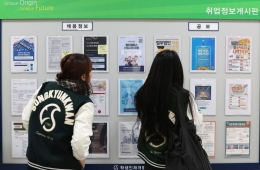
How can one identify labs with high corporate demand? Experts recommend researching "corporate job postings" beforehand. In particular, job postings from industry-leading companies contain highly detailed job descriptions, making it possible to determine what skills and research areas are in demand. For instance, this year's recruitment notices from Samsung Electronics show that the Memory, Foundry, and Semiconductor Research Center divisions all sought candidates for process design, process technology, and equipment technology roles. Given the strong demand for process and equipment specialties, these should be key criteria when selecting a graduate lab.
The same applies to other industrial fields such as machinery, chemicals, pharmaceuticals & biotechnology, and energy. While there is strong demand for research on anti-cancer drugs and drug formulations, conducting research in less-explored areas like Alzheimer's disease can greatly narrow your employment options. Similarly, pursuing research in hydrogen energy instead of autonomous driving or electric vehicles may also lead to difficulties securing a job. Will demand shift in a few years? Unfortunately, the industrial landscape does not change easily.
Carefully reviewing the lab's list of publications and the career paths of alumni published on its website is also important for assessing "relevance to industry." What if your degree specialization does not match corporate needs? There are about two options. First, you can approach the job market as if you do not have a graduate degree, treating yourself like a fourth-year undergraduate. Acquire new certifications and technical skills preferred by companies and gain practical experience through boot camps or similar programs. A sense of urgency to "reset both your degree and major" is essential.
Second, target startups that are betting on your area of research as a future growth engine. While companies hire talent for their current business needs, startups focus on "next-generation technologies." Surprisingly, startups that closely align with your research field may be struggling to attract talent.
Hot Picks Today
!["Those Who Hesitated at 3,000 Still Haven't Bought" 7 Trillion-Won Asset Manager Says "Opportunities Remain" [Investment Strategies of the Wealthy] ⑦](https://cwcontent.asiae.co.kr/asiaresize/93/2026050715101553735_1778134216.jpg) "Those Who Hesitated at 3,000 Still Haven't Bought" 7 Trillion-Won Asset Manager Says "Opportunities Remain" [Investment Strategies of the Wealthy] ⑦
"Those Who Hesitated at 3,000 Still Haven't Bought" 7 Trillion-Won Asset Manager Says "Opportunities Remain" [Investment Strategies of the Wealthy] ⑦
- "Why Are My Child's Grades Like This?" Surge in Overprotected, Isolated, and Reclusive University Students [University Students in Crisis] ⑧
- "Not Just Olive Young"... Word-of-Mouth Drives Foreigners to Pharmacies, Spending Surges 156%
- "Don't Come to Work from Tomorrow": Two Million Face Unemployment Crisis...Iran Shaken by War Shock
- "SK hynix Could Reach 2.8 Million Won; Why Securities Firms Are Confident That the Main Chapter of AI Has Not Even Begun Yet [Click eStock]"
Lee Sookeun, Publisher of 'Framework for Employment'
© The Asia Business Daily(www.asiae.co.kr). All rights reserved.