[University Students in Crisis]⑦"It Feels Like It's All My Fault"...How to Prevent Tragedy on Campus
Concealing Suicide Incidents... Insufficient Data, Reluctance to Share
Only One or Two Counselors on Campus... Responsibility Should Not Rest Solely with the Center
"Proactive Outreach Needed... Community Recovery Programs Essential"
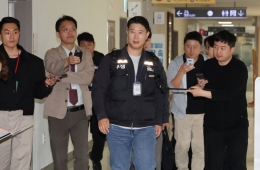
Jung Taeksu, Director of the Korea Suicide Prevention Center, received an urgent call late last year from the head of the student counseling center at University A, whom he knew personally. A university student had taken their own life, and the center head was seeking help on what steps to take next. Director Jung, who had served as a professional soldier for 24 years, changed careers to become a counseling psychologist after witnessing a series of suicides among military personnel. After graduating from a graduate school of counseling psychology in 2010, he worked as a counselor and lecturer for various suicide prevention programs and served as a “Military Life Specialist Counselor” for the Ministry of National Defense.

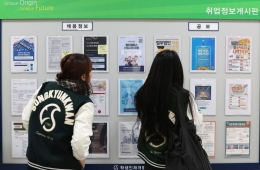
Job Plus Center at a university in Seoul. Unrelated to the article content. Yonhap News.
View original imageWith extensive experience counseling bereaved families, Director Jung immediately went to the school. This is because a student’s suicide can have a negative psychological impact on other students, potentially leading to further tragedies. “The first thing I did was find out who the deceased student’s closest friends were within their department,” he said. He then created a questionnaire and distributed it privately to those students. The survey assessed how often they thought about the deceased, and whether they were experiencing physical changes such as trouble sleeping or loss of appetite, in order to identify high-risk individuals. For students identified as high-risk, he quickly arranged one-on-one counseling sessions. During these sessions, students burst into tears, opening up about feelings they had not shared with anyone else.
“My friend wanted to meet, but I said I was too busy. I feel like it’s all my fault.” “They asked to have a meal together, but I couldn’t, and I feel so sorry. If we had eaten together, maybe this wouldn’t have happened.”
Director Jung said, “I empathized with the students’ stories, but continuously reassured them with the message ‘It’s not your fault’ so they wouldn’t be overwhelmed by guilt.” He added that they were given time to grieve and heal through tears. He explained, “Most universities fail to provide proper follow-up measures and are left helpless in such situations,” and pointed out, “Within the university system, there is a strong tendency to hush up suicides and cover up problems, making it difficult to establish preventive measures and response protocols.”
In fact, in 2016, the Ministry of Education attempted to analyze the status of student suicides at universities nationwide with the cooperation of the National Police Agency, but the response rate was only 44.7%, revealing the limitations in accurately grasping the situation at all universities. Even today, due to the lack of records on the specific causes and circumstances of suicides, it remains difficult to devise effective countermeasures.
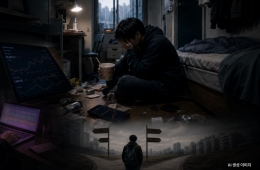
![[University Students in Crisis]⑦"It Feels Like It's All My Fault"...How to Prevent Tragedy on Campus](http://www.asiae.co.kr/news/img_view.htm?img=2026051223331860078_1778596398.jpg)
Growing Interest in Student Mental Health... Shortage of Counselors and Expertise
Already, university students are deeply interested in their own and their peers’ mental health, and are actively seeking ways to prevent suicides. Last month, Hallym University of Sacred Heart, located in Chuncheon, Gangwon Province, held a two-hour suicide prevention education session. The session, led by a counselor from the Chuncheon Mental Health Welfare Center, initially aimed for 100 participants, but a total of 162 students signed up, far exceeding expectations.
An official from Hallym University of Sacred Heart said, “To help students with emotional stability and smooth adjustment to university life, we conduct an adaptation assessment for freshmen at the beginning of every semester, as well as a variety of psychological tests and interpretations through individual counseling.” The official added, “Students’ increased interest in their own mental state, depression, and anxiety appears to have led to high participation in suicide prevention education.” However, most suicide prevention education at universities is a one-off event, making it difficult to identify fundamental causes and solutions.
In particular, the number of counselors at student counseling centers is insufficient to handle the growing demand from students, and there is also a lack of genuine expertise in suicide prevention. According to the “2025 National University Student Counseling Agency Status Report,” which surveyed 130 universities nationwide, only 4 out of 10 heads of university counseling agencies had a background in counseling. Furthermore, more than 7 out of 10 universities responded that they did not have a professor specializing in counseling (in charge of research or supervision). At 33.1% of universities, there was only one counselor, and at 23.1%, there were two.
A counselor who has worked at a university counseling center for one year said, “I didn’t realize there would be so much administrative work. If I postpone administrative work to handle urgent counseling sessions for students in crisis, I inevitably have to work overtime.”
![[University Students in Crisis]⑦"It Feels Like It's All My Fault"...How to Prevent Tragedy on Campus](http://www.asiae.co.kr/news/img_view.htm?img=2026051223373660080_1778596656.jpg)
Japan Distributes Counseling Guidelines... "Supporting Community Recovery"
In Japan, unlike in Korea, suicide prevention programs are managed by the Japanese Association of Student Counseling (JASC), which creates guidelines for universities. These guidelines are distributed to each university, providing basic instructions on how to respond to crises. In particular, the guidelines are aimed at all university staff, so the entire university can support student crisis management and suicide prevention. They also include measures to create a healthy campus community and provide safe spaces on campus to prevent isolation. Rather than having only counseling institutions run suicide prevention programs, collaborative programs are carried out in cooperation with academic departments, faculties, and other support agencies, while respecting student privacy. Counselors are guaranteed stable status and compensation to enable them to build networks within the university for crisis response and suicide prevention systems.
Director Jung pointed out, “Up through middle and high school, the ‘homeroom teacher’ system allows teachers to pay close attention to each student, but in universities, responsibility for student mental health is left entirely to counseling centers.” He emphasized, “Department heads should act as homeroom teachers and work closely with student counseling centers.” He added, “Professors should also observe and record changes in students’ facial expressions and behaviors during class, such as looking gloomy, frequent absences, or drinking alcohol often.” Furthermore, he said, “Universities should at least partially disclose suicide-related data to the Ministry of Education, and a new system should be established to reward universities that achieve positive results in suicide prevention activities.”
Lee Gijeong, President of the Korean Council for University Education, analyzed, “The problem of university student suicides arises not just from individual hardship, but from a break in the growth process and anxieties created by social structures.” He emphasized, “Universities, local governments, and medical institutions should work together to build an integrated support system, and instead of waiting for students to seek help, there should be proactive outreach programs.” He also called for the introduction of community recovery-oriented programs such as peer mentoring, as well as a comprehensive approach that addresses both career experiences and mental health.
Hot Picks Today
!["Those Who Hesitated at 3,000 Still Haven't Bought" 7 Trillion-Won Asset Manager Says "Opportunities Remain" [Investment Strategies of the Wealthy] ⑦](https://cwcontent.asiae.co.kr/asiaresize/93/2026050715101553735_1778134216.jpg) "Those Who Hesitated at 3,000 Still Haven't Bought" 7 Trillion-Won Asset Manager Says "Opportunities Remain" [Investment Strategies of the Wealthy] ⑦
"Those Who Hesitated at 3,000 Still Haven't Bought" 7 Trillion-Won Asset Manager Says "Opportunities Remain" [Investment Strategies of the Wealthy] ⑦
- "Why Are My Child's Grades Like This?" Surge in Overprotected, Isolated, and Reclusive University Students [University Students in Crisis] ⑧
- "Not Just Olive Young"... Word-of-Mouth Drives Foreigners to Pharmacies, Spending Surges 156%
- "Don't Come to Work from Tomorrow": Two Million Face Unemployment Crisis...Iran Shaken by War Shock
- "SK hynix Could Reach 2.8 Million Won; Why Securities Firms Are Confident That the Main Chapter of AI Has Not Even Begun Yet [Click eStock]"
※ If you are struggling with depression or other difficult issues, or if you have a family member or acquaintance who is, you can receive 24-hour professional counseling via the suicide prevention hotline (☎ 109) or through the suicide prevention SNS counseling service ‘Madeleine’.
© The Asia Business Daily(www.asiae.co.kr). All rights reserved.