Crowned as an "Emperor Stock" on a 150 Trillion Won Dream, but Lacking Substance [Trust Shaken by Samchundang]①
Key Absorption Indicators Missing in Circumvention Patent
Bioequivalence Proof Faces Major Hurdles
Variability in Oral Peptide Formulations Adds Complexity
No Precedent for Commercializing SNAC Alternatives
Reproducibility of I
[How Samchundang Shook Market Trust] ①A Hollow Technological Blueprint
[How Samchundang Shook Market Trust] ②The Art of Promotion That Sways Investor Sentiment
[How Samchundang Shook Market Trust] ③Regulatory Loopholes, Lingering Risks
Questions are mounting over the technological feasibility and regulatory approval prospects of the "SNAC-Free" strategy that Samchundang Pharmaceutical has put forward to target the 150 trillion won global anti-obesity drug market.
Developing new technology to enable the absorption of oral obesity medication in the body has remained an unsolved challenge in the industry for decades, and even if the technology is eventually secured, proving it to the U.S. Food and Drug Administration (FDA) is another formidable hurdle. As of the publication date, the available data are considered insufficient to make any definitive judgment in this regard.
Attempting FDA Generic Approval Without Clinical Trials... Disclosed PK Data Lacks Key Indicators
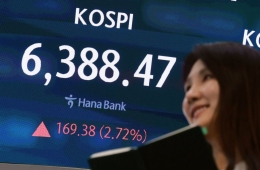
According to the bio industry and financial investment market as of April 14, Samchundang Pharmaceutical previously claimed that, despite Novo Nordisk's patent for the absorption enhancer SNAC—used in developing oral semaglutide (the active ingredient in Wegovy) and Rybelsus—being valid until the mid to late 2030s, it could bypass this with its proprietary drug delivery platform "S-PASS" and achieve early market entry within this year. The company's market capitalization at one point exceeded 27 trillion won, making it the top "Emperor stock" on KOSDAQ, reflecting market expectations for these claims.
![Crowned as an "Emperor Stock" on a 150 Trillion Won Dream, but Lacking Substance [Trust Shaken by Samchundang]①](http://www.asiae.co.kr/news/img_view.htm?img=2026041408143924486_1776122080.jpg)
However, as of now, there is no core data available to support the commercial viability of S-PASS. The PK (pharmacokinetic) data confirmed in the international patent filed by Samchundang Pharmaceutical via a Taiwanese biotech company with the World Intellectual Property Organization (WIPO) in 2024 do not include the actual in vivo absorption amount of semaglutide, which is essential for FDA approval.
The key experiments described in the patent were conducted not with semaglutide, but with liraglutide (the active ingredient in Saxenda). A radioisotope tracing method was used, which makes it difficult to determine whether the drug itself has been fully absorbed. This method cannot distinguish between the drug and fragments broken down during digestion, resulting in low accuracy. Crucial indicators for FDA approval—Cmax (maximum blood concentration) and AUC (area under the curve, or total exposure)—were also omitted from the patent. A professor of pharmacy specializing in drug delivery commented, "With the level of preclinical data currently disclosed, it is premature to discuss the possibility of FDA approval."
The biological equivalence demonstration that Samchundang Pharmaceutical declared it would pursue instead of clinical trials can reduce cost and time, but poses high technical difficulty. Compared to the original drug, major indicators such as blood concentration must match within a very narrow range. However, oral peptide formulations have low absorption rates and high inter-individual variability, meaning that even with the same dosage, outcomes can vary significantly.
A university hospital professor specializing in clinical pharmacology explained, "Even Rybelsus must be taken in a fasted state with only a small amount of water, reflecting highly sensitive absorption conditions. Achieving the same blood concentration with such a variable formulation is extremely challenging."
Building a Platform to Replace Novo Nordisk's Core SNAC Patent... Even Big Pharma Has Failed
Achieving the same level of oral absorption technology without SNAC is itself a major challenge. It is a task where several large pharmaceutical companies have previously failed. Even Novo Nordisk discontinued oral insulin development using other absorption enhancers after SNAC, and Novartis failed in phase 3 clinical trials while developing SNAC-like substances.
The fundamental reason lies in the structural limitations of "oral medication." A pharmacy professor explained, "Oral formulations are mostly broken down or filtered out while passing through the gastrointestinal tract, so the amount that actually reaches the bloodstream is only about 1%." He added, "Rybelsus succeeded in commercialization not so much because the absorption technology was perfected, but because the drug itself is effective even at low doses. To achieve the same effect, absorption itself must be redesigned, and that process will not be easy."
The absorption method in the small intestine, chosen by Samchundang Pharmaceutical, is also a variable. Although it has the advantage of a large surface area, the challenges include drug breakdown by digestive enzymes, difficulty crossing the mucosal barrier, and changes in the absorption environment due to food, pH, and intestinal motility—all of which make reproducibility difficult. India's largest biotech company, Biocon, advanced to phase 3 clinical trials with an oral insulin based on intestinal absorption, but ultimately the development was halted for the same reasons.
Hot Picks Today
 "Over 20 Times More Than Overseas": 104.5 Milli...
- "Only the Top 1% Winning Big in Stocks Smile... '300 Million Won Splurges' or '1...
- “Nothing Left to Protect” as Japan Drops Its “Peace State” Banner... Lifts B...
- "Even Luxury Cars Drive Off Without Paying"... UK Sees Surge in Fuel Theft at Ga...
- "Please Launch It in Korea!" After All the Hype... This Coffee Finally Arrives i...
Professor Lee added, "Even Rybelsus, which is absorbed in the stomach, has not completely overcome absorption variability, and the small intestine presents an even more complex and uncontrollable absorption environment."
© The Asia Business Daily(www.asiae.co.kr). All rights reserved.