Sangnoksoo Transfers 845 Billion Won in Long-Term Delinquent Bonds to SaeDoYak Fund... Collection Halted for 110,000 Debtors
Swift Liquidation Follows President Lee's Rebuke of "Predatory Finance"
Financial Services Commission to Conduct Full Investigation into Sangnoksoo-like Firms
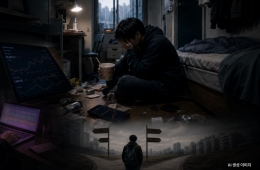
The long-term delinquent bonds held by 'Sangnoksoo', a non-performing loan resolution company established during the 2003 credit card crisis, will be transferred to the SaeDoYak Fund. As a result, approximately 110,000 long-term delinquent debtors are expected to be freed from the cycle of prolonged debt collection.
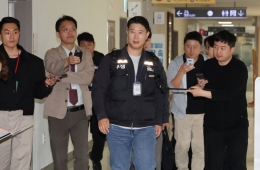
The Financial Services Commission announced on May 12 that it had convened an emergency meeting, presided over by Secretary General Shin Jin-chang, by calling together all members of Sangnoksoo to discuss measures for handling long-term delinquent bonds.
Sangnoksoo is a private bad bank established during the credit card crisis to liquidate the large volume of non-performing loans from credit card companies and to support rapid rehabilitation of debtors. Since its establishment, it has continued debt collection and bond recovery activities for 23 years.
At the meeting, all members of Sangnoksoo agreed to sell their entire portfolio of eligible bonds in bulk to the SaeDoYak Fund as soon as possible. The SaeDoYak Fund, launched in October last year, purchases delinquent bonds of 50 million won or less that have been overdue for more than seven years from financial companies and supports debt restructuring. For remaining bonds not covered by the SaeDoYak Fund, Sangnoksoo plans to quickly sell them to Korea Asset Management Corporation (KAMCO) and cease collection activities.
Once the liquidation of Sangnoksoo is completed, collection will be halted for approximately 110,000 long-term delinquent debtors, whose total debt amounts to 845 billion won.
When the SaeDoYak Fund purchases the bonds, collection will be stopped immediately. In particular, debts of socially vulnerable groups such as basic livelihood security recipients will be written off without a separate repayment ability assessment. Other bonds will be reviewed for repayment ability, and in cases where the debtor is deemed unable to repay—at a level equivalent to personal bankruptcy—they will be written off within one year. For debtors with significantly insufficient repayment capacity, debt restructuring will be pursued.
The Financial Services Commission plans to conduct a comprehensive investigation into companies structured similarly to Sangnoksoo that hold long-term delinquent bonds in the form of securitization firms. In addition, it will continue to encourage large-scale private lenders holding long-term delinquent bonds to participate in the SaeDoYak Fund.
Hot Picks Today
!["Those Who Hesitated at 3,000 Still Haven't Bought" 7 Trillion-Won Asset Manager Says "Opportunities Remain" [Investment Strategies of the Wealthy] ⑦](https://cwcontent.asiae.co.kr/asiaresize/93/2026050715101553735_1778134216.jpg) "Those Who Hesitated at 3,000 Still Haven't Bought" 7 Trillion-Won Asset Manager Says "Opportunities Remain" [Investment Strategies of the Wealthy] ⑦
"Those Who Hesitated at 3,000 Still Haven't Bought" 7 Trillion-Won Asset Manager Says "Opportunities Remain" [Investment Strategies of the Wealthy] ⑦
- "Why Are My Child's Grades Like This?" Surge in Overprotected, Isolated, and Reclusive University Students [University Students in Crisis] ⑧
- "Not Just Olive Young"... Word-of-Mouth Drives Foreigners to Pharmacies, Spending Surges 156%
- "Don't Come to Work from Tomorrow": Two Million Face Unemployment Crisis...Iran Shaken by War Shock
- "SK hynix Could Reach 2.8 Million Won; Why Securities Firms Are Confident That the Main Chapter of AI Has Not Even Begun Yet [Click eStock]"
The actions taken by the Financial Services Commission and financial companies on this day were carried out swiftly following a public rebuke from President Lee Jaemyung. On the morning of May 12, President Lee shared a news report on his social networking service (SNS) X (formerly Twitter), stating that Sangnoksoo had been collecting on 700 billion won worth of non-performing loans for over 20 years. He criticized, "I did not realize that such primitive predatory finance was still openly tightening the noose on ordinary citizens," and questioned, "Why have the authorities failed to even discover such corruption until now?"
© The Asia Business Daily(www.asiae.co.kr). All rights reserved.