Lee Eokwon: "Push to Designate Chief Officer for Inclusive Finance at Financial Firms"... Delinquent Debt Collection to Shift to Licensing System
Press Briefing by FSC Chairman Lee Okwon
Inclusive Finance Strategy Task Force to Launch in June with Four Divisions
Reform of Credit Evaluation System and Firm Response to Illegal Private Finance
The government will launch the "Inclusive Finance Strategy Task Force" in June 2026 to reform the structures that cause financial exclusion among vulnerable groups. Financial companies will be required to designate a Chief Officer for Inclusive Finance, and boards of directors will be tasked with establishing inclusive finance management systems. In addition, the management of delinquent debt collection will shift from a registration-based system to a full licensing regime.

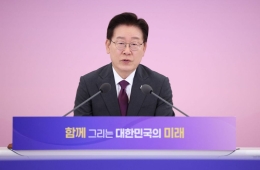
On May 21, 2026, Lee Eokwon, Chairman of the Financial Services Commission, stated at a press briefing at the Seoul Government Complex, "Until now, we have focused on urgent support for marginalized groups excluded from the formal financial sector, such as through the New Leap Fund, credit amnesty, delinquent debt management, and actions against illegal private lending. Now, it is time to fundamentally improve the structures that give rise to financial exclusion."
The government plans to establish the Inclusive Finance Strategy Task Force under the currently operating "Inclusive Finance Grand Transition Committee" to discuss measures for restructuring the financial system.
The task force will operate as an open structure with broad participation, including not only the government, financial companies, and policy institutions but also experts from outside the formal system, social activists, and field counselors. The intention is to move beyond the traditional financial sector perspective and incorporate on-the-ground awareness and diverse viewpoints.
The scope of discussion on inclusive finance will also be expanded. The task force will be organized into four divisions: General Affairs, Policy for Low-Income Groups, Financial Industry, and Credit Infrastructure.
The General Affairs division will focus on instilling an "inclusive finance DNA" within the financial system. Key topics include designating a Chief Officer for Inclusive Finance at each financial institution, establishing board-level management systems, and implementing immunity mechanisms for employees carrying out inclusive finance work. The Policy for Low-Income Groups division will discuss designing a comprehensive evaluation system for inclusive finance. This includes examining ways to link incentives, contributions, and reputation systems to evaluation indicators to promote inclusive finance in the financial sector.
The Financial Industry division will review whether prudential regulations in the financial sector excessively restrict inclusive finance and will prepare plans for regulatory rationalization. It will also discuss ways to strengthen the original roles of community-oriented financial institutions such as internet banks. The Credit Infrastructure division will focus on overhauling the credit evaluation system.
Chairman Lee explained, "Currently, credit evaluation is centered on past financial and delinquency histories, which has limitations in assessing those with insufficient financial records or those who have faithfully repaid delinquent debts. We will rationally adjust the criteria for using delinquency information and build a more inclusive and sophisticated credit evaluation system by utilizing non-financial and alternative data."
To this end, the Financial Services Commission will hold an on-site public forum in June to discuss relevant measures, and the results will be sequentially submitted to the Inclusive Finance Grand Transition Committee for announcement.
Regulation of delinquent debt collection businesses will also be strengthened. Currently, the purchase-type debt collection business, which buys delinquent debts from financial institutions at low prices and collects them, operates under a registration system, but this will be switched to a licensing system. Chairman Lee stated, "Because the purchase-type debt collection business profits by buying debts at low prices and collecting them, its very nature requires strict discipline."
The government will also expand its review of blind spots in the New Leap Fund. In light of the "Sangnoksoo" incident, financial authorities plan to conduct a comprehensive investigation of bonds held by special purpose companies (SPCs) through a quadruple inspection system involving financial companies, the Financial Supervisory Service, the Korea Credit Information Services, and Korea Asset Management Corporation (KAMCO).
Hot Picks Today
 At President Lee's Call to "Give Enough to Shock," Whistleblower Rewards Become a Real Lottery
- "If Both Spouses Work There, How Much Would They Make?" "They Earn More Than Me, and I'm a Doctor"... Envy Erupts Over Samsung Electronics' Bonus
- Lived as Family for Over 30 Years... Daughter-in-Law Cast Aside After Husband's Death
- "Going to Work Every Day Is Terrifying"... Starbucks Frontline Workers Vent Frustration Amid 'Tank Day' Backlash
- "Who Is Visiting Japan These Days?" The Once-Crowded Tourist Spots Empty Out... What's Happening?
The government also reaffirmed its zero-tolerance principle for illegal private lending. Chairman Lee emphasized, "Illegal private loans with ultra-high interest rates of 60% or more per year are null and void," and made it clear that there would be a tough response to illegal private lending disguised as advance gift certificate sales. He added, "Victims are not required to repay, and can receive immediate support through the online one-stop reporting system. The police and related ministries will strengthen their crackdown through close cooperation."
© The Asia Business Daily(www.asiae.co.kr). All rights reserved.