Adam Posen: "Dollar Hegemony Shaken... Weakening U.S. Trust and Security Alliances May Crack Monetary Order" [2026 Financial Forum]
Adam Posen, President of the Peterson Institute for International Economics, Delivers Special Lecture
"The Dollar Is Difficult to Replace Immediately, but Its Absolute Centrality Will Weaken"
"Internationalization of the Won Is Constrained b
Adam Posen, President of the Peterson Institute for International Economics (PIIE), has warned that cracks are emerging in the security alliances and financial order that have supported the dominance of the U.S. dollar, potentially destabilizing the dollar system. While the dollar continues to strengthen as a safe asset amid growing global economic uncertainty, he analyzed that U.S. protectionism, fiscal deficits, and political uncertainty could undermine trust in the dollar regime over the medium to long term.

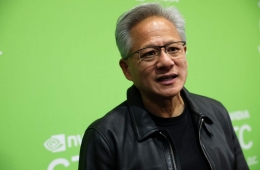
Adam Posen, President of the Peterson Institute for International Economics (PIIE), is giving a special lecture via Zoom connection at the "2026 Asia Financial Forum," hosted by The Asia Business Daily at the Chosun Hotel in Jung-gu, Seoul on May 21, 2026. Photo by Kim Hyunmin
View original imageOn May 21, at a special lecture during the 2026 Asia Financial Forum held at The Westin Josun Seoul under the theme "Future Financial Transformation: The Era of Productive Capital and a New Financial Order," Posen stated, "The dollar-centered order will likely persist for the time being, but it is becoming difficult to guarantee the absolute status it enjoyed in the past." On this day, Posen gave a presentation titled "Can Dollar Hegemony Be Sustained? Korea's Strategic Choices Amid Changes in the Global Monetary Order."
Posen diagnosed that the recent "King Dollar" phenomenon does not necessarily signify a structurally strong dollar. He explained, "Due to Middle East risks and geopolitical conflicts, demand for safe assets has increased, leading to short-term inflows into the dollar, but there are accumulating factors within the U.S. that undermine trust in the dollar." He pointed out, "The risks of U.S. inflation and an expanding fiscal deficit could lead to downward pressure on the dollar's value in the future."
"The Dollar Is a Product of Security Alliances"... Weakening U.S. Trust Threatens Monetary Order
He especially analyzed that the "America First" policy, which intensified after the launch of the Trump Administration, is weakening trust in the dollar-centered international financial order. Posen said, "Once tariffs are imposed, they are rarely withdrawn," and projected, "The U.S. will likely continue high tariffs and domestic supply chain policies to protect strategic industries, making a return to the previous free trade regime difficult." He added, "Even for allied countries, the U.S. may continue to demand increased investment, weapons purchases, and energy imports."
Posen also emphasized that the core foundation of dollar hegemony was the U.S.-centered security system. He noted, "In the past, as the U.S. led the global security order, allied countries naturally chose the dollar as their foreign reserves and means of settlement. The dollar is not merely a currency but a system built upon security relationships." He continued, "However, as the U.S. approaches alliances in a transactional manner and reduces the predictability of international order, the dollar regime itself could be shaken."
He also pointed out that the "insurance function" the U.S. has provided to the global economy is itself weakening. Posen remarked, "The U.S. used to act as an insurer by providing rules and security, but it is increasingly behaving more coercively and transactionally." He explained that, along with rising defense spending in Europe, Japan, and Korea, there are also moves to expand alternative payment systems and currency swap lines to circumvent U.S. sanctions and surveillance.
Posen cited U.S. fiscal and monetary policy as additional concerns. He predicted that, due to tariffs, immigration restrictions, increased defense spending, and expansionary fiscal policy, inflationary pressures in the U.S. could persist longer than expected. In particular, he observed that the neutral interest rate itself has risen due to increased defense spending, industrial policy, investment in artificial intelligence (AI), and greater geopolitical risk, which neither overheats nor depresses the economy. He noted, "Although the Federal Reserve currently considers its monetary policy sufficiently restrictive, actual financial conditions may be looser than expected."

Adam Posen, President of the Peterson Institute for International Economics (PIIE), is giving a special lecture via Zoom connection at the "2026 Asia Financial Forum" hosted by The Asia Business Daily, held on May 21 at the Chosun Hotel in Jung-gu, Seoul. 2026.5.21 Photo by Hyunmin Kim
View original image"Difficult to Immediately Replace the Dollar, but Centrality Will Weaken"... Strategic Opportunities for Korea
However, he assessed that it is unlikely for another currency to emerge that could immediately replace the dollar. Posen analyzed that while the euro and renminbi could expand their roles to some extent, rather than the dollar-centered system collapsing abruptly, it is more likely to weaken gradually and shift toward a multipolar system. He warned, "Demand for the dollar will not suddenly disappear, but its centrality could weaken compared to before. Until now, capital has flowed into the dollar during crises, but if the U.S. itself becomes a source of instability, there could even be capital outflows."
Posen also suggested that the process of weakening dollar hegemony could open up strategic opportunities for Korea. He stated, "The influence of American and European companies in the global market could weaken in the long term. In Southeast Asia, the Middle East, and developing markets, there could be greater demand for new cooperation partners that do not rely excessively on either the U.S. or China."
He continued, "Rather than simply relying on one side amid U.S.-China rivalry, Korea should strengthen its own independent economic and financial networks. There are also new opportunities in utilizing regional economic cooperation and multilateral financial safety nets with China, Japan, and ASEAN (Association of Southeast Asian Nations)." He particularly assessed that Korean companies' competitiveness in semiconductors, defense, and advanced manufacturing could become even more important in the future.
"Limitations to Won Internationalization"
Regarding the possibility of internationalizing the won, Posen diagnosed that there are structural constraints. In response to a question about the prospects for won internationalization, he said, "Korea has very sophisticated investors and companies, but its financial services industry is still not on par with global financial hubs like Singapore, London, or New York. As the Korean government has maintained a fiscal surplus for an extended period, the size and depth of the won-denominated government bond market are also limited."
Hot Picks Today
 At President Lee's Call to "Give Enough to Shock," Whistleblower Rewards Become a Real Lottery
- If They Fail Next Year, Bonus Drops to 97 Million Won... A Closer Look at Samsung Electronics DS Division’s 600M vs 460M vs 160M Performance Bonuses
- Lived as Family for Over 30 Years... Daughter-in-Law Cast Aside After Husband's Death
- Opening a Bank Account in Korea Is Too Difficult..."Over 150,000 Won in Notarization Fees Just for a Child's Account and Debit Card" [Foreigner K-Finance Status]②
- "Who Is Visiting Japan These Days?" The Once-Crowded Tourist Spots Empty Out... What's Happening?
He further added, "The U.S. government, especially the Trump Administration, might not welcome the internationalization of the won." However, he assessed, "Even if the won does not reach the level of replacing the dollar or the euro, it could still play a meaningful role as an international currency in specific sectors and regions, similar to the Singapore dollar or the Norwegian krone."
© The Asia Business Daily(www.asiae.co.kr). All rights reserved.