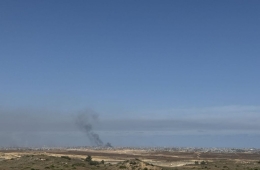
"US-Iran: Patch-Ups More Likely Than Settlement... Unlikely to Resolve Within 6 Months" [Economic Policy Zoom-In]
Interview with Middle East Diplomatic Expert Moon Byungjun, Former Chargé d'Affaires at the Saudi Embassy
"Crisis Will Be Managed Through Partial and Temporary Provisional Agreements, Not a Grand Settlement"
"Industry Must Prepare Scenarios Assuming the Stalemate Will Last Beyond Six Months"
Nearly three months have passed since the outbreak of the U.S.-Iran war, but an uneasy ceasefire continues, with peace negotiations at a standstill. On the 19th, U.S. President Donald Trump stated that he would resume attacks on Iran, only to later put those plans on hold, saying he could allow more time until early next week depending on the progress of negotiations.
To discuss the root causes and future prospects of the U.S.-Iran war, shifts in Middle Eastern geopolitics, and the potential impact on Korea, The Asia Business Daily spoke with Moon Byungjun, former chargé d'affaires at the Embassy of Saudi Arabia and a Middle East diplomatic expert.
Mr. Moon explained, "The Trump Administration cannot ignore the pro-Israel voter base in the U.S., and Iran's supreme leadership system cannot withstand backlash from its hardliners. As a result, the likelihood of a comprehensive Obama-style agreement (JCPOA) being reinstated in the short term is low. Realistically, what we should expect is not a 'complete settlement,' but repeated cycles of 'imperfect patchwork.' In lieu of a grand agreement, we are likely to see the crisis managed through partial and temporary provisional agreements that buy time."
Regarding the Strait of Hormuz, he remarked, "The transit fee card is not really about actual collection, but about expanding the agenda for negotiations and pressuring parties to address not only the nuclear issue but also Iran's control over Hormuz as a separate topic." He added, "The opening of the strait and peace are not a one-time deal. Rather, Iran will drag out the process, and the U.S. will manage the situation gradually, leading to a prolonged period of instability. Korean industry needs to develop scenarios based on the premise that this structure will not be resolved within six months."
Mr. Moon graduated from the Arabic Language and Literature Department at the University of Jordan and completed a combined master's and doctoral program in Islamic and Middle Eastern Studies at the University of Edinburgh in the UK. He entered the diplomatic service through a competitive recruitment process specializing in international relations and the Middle East at the Ministry of Foreign Affairs, serving 26 years across 10 posts exclusively in the region. From the 1st to the 8th of this month, he visited Kuwait, Bahrain, and Iraq as a special envoy of the Minister of Foreign Affairs.

Moon Byungjun, former chargé d'affaires of Saudi Arabia, is giving an interview to The Asia Business Daily at Asia Media Tower in Jung-gu, Seoul on the 18th. Photo by Kang Jinhyung
View original image- Policy Chief Kang Hoonshik visited Saudi Arabia, the UAE, Qatar, and Oman, while Special Envoy Jeong Byungha went to Iran. What was the purpose and outcome of these special envoy visits?
▲ There is a proverb in the Middle East: "A true friend is the one who stands with you in difficult times." This is not just a rhetorical phrase. In Middle Eastern diplomacy, trust is not built during peacetime—it is decided by where you are during a crisis.
The most impressive aspect of this visit was the reaction of officials in each country. Amidst a situation where foreign dignitaries had largely stopped coming due to the war, Korea from Asia was the first to arrive. The welcome was not merely ceremonial; there was a palpable sense of sincerity that "we have not been forgotten."
The outcomes can be summarized in three ways. First, mutual trust between the countries was elevated to a new level. Second, Korean companies secured priority in postwar recovery projects. Third, there was substantial progress in cooperation for stable energy supply. This visit effectively converted trust into tangible cooperation assets.
- In your recent writing, you said that the U.S. and Europe are misreading the Middle East.
▲ The essence of this misreading lies in viewing the Middle East as a 'space manageable by military means.' The calculation is that pressure will force surrender, attacking the regime will destabilize society, and strong sanctions will ultimately increase bargaining power. However, in the Middle East, external pressure often ends up legitimizing the hardliners internally.
This was the case in Iraq. The Bush Administration thought that toppling Hussein would lead to a free Iraq, but what actually emerged were Shia militias and Al-Qaeda. Afghanistan was no different—the Taliban returned after 20 years of occupation. Iran is following the same pattern. While military strikes are possible, what kind of order will remain afterward is a different matter altogether.
The West has been adept at starting wars but has repeatedly failed to design the postwar political order. The Middle East is not simply about regimes. It is a space where layers of history, sectarianism, tribal identities, memories of humiliation, and experiences of external intervention coexist within each society. Approaching this complexity with force alone turns military victories into political defeats. The current U.S.-Iran war is an extension of this longstanding misreading.
- Looking at the Iraq war, the Yemen civil war, the recent Israel-Hamas war, and the Iran war, it seems there are persistent drivers that make conflict in the Middle East almost inevitable.
▲ If you try to explain everything through religion or sectarianism, you miss the essence. The deeper issues are incomplete nation-building, fragile governance, and broken social contracts. Most Middle Eastern countries were established on artificial borders drawn by Britain and France in the aftermath of World War I. The division plan that began with the secret Sykes-Picot Agreement in 1916 was cemented into current borders through the San Remo Conference in 1920. Efforts to unify citizens as a single nation were never completed, and tribal, sectarian, and regional identities filled that vacuum. When states are weak, religion becomes strong, and when religion is strong, conflict becomes easier. Religion is not the cause of conflict; rather, it is the language most quickly mobilized when the state falters.
When external intervention is added, conflicts become protracted. When the U.S., Iran, Saudi Arabia, Israel, and Turkey get involved in local schisms, domestic conflicts quickly escalate into proxy wars. Once war breaks out, militias and quasi-state actors take control of security and the economy, further weakening the state, which in turn invites more external intervention. Lebanon, Syria, Yemen, and Libya have all followed this path.
Instability in the Middle East is not just a series of isolated events. It is a recurring structural crisis in which weak states, external intervention, and armed groups reinforce each other. If this structure does not change, conflicts will persist in different forms.

Moon Byungjun, former chargé d'affaires at the Embassy of Saudi Arabia, is being interviewed by The Asia Business Daily on the 18th at Asia Media Tower in Jung-gu, Seoul. Photo by Kang Jinhyung
View original image- Despite suffering extensive attacks and destruction during this war, Iran continues to endure. What accounts for Iran's resilience and its sources of strength?
▲ It is not about national character, but about the structure of the state. Iran is a mountainous country of 1.65 million square kilometers, separated by the Zagros and Elburz mountain ranges, with cities scattered in basins. While airstrikes can target nuclear facilities and leadership, occupying the entire country is impossible for anyone.
Self-sufficiency is another factor. Iran produces most of its own oil, gas, wheat, rice, and meat. Though sanctions have caused severe foreign currency shortages and inflation, the basic essentials for survival are maintained. This is also why Iran survived eight years of war with Iraq in the 1980s.
The control system is also robust. The Revolutionary Guard is not a regular army, but a regime protection force. It is a "state within a state," controlling the military, economy, intelligence, and diplomacy. The supreme leadership system provides legitimacy from the top, and this structure becomes even more rigid in times of crisis.
Finally, Iran is optimized for attritional warfare, not total war. By spreading its influence across the Shia Crescent (Iraq, Syria, Lebanon, Yemen), it absorbs shocks. Even if parts of the country are attacked, the regime does not collapse instantly.
However, "not collapsing" does not mean "sustainable." If the Iranian rial continues to plummet, youth unemployment remains high, and public discontent grows, the risk of long-term fissures will increase. Both Iran's short-term resilience and long-term vulnerabilities must be considered.
- You mentioned that time in the Middle East moves differently. Iran's "resistance diplomacy" is often described as the "bazaar strategy" or "carpet strategy."
▲ "Bazaar strategy" is an accurate term. Negotiation is embedded in the Iranian DNA, shaped by 5,000 years of merchant culture. There are no fixed prices; the opening price is only the start of bargaining, and patience determines the final deal. It is a process of gradually exhausting the other party, like weaving a carpet thread by thread.
This is why the nuclear agreement under the Obama Administration dragged on for 20 months. Iran factored in the U.S. presidential election cycle, the administration's term, Congressional dynamics, alliance burden, and oil price cycles. In the end, the U.S. was the side that raised its price.
This pattern is unlikely to change. Iran sees the Strait of Hormuz not as a mere logistics route, but as a "negotiation card that can be closed at any time." Whenever oil prices rise and alliance burdens mount, Iran will raise its demands step by step.
This does not mean Iran always wins. If the U.S. simultaneously pursues alternative routes, energy diversification, and military options, Iran's resistance could backfire. This is why, in 1988, Khomeini said he was "drinking poison" when accepting the ceasefire with Iraq. Ultimately, opening Hormuz and achieving peace will not be a one-time deal. Iran will drag out the timeline, and the U.S. will manage it gradually, entrenching a long-term unstable structure. Korean industry should be preparing scenarios based on the assumption that this structure will not be resolved within six months.
- The nuclear enrichment issue seems prominent now, but with compensation, sanctions, future control over the Strait of Hormuz, and the issue of U.S. bases in the Middle East all intertwined, it seems difficult to reach an agreement. It seems unlikely that a deal can be struck that would persuade the pro-Israel bloc in the U.S.
▲ The nuclear issue cannot be isolated and solved on its own. For Iran, the strategic cost of agreeing only to halt uranium enrichment is too high, and the compensation the U.S. can offer on its own is too little. Inevitably, the negotiation becomes a package deal encompassing the nuclear issue, sanctions relief, return of frozen assets, control over Hormuz, cessation of threats to U.S. assets in the region, and the issue of support for pro-Iranian armed groups.
The problem is that this package deal directly clashes with U.S. domestic politics. The pro-Israel bloc in the U.S. demands permanent dismantlement of enrichment, limits on missile range, and dismantling of support for Hezbollah, Hamas, and the Houthis. The maximum Iran is willing to concede does not even reach half of these demands. The gap between the ceiling in Washington and the floor in Tehran is even wider than during the Obama era.
Neither side has the political capital to bridge this gap. The Trump Administration cannot disregard the pro-Israel vote, and Iran's supreme leadership system cannot withstand hardliner backlash.
As a result, the likelihood of a comprehensive Obama-style agreement (JCPOA) emerging in the short term is low. Realistically, what lies ahead is not a 'complete settlement,' but repeated cycles of 'imperfect patchwork.' The crisis will continue to be managed through partial and temporary provisional agreements that buy time instead of a grand settlement.
- Israel appears determined to continue the war until Iran's nuclear issue is resolved. It seems that Israel does not even want a peace agreement and may be trying to obstruct negotiations between the U.S. and Iran?
▲ The U.S. and Israel have fundamentally different perspectives on Iran. For the U.S., Iran is a "manageable threat," but for Israel, it is an "existential threat." The issue is different in terms of geography, history, and security. This is why agreements deemed sufficient by the U.S. are never sufficient for Israel.
Israel's military actions do disrupt the environment for U.S.-Iran negotiations, but viewing this as mere "obstruction" misses part of the picture. Israel claims these are actions for national security, and such actions inevitably shift the balance of negotiations. Attacks on Hezbollah in Lebanon, strikes against Iranian assets in Syria, and operations in Gaza all fall into this category.
Another variable is Israeli domestic politics. For Prime Minister Benjamin Netanyahu's government, the continuation of war is directly linked to political survival. Once the war ends, the responsibility for the Gaza operation, hostage negotiation failures, and controversies over judicial reform will all catch up to him. Thus, Israel sees a "managed state of tension" as more politically advantageous than a stable peace agreement.
This ongoing tension without an agreement is where Israel's security logic and Netanyahu's political logic converge. As long as these two logics remain intertwined, Israel's actions will continue to influence the U.S.-Iran negotiations.
- The U.S. is warning of additional attacks. It seems unlikely that this will escalate into a ground war, and additional airstrikes may not have much effect in pressuring Iran.
▲ Ground warfare is virtually impossible. Iran is a mountainous country of 90 million people and 1.65 million square kilometers. More importantly, the U.S. cannot go in alone.
There has never been a case of a foreign ground war in the Middle East ending in complete success. During the Iraq war, even with the majority Shia population and the northern Kurds as internal allies against Hussein, the U.S. ultimately handed power to a pro-Iranian Shia government after eight years of occupation. In Afghanistan, the Northern Alliance entered Kabul with U.S. forces, but after 20 years, the Taliban returned. In Iran, there are not even such internal allies. While there are certainly groups dissatisfied with the hardline path, there is no organized anti-government force willing to fight alongside foreign troops on Iranian soil. Iranian society distinguishes between discontent with the regime and rejection of foreign intervention.
The Pentagon, Congress, and the U.S. military all likely want to avoid this scenario. The U.S. understands the lessons of Iraq and Afghanistan better than anyone.
Thus, the options are narrowed to additional airstrikes. However, the limitations of this approach have already become apparent. The first round of airstrikes targeted nuclear facilities, missile launchers, and parts of the air defense system, but Iran's strategic calculus did not change. Additional strikes are more likely to harden Iran's resolve to develop nuclear weapons and expand asymmetric retaliation, rather than force concessions.
From the U.S. perspective, further airstrikes may serve more as a means of negotiation pressure than as a substantive solution. However, if pressure from the pro-Israel hardline bloc in the U.S. continues to mount, there is a possibility that these could lead to limited additional strikes. For now, the situation will oscillate between actual attacks and the prospect of attacks for some time.
- Experts from the Brookings Institution, prior to the U.S.-China summit, suggested the following scenario. Do you agree?
"Most likely scenario: ceasefire is maintained + frozen conflict, meaningful peace agreement is very difficult. Iran holds the initiative in negotiations. The U.S. has failed to achieve all four war objectives (halting uranium enrichment, ending support for Hezbollah/Hamas/Houthis, missile dismantlement, regime change). On the contrary, Iran may have increased its missile arsenal and become more convinced of the need for nuclear weapons."
▲ I agree with the broad assessment. In particular, the "frozen conflict" scenario—where a ceasefire is maintained but no substantive peace agreement is reached—is the most likely outcome. Within the current power structure of the Middle East, all other scenarios would entail even higher costs.
The evaluation that the U.S. has failed to achieve its four war objectives is factually correct. The suspension of uranium enrichment is only temporary, and support for Hezbollah, Hamas, and the Houthis has only weakened, not ceased. The issue of missile dismantlement has not even entered substantive negotiations, and regime change has effectively been abandoned.
However, the analysis that "Iran holds the initiative in negotiations" only captures one dimension. Iran may have the upper hand in terms of controlling time, but it faces economic and social pressures. The value of the rial is at its lowest since the 1979 revolution, and youth unemployment exceeds 20% by official statistics. If public dissatisfaction continues to accumulate, Iran cannot indefinitely keep time on its side.
One more important variable is that this war may have further convinced Iranian hardliners that "there is no safety without nuclear weapons." Cases where the international community treated nuclear and non-nuclear states differently are already deeply embedded in Iran's internal discourse. If the recent airstrikes have reinforced this perception, this will become the most difficult factor for future negotiations.
- There must be hardliners, moderates, and a middle ground within Iran's political spectrum.
▲ There are indeed hardliners, moderates/pragmatists, and a middle segment within Iran. However, the middle segment is not an independent third force, but rather a balancing group that shifts according to the power equilibrium. Hardliners are centered around the Revolutionary Guard, core clergy, security/intelligence agencies, and military elites. Moderates consist of government officials, diplomats, economic managers, and technocratic elites.
The core of Iranian politics is that the middle group is constantly swayed between the two extremes, making compromise difficult. Even under moderate leaders like Rafsanjani, Khatami, and Rouhani, the hardliners have always imposed restraints. The Green Movement in 2009, protests in 2017, and the Mahsa Amini protests in 2022 all ended with the hardliners regaining control.
Whether the hardliners want war depends on the context. Even they do not desire full-scale war, as the burden on the regime would be too great. However, "gray zone conflict"—prolonged tension without a peace agreement—benefits the hardliners. Persistent external threats strengthen their justification for internal control, weaken the moderates' case for negotiation, and elevate the Revolutionary Guard's political standing.
Ultimately, what hardliners prefer most is neither complete peace nor uncontrollable total war, but "managed tension." This is why Iran repeatedly approaches compromise on diplomatic and nuclear issues, only to be pulled back toward the hardline stance.
- Iran has declared it will impose transit fees for passage through the Strait of Hormuz. Is this realistically possible?
▲ In the short term, it is unlikely. Hormuz is an international strait under international law, and the right of innocent passage is guaranteed. If Iran were to unilaterally impose transit fees, the U.S., EU, Gulf countries, and major Asian importers would all protest, and the fees themselves would violate international law. Iran is surely aware of this.
Therefore, to interpret this statement as merely a revenue-driven move misses the point. Iran's transit fee card is a political declaration that it exercises "effective control" over Hormuz. Since the days of the Iran-Iraq war in the 1980s, when both sides attacked each other's oil tankers and paralyzed shipping in the Persian Gulf, Iran has regarded control over Hormuz as a strategic asset. This time, Iran has made its intentions even clearer. It is signaling that it wants to turn an international waterway into a "negotiable strategic asset."
What is more likely in practice is not official transit fees, but "unofficial cost imposition"—selective inspections of certain nations' ships, procedural delays, heightened maritime security threats, and higher insurance premiums, all of which create de facto costs. In fact, war risk insurance premiums for passing through Hormuz have risen significantly compared to before the war. While not explicit transit fees, the market is already experiencing similar effects.
Ultimately, the transit fee card is aimed more at expanding negotiation agendas than actual revenue collection. It is a means of pressuring the U.S. and Western countries to address not only the nuclear issue but also Iran's control over Hormuz as a separate negotiation item.

Moon Byungjun, former chargé d'affaires at the Embassy of Saudi Arabia, is giving an interview to The Asia Business Daily on the 18th at Asia Media Tower in Jung-gu, Seoul. Photo by Kang Jinhyung
View original image- Most Middle Eastern countries are monarchies. Iran is a state founded through revolution and is said to export revolution. Why does it persist in doing so?
▲ The conflict between Iran and the Middle Eastern monarchies is not simply a Shia-Sunni issue, but is rooted in the structural threat of "exporting revolution." In 1979, Khomeini did not just topple the Pahlavi dynasty; he introduced an ideology that questioned the legitimacy of monarchy across the Middle East.
For monarchies like Saudi Arabia, the UAE, Jordan, Morocco, and Bahrain, this is not just a diplomatic issue but a regime survival issue. The Gulf Cooperation Council (GCC) was formed under Saudi leadership in 1981 as a bulwark, and throughout the Iran-Iraq war in the 1980s, Saudi Arabia provided massive financial support to Hussein's regime for the same reason. For Saudi Arabia, the real adversary was not Hussein but the Iranian revolution.
Hezbollah, Hamas, the Houthis, and Iraqi militias are practical extensions of Iran abroad. The Quds Force of the Iranian Revolutionary Guard provides funding, weapons, training, and strategy, and these local actors raise anti-government, anti-Western, and anti-Israel legitimacy, functioning as pressure levers to destabilize their host countries from within. The rise of Shia militias as a "state within a state" in Iraq after Hussein is the most obvious example.
This is why monarchies see Iran not just as a military or diplomatic adversary, but as a source of revolutionary threat. Thus, Middle Eastern conflict is fundamentally a contest between monarchy and revolution. The Shia-Sunni divide is only a surface framework; the real issue is the conflict between the stability of monarchical regimes and the spread of revolutionary and resistance networks. This structure prolongs and complicates conflicts between Iran and the monarchies, making compromise difficult.
- But I still don't understand why Iran continues to "export revolution," given the negative economic impact and the need to support foreign assets, which must be difficult for ordinary citizens.
▲ The primary reason is for domestic hardliners—specifically, the clergy and the Revolutionary Guard—to consolidate their grip on power. The Shia-Sunni divide is more complex than often assumed. While Iran claims to promote Shia expansion, its hardliners use anti-American and anti-Israel rhetoric to serve their own interests. The Revolutionary Guard controls 20-40% of Iran's national economy, including segments of the oil industry, manufacturing, and agriculture.
- The UAE seems to have abandoned its role as a middle ground by signing the Abraham Accords with Israel and withdrawing from OPEC.
▲ The interpretation that the UAE has "abandoned the middle ground and sided with the U.S. and Israel" is only a surface reading. In essence, it's closer to a "strategic realignment." The UAE has left its passive middle position within the Saudi-led Gulf order, entering the U.S., Israel, Western markets, and advanced technology networks, thereby creating a "new strategic middle ground" that considers Iran, Saudi Arabia, and Israel all at once to broaden its influence.
The Abraham Accords are more than just normalization of relations. Through cooperation in security, intelligence, defense, advanced technology, agriculture, and ICT, the UAE has chosen to internalize the "U.S.-Israel-UAE" security structure. During this war, it was officially confirmed on May 12th by the U.S. Ambassador to Israel that Israel's Iron Dome system had been deployed in the UAE. The two countries have already become united in terms of security.
The withdrawal from OPEC sends an even stronger message. Since OPEC's founding in 1960, this signals a departure from the Saudi-led system of price and production control, a shift toward autonomy in the international oil market, and an energy strategy centered on the U.S. market. Simultaneously, it is a declaration of independence from Saudi Arabia's shadow.
The UAE has a population of about 11 million, but citizens make up just over 10% of that figure; the rest are foreigners. By citizen count, the UAE is only slightly larger than one-tenth the size of Saudi Arabia, and its territory is only one-thirtieth as large. For a country of this size to break away from the Saudi-led Gulf order and deeply embed itself in the U.S.-Israel security network is a bold move, but it is also a strategic choice to scale up its influence.
Personally, I feel that the UAE may be overextending itself in security terms. The UAE is geographically very close to Iran, and as its ties with the U.S.-Israel security network deepen, it may become more directly exposed to Iranian pressure or retaliation in times of crisis.
This trend is a direct factor for Korea. The UAE is Korea's largest Middle Eastern partner in areas such as the Barakah nuclear power plant, defense exports, energy, infrastructure, and sovereign wealth fund cooperation. The extent of the UAE's strategic realignment will directly affect the scope of Korea's interests.
Hot Picks Today
 At President Lee's Call to "Give Enough to Shock," Whistleblower Rewards Become a Real Lottery
- "If Both Spouses Work There, How Much Would They Make?" "They Earn More Than Me, and I'm a Doctor"... Envy Erupts Over Samsung Electronics' Bonus
- Lived as Family for Over 30 Years... Daughter-in-Law Cast Aside After Husband's Death
- "Who Is Visiting Japan These Days?" The Once-Crowded Tourist Spots Empty Out... What's Happening?
- Park Minshik Shaves Head: "I Will End Han Donghoon's Predatory and Parasitic Politics"... Ongoing Calls for Conservative Consolidation in Busan Buk-gu Gap within PPP
The extent of future UAE-Israel cooperation and the responses of other Middle Eastern countries remain variables. In any case, the current U.S.-Iran war has changed many things.
© The Asia Business Daily(www.asiae.co.kr). All rights reserved.