Pyeongtaek Housing Market Revives on Semiconductor Boom... 'Hillstate Pyeongtaek Station Central City' Draws Attention
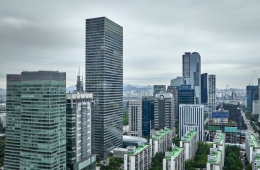
The Pyeongtaek housing market, which had remained stagnant for some time, is now showing signs of change with a recent recovery in transaction activity and a sharp decline in unsold inventory. The resumption of construction at the Samsung Electronics Pyeongtaek Campus, combined with rising expectations for a rebound in the semiconductor industry, has led analysts to believe that the local real estate market is entering a gradual recovery phase.
According to statistics from the Korea Real Estate Board, the average number of monthly apartment sales transactions in Pyeongtaek during January and February of this year was 623, a 5.9% increase compared to the previous year. The supply burden has also eased: the number of unsold private-sector homes in Pyeongtaek plummeted by 55.5% over the past year, from 5,868 units in February last year to 2,612 units in February this year.
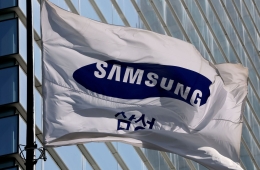
The resumption of construction at the Samsung Electronics Pyeongtaek Campus is acting as a key driver in reversing market sentiment. As construction personnel and partner firms return, demand for rental housing has surged in nearby Godeok-dong, with monthly rents for one-room apartments rising sharply. This renewed industrial activity is directly translating into increased residential demand. In addition, the potential for collaboration with global AI semiconductor companies, along with the groundbreaking ceremony for Pyeongtaek City's new city hall, is further solidifying the city's status as an advanced industrial hub.

Amid these developments, attention is turning to 'Hillstate Pyeongtaek Station Central City,' a new residential complex being supplied to Pyeongtaek's original downtown area. Located in Hapjeong-dong, Pyeongtaek, the project will consist of 14 buildings ranging from three basement levels to 35 above-ground floors, with a total of 1,918 units. Its proximity to major industrial facilities—including Samsung Electronics Pyeongtaek Campus, Songtan Industrial Complex, Chilgoe Industrial Complex, and Pyeongtaek Integrated Logistics Complex—makes it well-positioned to attract demand from people seeking to live close to their workplaces.
The transportation environment is also excellent. Residents can access Subway Line 1 via Pyeongtaek Station within walking distance, and from Pyeongtaek Jije Station—just one stop away—they can reach Suseo Station in Seoul in about 40 minutes using the SRT. In the future, Pyeongtaek Jije Station is expected to benefit from the extension of the GTX-A and C lines and the direct connection of the Suwon KTX line, further improving regional accessibility.
The area also boasts strong living and educational infrastructure, with facilities such as AK Plaza and Pyeongtaek Central Market nearby, as well as prestigious schools including Hapjeong Elementary School and Pyeongtaek High School.
The design and community amenities are also noteworthy. The complex is primarily oriented to the south, features 12 different unit types, and offers layouts designed for pleasant views and ventilation. Planned community facilities include a fitness center, screen golf, sauna, study room, small library, daycare center, and more. Each unit will have approximately 1.5 parking spaces and an individual storage room.
Backed by a large-scale semiconductor manufacturing hub, this development is expected to secure solid end-user demand despite market uncertainties, making it likely to become a landmark that drives residential value in Pyeongtaek going forward.
Hot Picks Today
![Home Appliance Woes Mount, Yet 45 Trillion Won in Bonuses? Samsung's Risky Asymmetry [Why&Next]](https://cwcontent.asiae.co.kr/asiaresize/93/2022111609212518207_1668558086.jpg) Home Appliance Woes Mount, Yet 45 Trillion Won ...
Home Appliance Woes Mount, Yet 45 Trillion Won ...
- "Major Crash Is Coming... Buy Even If You Have to Skip a Meal" 'Rich Dad' Shares...
- Government Accelerates Creation of Korean Sovereign Wealth Fund... Establishes F...
- 500% Energy Efficiency... Samsung Electronics’ 'Energy Magic' to End the Fear o...
- "It Was Fantastic" Jensen Huang's Daughter Seals 'Robot Alliance' with LG throug...
The model home for 'Hillstate Pyeongtaek Station Central City' is located in Hapjeong-dong, Pyeongtaek, and move-in is scheduled for January 2028.
© The Asia Business Daily(www.asiae.co.kr). All rights reserved.