Mobilized During Financial Crises and the Pandemic...Currency Swaps Revisited Amid Shaken 'Petrodollar' System

Koo Yoon-chul, Deputy Prime Minister and Minister of Economy and Finance, shakes hands with Scott Bessent, U.S. Secretary of the Treasury, and poses for a commemorative photo on the 17th (local time) before their bilateral meeting at the U.S. Treasury Department. Ministry of Economy and Finance
View original imageImmediately after the 2008 Lehman Brothers crisis, the U.S. central bank, the Federal Reserve (Fed), quietly poured hundreds of billions of dollars into foreign central banks to help foreign banks suffering from a dollar shortage. The tool used for this was the currency swap. A currency swap is an agreement that allows two countries to exchange their currencies. It can be utilized whenever needed, which is why it is often referred to as a "foreign currency overdraft account" or a "foreign currency liquidity safety net." Shin Je-yoon, who was then Assistant Vice Minister of the Ministry of Strategy and Finance (now the Ministry of Economy and Finance) and led the Korea-U.S. currency swap agreement during the Lehman crisis, compared the significance of the Korea-U.S. currency swap to the deterrent effect of the U.S. military presence in Korea. This analogy means that even if there is no situation where the currency swap must actually be used, the mere conclusion of a swap agreement between Korea and the U.S. serves as a strong deterrent and provides a trust effect against a foreign exchange market crisis.
The scale of the currency swap agreement at the time was 30 billion dollars. Considering that Korea's monthly export volume was in the 30 billion dollar range back then, it was not a particularly large amount, but it proved to be more powerful than any other measure. Even when the base interest rate was lowered by as much as 0.75 percentage points at once, Korea's financial markets continued to plunge, but the announcement of the currency swap brought an immediate turnaround. Just one day after the conclusion was announced, the won-dollar exchange rate dropped by 177 won, and stock prices soared by 12%. During the 2020 pandemic, Korea also overcame the crisis by concluding a 60 billion dollar currency swap with the U.S. Both swap agreements lasted for 15 to 18 months, but the actual period of borrowing was only 83 days, making it extremely short-term. Just as the presence of U.S. troops in Korea does not necessarily mean that military conflict will occur, but serves as a deterrent, the swap agreement served as a psychological safety net that ensured market confidence, even if it was not actively utilized.
It is clear that these two swap agreements played a reliable safety net role for Korea's foreign exchange market, but the U.S. had its own reasons for participating. A significant portion of the foreign exchange reserves of emerging economies experiencing financial crises, including Korea, is composed of U.S. Treasury bonds. If these countries deplete their reserves to defend against market instability, triggering a large-scale sell-off of U.S. Treasuries, and if other dollar-starved emerging economies follow suit, this could lead to a drastic drop in U.S. Treasury prices and a sharp rise in interest rates, severely shaking the U.S. financial market. At that time, other countries that had swap agreements with the U.S. apart from Korea, such as Brazil, Mexico, and Singapore, were all among the top holders of foreign exchange reserves. There is even a well-known anecdote that Kang Man-soo, then Minister of Strategy and Finance, succeeded in concluding the agreement by arguing that an emerging market crisis could spill over into advanced economies (a "reverse spillover"). In times of financial crisis or emergencies similar to a financial crisis, the U.S. used currency swaps as a measure to prevent the spread of external risks due to a shortage of dollars.

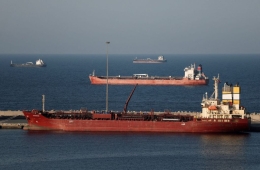
The background behind the U.S. and countries hit hardest by the latest Middle East war moving to expand currency swaps also centers around their own national interests. As countries facing dollar shortages due to the Iran war response tap into their foreign exchange reserves and start dumping U.S. Treasuries, there is concern that this crisis could once again spill over into the U.S. financial market. In addition, the U.S. is seeking to counter China's efforts to expand the influence of the yuan by broadening swap lines, especially as the recent war and the closure of the Strait of Hormuz have further shaken the foundation of the petrodollar system. However, since currency swap agreements between central banks are limited to countries that are structurally and closely linked to the U.S. financial market, there is also the possibility of using alternative swaps through the Exchange Stabilization Fund (ESF), which is the U.S. Treasury Department’s independent support tool.
This is not the first time the possibility of a Korea-U.S. currency swap has been discussed. Previously, both countries engaged in negotiations to link a 350 billion dollar investment in the U.S. with the conclusion of a currency swap, but it is reported that the agreement was not reached due to the U.S. government's perception that Korea did not have a shortage of dollars. Korea is also not currently facing an urgent dollar liquidity situation. The country’s foreign exchange reserves, which serve as ammunition for defending the currency (423.66 billion dollars), do not meet the International Monetary Fund (IMF) recommended level, but remain solid, and net external financial assets, which also help with exchange rate defense, have maintained a surplus of over 1 trillion dollars.
Hot Picks Today
 "Driven by Samsung and SK hynix: Korean Stock M...
- "Pay for the Postpartum Care Center with My Card"... Grandparents Open Their Wal...
- "Forged IDs Easily Bypass Convenience Stores, Bars, and Motels... Delinquency En...
- "Skipping Diamond Rings... Gen Z in the US Opts for Finger Tattoos"
- Back After 3 Years and 5 Months with a 'Shark Nose Surgery'... Hyundai Unveils T...
However, with the combination of a 350 billion dollar investment in the U.S. and external shocks such as the Middle East war, the conclusion of a currency swap could have a clear impact on market sentiment and exchange rate direction. From the U.S. perspective, it also sees the stable maintenance of the won-dollar exchange rate as being in its own national interest. A government official explained, "The fact that Secretary Bessent issued unusually verbal intervention messages regarding the Korean foreign exchange market on two occasions reflects the importance of a stable flow of the Korean won in the economic cooperation between the two countries."
© The Asia Business Daily(www.asiae.co.kr). All rights reserved.