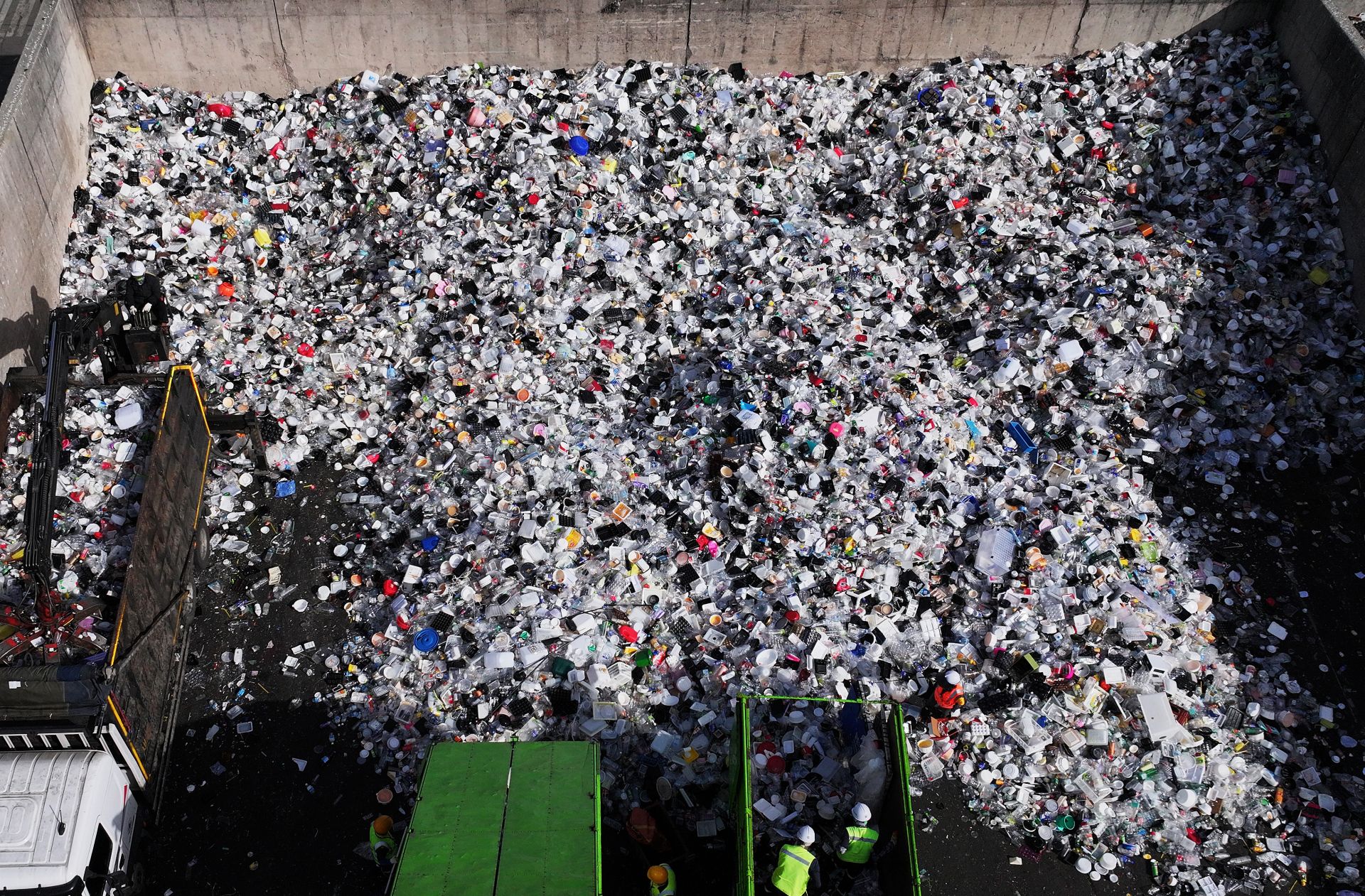
The government has set a goal to fundamentally reduce the use of petroleum-based virgin plastic materials (new materials made from petroleum or naphtha) by more than 30% compared to the projected amount of waste plastic generated by 2030. This initiative aims to respond to the recent instability in oil and naphtha supplies caused by the war in the Middle East, while also establishing a sustainable circular economy free from plastic dependency to secure industrial competitiveness.
Government to Cut Virgin Plastic Use by 30% by 2030... Building a 'Plastic-Free' Ecosystem
On the 28th, the Ministry of Climate, Energy and Environment reported these details in its 'Plastic-Free Circular Economy Transition Promotion Plan' at the Cabinet meeting. This policy, one of the core national tasks of the Lee Jaemyung administration, is centered on reducing unnecessary plastic production from the outset and reintegrating inevitably generated waste resources as recycled materials.
To achieve a fundamental reduction in plastic, the government will encourage consideration of recyclability from the design and production stages. It plans to promote alternatives for products with frequent plastic use, such as cosmetic containers and plastic bags, and to strictly manage excessive packaging by limiting the space ratio of delivery packaging (to 50% or less) and restricting the number of packaging layers (to one time).

President Lee Jae-myung is observing the PET can (Can-Seamer) container explained by Minister Kim Sung-hwan of the Ministry of Climate, Energy and Environment at the Cabinet meeting combined with the Emergency Economic Inspection Meeting held at the Blue House on the 28th. The PET can is a plastic PET container sealed with an aluminum can lid. Yonhap News Agency
원본보기 아이콘The government will also refine the 'Korean-Style Eco-Design System,' which evaluates factors such as product recyclability and repairability, and strengthen economic incentives, such as offering differentiated reductions in waste charges based on the proportion of recycled materials used.
To broaden the foundation of the recycling industry, the target for using recycled materials will be raised. The mandatory use of recycled materials in PET bottles, currently at 10%, will be increased to 30% by 2030, and the range of applicable items will gradually expand to include food and cosmetics containers as well as vinyl products.
Stricter Management of Clothing and Disposable Cups... Details of 'Korean-Style Eco-Design' Announced
In particular, management of clothing and disposable cups, which have previously been overlooked in recycling, will become more thorough. For example, police uniforms and other military and official uniforms will be collected to extract recycled polyester, while disposable cups will be incorporated into the Extended Producer Responsibility (EPR) system for systematic collection. To support this, the government will launch the 'K-Circular Economy Ribbon Project,' worth approximately 254 billion won from 2027 to 2033, to secure high-quality recycled material production technologies.
To establish a plastic-free culture throughout society, the government will accelerate the transition to reusable containers at multi-use facilities. This will begin with funeral halls operated by public institutions and expand to private facilities, as well as to sports stadiums and cafeterias. In addition, collaboration systems will be built to guarantee consumers' "right to repair," including the establishment of an information system for appliance repairs and an expansion of repair service centers.
Kim Seong-hwan, Minister of Climate, Energy and Environment, emphasized, "The current war in the Middle East is both a crisis and an opportunity to improve the linear structure of our economy," adding, "We will swiftly advance the goals of fundamental reduction and circular utilization to realize a sustainable economy resilient to external shocks."
-

Reporter Lee Dongwoo dwlee@asiae.co.kr
-
Edit Lee Kijae happylee17@asiae.co.kr
© The Asia Business Daily(www.asiae.co.kr). All rights reserved.