[Reporter’s Notebook] Hearings on Prosecutorial Manipulation Allegations Resemble Factional Disputes of the Past
Successful Performance, Failed Argumentation
![[Reporter’s Notebook] Hearings on Prosecutorial Manipulation Allegations Resemble Factional Disputes of the Past](http://www.asiae.co.kr/news/img_view.htm?img=2026042716310742239_1777275067.jpg)
"Compatibility is important. It's a matter of luck."
A ruling party lawmaker made this comment in a private setting, suggesting that the effectiveness of a parliamentary investigation or hearing depends on the rapport between the parties’ floor leaders. Even in sessions marked by shouting, insults, and rebukes, there is an unwritten gentleman's agreement. If someone’s remarks drag on, the floor leaders exchange glances to break the flow, and after a recess, they may stage a bigger confrontation outside before returning to the chamber. This way, all lawmakers stick to their allotted speaking times and create a lively session. The lawmaker said, "It's hard to coordinate everything in advance, but ultimately, things only work if the chemistry is right."
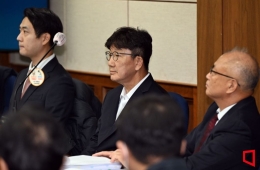
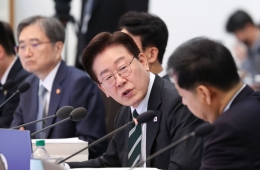
On April 28, with the comprehensive hearing coming to an end, the "Parliamentary Inquiry into Allegations of Politically Motivated Prosecution" successfully showcased this kind of "chemistry." A former high-ranking prosecutor present at the hearing noted, "Assistants were stationed in camera blind spots to film scenes for Shorts, Reels, and TikTok." In fact, with the floor leader election approaching, several lawmakers have become "inquiry stars." Provocative remarks like, "You look like Yoon Suk-yeol! Yoon Suk-yeol!" also drew attention.
The real issue lies in the substance. The key testimony at the heart of this hearing—the claim by former Gyeonggi Province Vice Governor Lee Hwa-young that he "reported the North Korea remittance to then-Gyeonggi Governor Lee Jaemyung"—had already been undermined in court, with its credibility in question and its admissibility as evidence limited. Other physical evidence, such as receipts for the $7 million delivered to North Korea and the admissions by Ssangbangwool executives regarding the illegal transfer of foreign currency, formed the decisive basis for the Supreme Court's judgment. Even though former Vice Chairman Bang Yong-cheol testified that he had met Ri Ho-nam, the hearing repeatedly parroted the claim that this testimony had been coerced.
Targeted investigations or over-prosecution by prosecutors must, of course, be kept in check. There are certainly indictments open to controversy, such as the "100,000 won corporate card misuse indictment" involving Kim Hye-kyung. However, extending the criticism of individual cases to broadly deny the legitimacy of all prosecutorial indictments is an overreach. One constitutional scholar likened this to "witnessing the collapse of rational debate and argumentation in the humanities." Meanwhile, a legal professional remarked, "Whether someone was served salmon sashimi or not—how is that different from the factional disputes of the Joseon Dynasty?"
The fundamental problem is that the hearing directly clashes with the principles of the judiciary. Criminal trials do not reach conclusions based on a single testimony. The process combines testimony, physical evidence, circumstances, and cross-examination. Especially in conspiracy cases, piecemeal interpretation is rarely valid. Nevertheless, this parliamentary inquiry lumped together disparate issues—such as the Daejang-dong, Wirye New Town, Kim Yong cases, statistical manipulation, the West Sea killing, and the Busan Savings Bank affair—into a single frame.
Hot Picks Today
 "Pay for the Postpartum Care Center with My Car...
- "Skipping Diamond Rings... Gen Z in the US Opts for Finger Tattoos"
- "Forged IDs Easily Bypass Convenience Stores, Bars, and Motels... Delinquency En...
- Found a Cockroach in Tteokbokki Order... Headquarters Apologizes for Discomfort,...
- Back After 3 Years and 5 Months with a 'Shark Nose Surgery'... Hyundai Unveils T...
In the end, the hearing has functioned less as a procedure to uncover the truth and more as a platform for each camp to send messages to their supporters and build partisan fandoms. Isn't this kind of politics better left for campaign speeches? Why should taxpayers continue to fund such hearings? It's time to reconsider their necessity.
© The Asia Business Daily(www.asiae.co.kr). All rights reserved.