Iran Turns to Putin for Breakthrough as Trump Proposes Phone Talks; Progress Remains Elusive (Comprehensive)
Trump Cancels Negotiators' Dispatch
Iran Likely to Request Mediation from Putin
"Strategic Uncertainty, Concerns Over Deadlock"

Last weekend, a second attempt to resume talks between the United States and Iran failed once again. As both sides were unable to reach an agreement on the core issue of nuclear weapons, U.S. President Donald Trump canceled the dispatch of the negotiating team. In response, Iran has expanded its diplomatic efforts beyond the Middle East to Russia, requesting mediation. Both inside and outside Iran, there are growing concerns that a prolonged deadlock and increased strategic uncertainty could further weaken Iran's position.
Trump: "No reason to meet if they won't give up nuclear weapons"

On April 26 (local time), President Trump said in a phone interview with Fox News regarding negotiations with Iran, "I will conduct negotiations by phone. If they want, they can just call us," adding, "I will not send our people (the U.S. negotiating delegation) on an 18-hour trip." He further stressed, "They cannot have nuclear weapons. Otherwise, there is no reason to meet." President Trump made these remarks immediately after putting on hold the dispatch of a negotiating team to Pakistan.
It is interpreted that President Trump is not committed to negotiations until a proposal on the core nuclear issue is prepared. On this day, Iranian Foreign Minister Abbas Araghchi, after visiting Oman, was initially planning to head to Russia but redirected his trip to Pakistan.
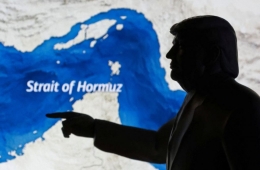
He presented a ceasefire proposal to Pakistani officials that included the implementation of a new legal regime in the Strait of Hormuz, receipt of compensation for war damages, guarantees against renewed aggression by warring parties, and the lifting of the maritime blockade against Iran. However, Iran’s Tasnim News reported, "The nuclear issue, which the United States considers the most critical point, was excluded." President Trump reiterated regarding the possibility of war with Iran, "We have achieved great results, and we will achieve a major victory."
Araghchi to meet with Putin... Will Russia mediate?

With the second attempt at talks with the United States falling through, Iran is now racing to engage with Russia. According to Russia's TASS news agency, Minister Araghchi is heading from Pakistan to Russia and is scheduled to meet with Russian President Vladimir Putin on April 27. On this day, Kremlin spokesperson Dmitry Peskov stated at a briefing, "President Putin will meet with Minister Araghchi on the 27th." Kazem Jalali, Iran’s ambassador to Russia, also said, "Minister Araghchi plans to consult with Russian authorities on the Middle East conflict, the negotiation situation, the ceasefire, and subsequent developments."
There is growing attention as to whether Russia will step forward as an active mediator in the Iran war through this meeting. According to CNN, Russia proposed to the United States that it would cooperate in resolving the nuclear issue, including the removal and dilution of highly enriched uranium from Iran. However, it is reported that the Trump administration rejected this proposal.
With talks between the United States and Iran having collapsed, fighting between Israel and Hezbollah, the pro-Iranian militant group in Lebanon, has once again intensified. According to Lebanon’s National News Agency (NNA), the Israeli military launched airstrikes in southern Lebanon on this day. NNA reported that at least one person was killed and three were injured in Lebanon as a result of the airstrikes. In response, Hezbollah retaliated by using suicide drones to attack Israeli forces stationed in southern Lebanon. The Israeli military stated that as a result of the attack, one Israeli soldier was killed and six were wounded. Both sides continue to accuse each other of violating the ceasefire agreement.
"Concerns grow over Iran's 'strategic uncertainty'... Prolonged deadlock seen as more disadvantageous"

Both inside and outside Iran, there are growing fears that a prolonged stalemate—neither negotiation nor open conflict with the United States—could inflict greater economic damage. If the state of strategic uncertainty continues, it is expected that economic pressure on Iran will intensify due to the U.S. maritime blockade.
Hot Picks Today
 Lingering at the Olive Young Shelf, Then Straig...
- Silently Climbing to the Top... Will Samsung Electronics Become the World's Most...
- Expansion of National Compensation for Force Majeure Obstetric Medical Accidents...
- "I Want to Sleep Here"... The Reason a Girl Lay Beside Her Grandparents' Grave a...
- Once a Leading 'Outdoor Legend'...Is Nepa Headed Down the Same Path as Homeplus?...
The New York Times (NYT) analyzed, "Major Iranian media see the ongoing strategic uncertainty—neither negotiations nor armed conflict with the United States—as more dangerous than short-term war," adding, "Within the next few months, Iran’s annual inflation could skyrocket from 70 percent to over 120 percent, while disruptions in the production of petrochemicals and pharmaceuticals as well as mass layoffs could threaten the Iranian regime."
© The Asia Business Daily(www.asiae.co.kr). All rights reserved.