Korean Bar Association Publishes "2025 Human Rights Report"
Review and Evaluation of the State of Human Rights in South Korea Last Year
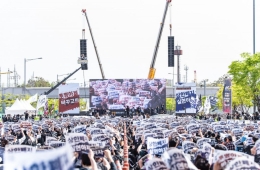
The Korean Bar Association announced on April 24 that it has published the "2025 Human Rights Report (40th Edition)," which reviews and evaluates the state of human rights in South Korea last year.

The "2025 Human Rights Report" is composed of Part 1, "Overview of Human Rights in 2025," and Part 2, "Status of Human Rights by Sector." Part 1 provides a summary of the key issues in each sector regarding human rights in 2025.
In Part 2, which covers the status of human rights by sector: ▲ In the area of the right to life and bodily freedom, the report examines the 12·3 Martial Law Declaration incident and issues of constitutional oversight, discussions on the life-sustaining treatment decision system and assisted dignified death, and the crisis in the essential medical system. ▲ In the area of judicial human rights, the report analyzes delays in trials and investigations, the status of search and seizure warrant issuances, digital evidence management, and judicial measures to address overcrowding in detention facilities. ▲ In the area of freedom of expression, it looks at the international assessments such as Korea's press freedom index, the portal-centered news consumption structure, and regulations on AI-based disinformation.
Additionally, ▲ In the area of environmental rights, the report reviews the International Court of Justice (ICJ)'s specification of national obligations in response to climate change and the implementation status of domestic carbon neutrality policies, as well as the launch of the Climate, Energy, and Environment Ministry and resource circulation policies. ▲ In the area of the human rights of migrants and refugees, it examines the record-high number of foreign residents, the low refugee recognition rate, the issue of the amended Immigration Control Act that does not specify the maximum detention period for those subject to deportation, and the operation of foreigner protection facilities. ▲ In the area of women's rights, the report analyzes major equality indicators such as the gender wage gap, policies to prevent career interruptions such as parental leave, and responses to deepfake sex crimes and dating violence. ▲ In the area of the rights of children and youth, it examines the status of child abuse and school violence, policies reflecting these issues in college admissions, support systems for youths preparing for self-reliance, and discussions on adjusting the age of criminal responsibility. ▲ In the area of the rights of persons with disabilities, the report reviews the implementation of policies supporting independent living and deinstitutionalization, the operation of the individual budget system for people with disabilities, and the operation of dedicated courts for the disabled. ▲ In the area of labor rights, it looks at the gap in treatment between regular and non-regular workers, discussions on reducing working hours, major legislative amendments such as the "Yellow Envelope Act," and the vulnerability of non-regular workers to industrial accidents.
Hot Picks Today
 "You Can Only Have This in Korea": Which Nation...
- "I Just Want to Sleep": Prime Minister Takaichi's Struggles?Frozen Meals, Two Ho...
- Iran Begins Collecting Hormuz 'Transit Fee' in Cash, Not Cryptocurrency
- This Is Truly "Unbelievable Stories"... Went to Renew License, Flagged as Identi...
- "This Has Never Happened to Me in Korea"... Gwangjang Market Stall That Charged ...
The Korean Bar Association stated that it hopes this report will serve as a guide for steering national human rights policy in the right direction and lead to the practical enhancement of the rights and interests of the people.
© The Asia Business Daily(www.asiae.co.kr). All rights reserved.