Prolonged High Oil Prices: Government Discusses Energy-Saving Measures Including Flexible Work in Private Sector
Corporate Roundtable on Promoting Flexible Work Arrangements
In an effort to expand energy-saving initiatives to the private sector amid prolonged high oil prices, the government has moved to strengthen support for flexible work arrangements. By encouraging companies to adopt policies such as staggered work hours and remote work, the aim is to ease traffic congestion while simultaneously reducing energy consumption.
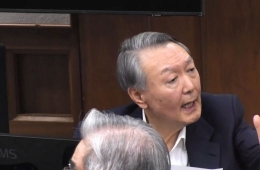
On April 24, the Ministry of Employment and Labor and the Metropolitan Transport Commission under the Ministry of Land, Infrastructure and Transport held a corporate roundtable on promoting flexible work at the Seoul Regional Employment and Labor Office, where they discussed public-private cooperation strategies in response to high oil prices. The meeting was attended by Minister of Employment and Labor Kim Younghoon, Metropolitan Transport Commission Chair Kim Yongseok, and representatives from six companies recognized as '2025 Korea Work-Life Balance Exemplary Companies' for their high adoption rates of flexible work arrangements.
Amid rising oil prices caused by instability in the Middle East, companies are facing increased costs and have begun spreading out commuting times and expanding remote work. Flexible work arrangements are drawing attention as a practical solution, as they can reduce traffic volume and energy use while also helping companies cut costs.

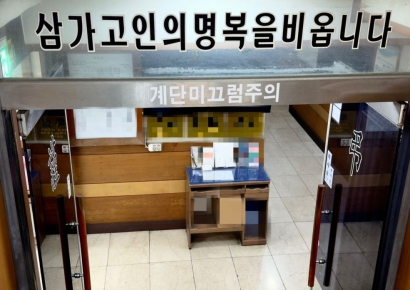
As the Middle East war prolongs, the public institutions' vehicle usage restriction system has been strengthened from the current odd-even system to a 'two-shift system.' On April 8, 2026, a signboard indicating the application of the two-shift system for passenger cars was installed at the main gate of the Government Seoul Office in Jongno-gu, Seoul. Photo by Kang Jinhyung
View original imageHowever, small and medium-sized enterprises are struggling to adopt flexible work due to constraints in workforce management, costs related to setting up new systems, and security concerns. To address this, the government will provide financial incentives to alleviate initial setup costs, as well as cover expenses and fees for implementing attendance management and information security systems. For companies with limited experience, the government will also offer manuals and connect them with consulting services.
Additionally, a new '10 a.m. Start for Parents with Young Children' system was introduced this year. Under this program, employees with young children can reduce their daily working hours by one hour without a pay cut. The government plans to boost uptake by eliminating the six-month minimum employment requirement and relaxing the mandatory submission of work and HR regulations to a recommended level.
Minister Kim stated, "As technological, demographic, and climatic changes occur simultaneously, transforming the way we work is essential. We will strengthen tangible support to help companies participate in this transition through flexible work."
Hot Picks Today
 The Quoted 800,000 Won, the Bill Was 5 Million....
- "How Do Six People Sleep in a 44㎡ Apartment?" Subscription Point System Controv...
- They Say They'd Rather Go to Japan Than Travel Domestically... But a 'Surprising...
- Came to Shop for Clothes, Ended Up Singing and Getting an Eye Exam... Inside Mus...
- "Never Hike Alone as a Woman" "Even Two Are at Risk"... Growing Fear of Crime on...
Chairman Kim said, "We are implementing the 'Everyone's Card' policy, which provides incentives for commuting during off-peak hours. We encourage companies to take advantage of this in combination with flexible work arrangements." He added, "A pan-government task force is preparing measures to alleviate public transportation congestion, including the expansion of flexible work, and these plans will be announced soon."
© The Asia Business Daily(www.asiae.co.kr). All rights reserved.
![The 'Epic' 1,500 Trillion Won Bill... In the End, the Poor Pay the Price [Data Pick]](https://cwcontent.asiae.co.kr/asiaresize/307/2026042310001637425_1776906017.jpg)