[Battleground Preview] ③ Geumho River Belt... Daegu’s Conservative Stronghold Shaken by Nomination Turmoil
People Power Party Faces Prolonged Infighting Amid Nomination Turmoil
Democratic Party Fills Candidacies with the Kim Boo-kyum Card
Nervous Watch on Cracks Emerging in the Conservative "Geumho River Belt"
Daegu Lawmakers: "Outcomes Will Depend on Voter Turnout"
As the June 3 local elections approach, tremors are being felt in Daegu Metropolitan City, a traditional stronghold of conservative politics in South Korea. Amid a nomination crisis, cracks have emerged in what was once a solid conservative bloc, drawing attention to the changing electoral landscape in the Geumho River belt. The Democratic Party is in high spirits, fielding candidates throughout Daegu and putting forward Kim Boo-kyum as their main figure. In contrast, the People Power Party is trying to overcome internal strife and is focusing on boosting voter turnout.
In Daegu, the Geumho River runs through the center of the city, forming the so-called Geumho River belt that includes Seo-gu, Buk-gu, Dong-gu, Dalseo-gu, and Dalseong-gun. Surrounding areas such as Suseong-gu, Jung-gu, and Nam-gu make up the city center. Daegu has never once handed over the positions of metropolitan or local government heads to a Democratic Party-affiliated candidate, remaining a steadfast conservative bastion. In particular, the Geumho River belt, densely packed with industrial complexes, has long been a fiercely contested area every election season, with conservatives vying for nominations.
This year, however, the situation has changed. While the People Power Party made a misstep due to the Daegu mayoral nomination crisis, the Democratic Party took a gamble by bringing back Kim Boo-kyum, the former prime minister who had retired from politics. Several factors have worked against the People Power Party, including the region's deep sense of disappointment following the impeachments of former presidents Park Geun-hye and Yoon Suk-yeol, as well as the fact that the region's per capita gross regional domestic product (GRDP) ranks the lowest nationwide, reflecting a declining local economy.
![[Battleground Preview] ③ Geumho River Belt... Daegu’s Conservative Stronghold Shaken by Nomination Turmoil](http://www.asiae.co.kr/news/img_view.htm?img=2026042410565539343_1776995815.jpg)
Within the People Power Party, there are concerns that not only the outcome of the Daegu mayoral race but also some local government head (district and county) races cannot be predicted. Lawmakers in Daegu have expressed concern, saying, "It won't be easy," and "Public sentiment is more critical than ever." However, as a significant number of voters disappointed with the party are saying they will not go to the polls, the outlook is that the election results could shift depending on how much voter turnout among this group can be raised.
One Daegu lawmaker, speaking on condition of anonymity, said, "The situation may be similar to the 2018 local elections that took place after the impeachment of former President Park Geun-hye," and predicted, "The results may even be a little worse than back then." The lawmaker added, "Some local constituencies could become vulnerable depending on voter turnout, which is worrying," and further explained, "We can anticipate voters' choices once they're at the polling stations, but the worry is that they may not show up at all."
The 2018 local elections, held the year after former President Park’s impeachment was upheld, are often seen as a barometer for the current race. At the time, the Liberty Korea Party (now the People Power Party) won the Daegu mayoralty and appeared to be holding its ground by securing seven out of eight local government head positions. However, a closer look revealed a different story. In the Geumho River belt areas of Dong-gu and Buk-gu, the vote margin with the Democratic Party was only about 4.4 and 8.6 percentage points, respectively. The Dalseong-gun chief (an independent) seat was lost.
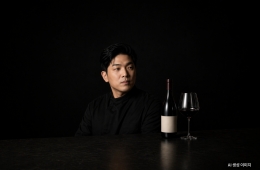
In the metropolitan council elections, the Democratic Party secured 5 out of 30 seats (including both district and proportional representation), forming a negotiation group for the first time—a sharp contrast to the single proportional seat they won in 2014. In the basic council elections, the Democratic Party took 50 out of 116 seats (43%). Yoo Seungchan, CEO of Storydot and a political consultant, said, "A similar number of Democratic Party winners can be expected in this year's (metropolitan and local council) elections as well."
![[Battleground Preview] ③ Geumho River Belt... Daegu’s Conservative Stronghold Shaken by Nomination Turmoil](http://www.asiae.co.kr/news/img_view.htm?img=2026042410571439344_1776995834.jpg)
The Democratic Party has high hopes for former Prime Minister Kim, a Daegu native who managed to plant the party’s flag in the region during the 20th National Assembly elections. The party is also fielding candidates for both local government heads and metropolitan council seats throughout Daegu. Heo So, head of the Democratic Party's Daegu branch, said, "We originally planned for about 15 to 20 metropolitan council candidates, but after Kim's announcement, that number nearly doubled. In 2018, we ran in 18 districts, but this time, we will field candidates in all 30 districts."
The People Power Party managed to ease some internal strife after Deputy National Assembly Speaker Joo Ho-young, who opposed being excluded from the Daegu mayoral nomination (cutoff), decided not to run. There is speculation that party unity will improve once the final candidate is selected. There is also a chance that Han Dong-hoon, the former party leader running in the Busan Buk-gap by-election, could have some effect in Daegu. However, the possibility of Lee Jin-sook, a former chairperson of the Korea Communications Commission who was also excluded from nomination, running as an independent remains a challenge.
Hot Picks Today
 "I Just Want to Sleep": Prime Minister Takaichi...
- "You Can Only Have This in Korea": Which National Museum Cafe Menu Is Captivatin...
- "This Has Never Happened to Me in Korea"... Gwangjang Market Stall That Charged ...
- Iran Begins Collecting Hormuz 'Transit Fee' in Cash, Not Cryptocurrency
- "Never Hike Alone as a Woman" "Even Two Are at Risk"... Growing Fear of Crime on...
Experts believe that a range of variables will continue to influence the election in Daegu up until voting day. Lee Jaemook, a professor at Hankuk University of Foreign Studies, said, "Conservatives may rally at the last moment if they sense a crisis, so the situation requires close attention. Nevertheless, this election is one that the People Power Party must be extremely cautious about." CEO Yoo also commented, "Voters in their 40s and 50s in Daegu could shift away from the conservative bloc. With the local economy struggling, problem-solving leadership is more important than ever."
© The Asia Business Daily(www.asiae.co.kr). All rights reserved.