[SK hynix ADR Boost②] "Concerns Over Shareholder Dilution Are Valid... Depends on Capital Efficiency"
"TSMC ADR Did Not Harm Domestic Liquidity"
"Focus Should Be on Fundamental Value, Not Listing Market"
There are also investor concerns surrounding SK hynix's plans for an American Depositary Receipt (ADR) listing in the United States. While there is optimism that it could resolve the "Korea discount" (a phenomenon where Korean stocks are undervalued) and attract global capital, there are fears about the dilution of existing shareholders' value due to the issuance of new shares. In an interview with The Asia Business Daily, Professor Chen Yaotung of Ming Chuan University in Taiwan stated that, in principle, concerns about shareholder value dilution through new share issuance for ADRs are valid.
However, he added, "The actual impact depends on the scale of issuance and the efficiency with which the raised capital is used," and explained, "If the funds contribute to growth, the dilution effect could be offset in the long term." Last October, Professor Chen published a paper as first author analyzing the ADR premium for TSMC.

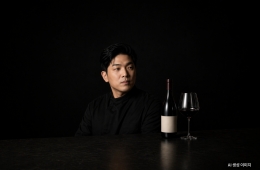
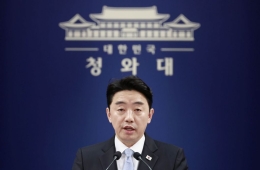
Professor Chen Yaotung of Ming Chuan University, Taiwan (left), and Professor Wang Shufeng of the Department of Business Administration at Ajou University.
View original imageSK hynix was initially reported to be considering an ADR listing based on treasury shares, but after retiring all of its treasury shares worth 12.24 trillion won, the market now sees a new share issuance as the most likely method for the listing. The company has stated, "We are preparing for a listing in the second half of this year, but the scale and method of issuance have not been finalized."
When TSMC first listed ADRs on the New York Stock Exchange in October 1997, there were also concerns about a decrease in domestic market liquidity and the possibility of capital outflow. Professor Chen explained, "At the time, some market participants worried that it could disperse domestic market liquidity overseas and lead to capital outflow." However, he added, "In the end, these concerns were somewhat exaggerated. The ADR listing raised TSMC's global profile but did not significantly harm liquidity in the domestic market."
Wang Shufeng, a Taiwanese professor in the Department of Business Administration at Ajou University, also dismissed such concerns in an interview with The Asia Business Daily, and offered a positive outlook on the effects of the ADR listing. He said, "The reason for concerns over SK hynix's ADR listing is that it was initially assumed to be based on treasury shares, but there is resistance as the method has shifted to new share issuance." He continued, "However, what investors overlook is that issuing new shares brings cash into the company." He further explained, "Theoretically, that cash belongs to the shareholders. The company spent money to buy back treasury shares, and when it issues new shares, it receives funds; ultimately, the intrinsic value remains the same."
He expressed a positive outlook for the ADR listing not only because the per-share value as a whole does not change, but also because the funds raised through ADRs will be used for investment. Professor Wang said, "If this were a poorly run company, people might worry that the controlling shareholders would take the cash raised through new share issuance, but SK hynix plans to continue investing the cash generated from the ADR listing."
Professor Wang emphasized that the focus should be on the fundamental value of the company, not which market it is listed on. He said, "As of the end of March, there is about a 10-11% price difference between TSMC's original shares in Taiwan and its ADRs in the United States. Although ADRs are traded on a more liquid market and thus see more volume, the important thing is that, regardless of the shares, you are investing in the same company. As long as the fundamentals do not change, the price will not change."
Professor Wang also advised against investment strategies that simply aim for the ADR premium. He said it is best for investors to consider their individual situations, such as tax implications. For example, under Taiwan's tax system, small investors may benefit more from buying TSMC's original shares, while large-scale investors may find it advantageous to buy ADRs.
Hot Picks Today
 "I Just Want to Sleep": Prime Minister Takaichi...
- "You Can Only Have This in Korea": Which National Museum Cafe Menu Is Captivatin...
- "This Has Never Happened to Me in Korea"... Gwangjang Market Stall That Charged ...
- Iran Begins Collecting Hormuz 'Transit Fee' in Cash, Not Cryptocurrency
- "Never Hike Alone as a Woman" "Even Two Are at Risk"... Growing Fear of Crime on...
He stated, "Although the premium persists, 11% is not a particularly significant level. Factors such as exchange rates, taxes, liquidity, or geopolitical risks may have an effect, but the more important point is that in both cases, you are investing in TSMC, so unless something fundamental changes, there will not be wild fluctuations in price."
© The Asia Business Daily(www.asiae.co.kr). All rights reserved.