"Please Help Us": Even Day Labor Collapses... Chinese Workers Hit Hard by War
BBC Reports from Factory Streets in Guangdong
Export Sectors Such as Electric Vehicles and Textiles Hit Hard
Even China, Which Withstood Tariffs, Reels from the Iran Crisis
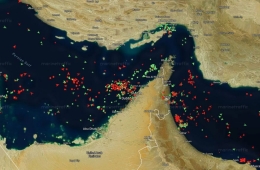
As a result of the aftermath of the Iran crisis, the Strait of Hormuz has been effectively blockaded, causing severe damage to Chinese manufacturing. It is reported that even low-wage day labor jobs in some industrial complexes are now at risk.
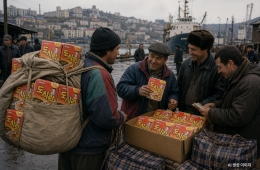
On the 22nd (local time), the BBC in the UK interviewed street workers in Foshan, Guangdong Province, one of China’s largest manufacturing hubs. These workers, who are mainly engaged in production-related day labor, earn an hourly wage of 18 to 20 yuan (approximately 3,800 to 4,300 won).
One worker, who requested anonymity, told the BBC, “All we do is work. We have no life. Please help us,” adding, “No one knows what our lives are really like.”

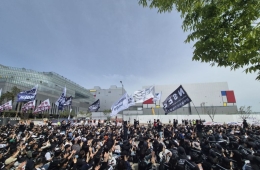
Workers at a factory in China. Not related to any specific expression in the article. Photo by AFP Yonhap News Agency
View original imageThe Chinese economy grew by 5% last year, maintaining robust growth even amid tariffs imposed by the U.S. under the Trump Administration. However, due to the aftermath of the Iran crisis, major global shipping routes have been blocked, and both shipping and raw material costs have surged, delivering a direct blow to Chinese manufacturing.
In particular, China’s electric vehicle (EV) industry, a key export sector, is facing a crisis. An EV exporter explained, “Last year, 90% of our exports were destined for the Middle East, but this year, war broke out in the region,” adding, “Because of the war, our business has virtually come to a halt. Cars that could not be exported are now stuck at Chinese ports.”
The textile industry has also suffered. This is due to a sharp rise in the price of petrochemical products, which are the primary raw materials for fabric. One merchant lamented, “Costs have increased, but customers are not willing to pay more,” adding, “As a result, only piles of fabric are accumulating in the warehouse.”
Wei Zhe, a researcher at the UK international affairs think tank Chatham House, commented, “China has longed for the decline of the U.S., but the current U.S. is not what China had hoped for,” adding, “China prefers a predictable and manageable United States.”
Hot Picks Today
 Chilling Timing "Did They Know Again?"... $640 ...
- Trump: "Iran in a Crazy Situation... Orders to Fire on Mine-Laying Vessels in th...
- "I Spent Money in a Truly Meaningful Way"... How an SK hynix Employee Donated 10...
- "If You Have This at Home, Remove It Immediately"... 'This Item' Is as Harmful a...
- Foreign Vessels Once Swept Up the Seas Every Season... Now Face Fines of Up to 1...
Chinese President Xi Jinping is deploying all diplomatic efforts to stabilize the Middle East. According to the BBC, China is urging both the U.S. and Iran to agree to a ceasefire, while also pressuring its ally Iran to come to the negotiating table. Meetings and phone calls have been held with major Gulf states such as the United Arab Emirates (UAE) and Saudi Arabia. In response, William Figueroa, a professor at Leiden University, told the media, “China is flexing its diplomatic muscle to show both the U.S. and its regional partners that it is keeping its promises in the Middle East.”
© The Asia Business Daily(www.asiae.co.kr). All rights reserved.